The Ultimate Guide to Spirulina Nutrients, Protein, and Antioxidants
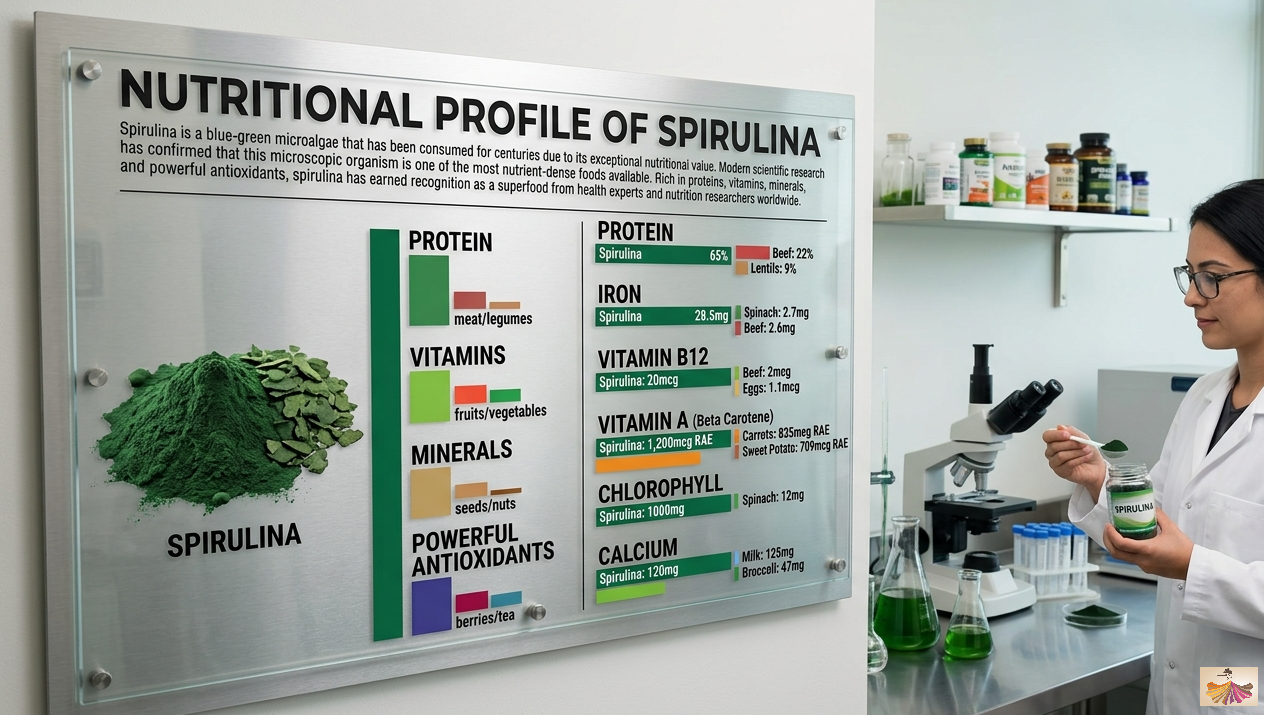
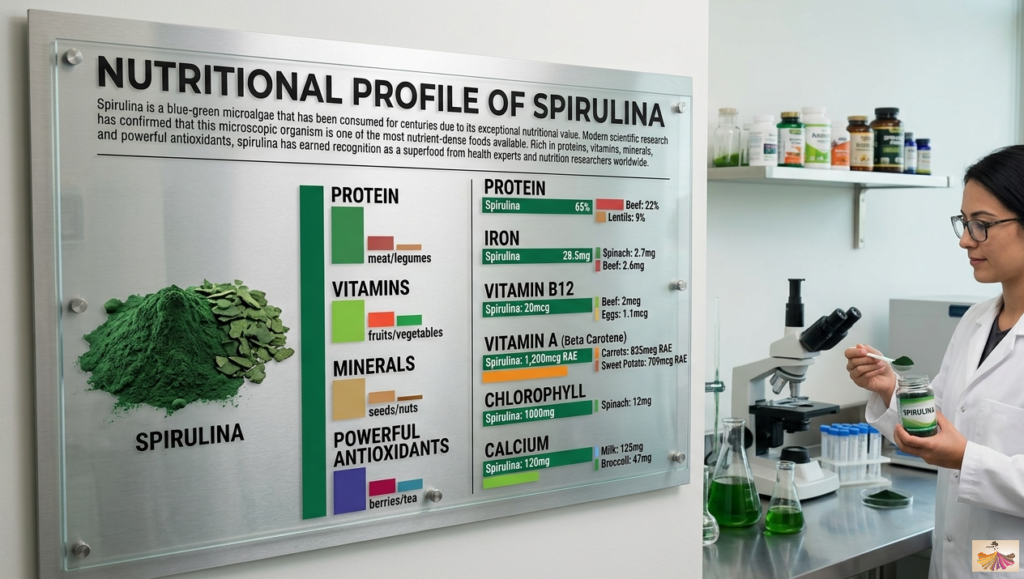
Spirulina is a blue-green microalgae that has been consumed for centuries due to its exceptional nutritional value. Modern scientific research has confirmed that this microscopic organism is one of the most nutrient-dense foods available. Rich in proteins, vitamins, minerals, and powerful antioxidants, spirulina has earned recognition as a superfood from health experts and nutrition researchers worldwide. The remarkable composition of spirulina nutrients makes it beneficial for supporting immunity, energy production, cardiovascular health, and overall wellness.
Unlike many plant-based foods, spirulina offers highly bioavailable nutrients that the body can absorb and utilize efficiently. This comprehensive guide explores the complete nutritional profile of spirulina and explains how each nutrient contributes to human health.
Nutritional Profile of Spirulina
Dried spirulina is approximately composed of:
- Protein: 55–70%
- Carbohydrates: 15–20%
- Fats: 5–8%
- Dietary fiber: 3–5%
- Vitamins and minerals: significant amounts
- Antioxidants and plant pigments: abundant
A single tablespoon (about 7 grams) of spirulina typically provides:
- Around 20 calories
- About 4 grams of protein
- Iron, magnesium, potassium, and manganese
- Various B vitamins
- Essential fatty acids and antioxidants
The density of spirulina nutrients makes it one of the most concentrated natural food sources of essential micronutrients.
Protein Content in Spirulina
Protein is the most remarkable component of spirulina. The algae contain more protein by weight than many traditional protein sources, including meat, eggs, and soybeans.
Complete Protein Profile
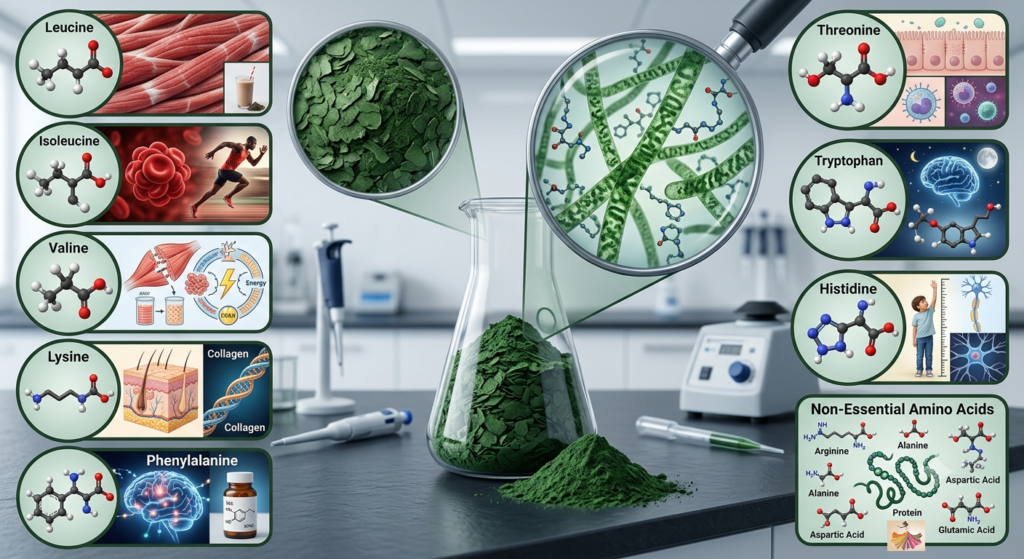
Spirulina contains all nine essential amino acids, making it a complete protein source.
Leucine
Leucine is an essential branched-chain amino acid that stimulates muscle protein synthesis and helps maintain lean muscle mass. Spirulina contains significant amounts of leucine, supporting muscle recovery and physical performance.
Isoleucine
Isoleucine contributes to energy production, hemoglobin formation, and muscle repair. The presence of isoleucine in spirulina helps support endurance and tissue recovery.
Valine
Valine is another branched-chain amino acid involved in muscle metabolism and tissue repair. It assists in maintaining energy levels during physical activity.
Lysine
Lysine is necessary for collagen formation, calcium absorption, and immune function. Since many plant foods are low in lysine, spirulina serves as a valuable source.
Methionine
Methionine plays a role in detoxification and the production of important molecules like glutathione. It also contributes to healthy skin, hair, and liver function.
Phenylalanine
Phenylalanine helps produce neurotransmitters such as dopamine and norepinephrine, supporting mood and cognitive function.
Threonine
Threonine is essential for collagen and elastin production, contributing to skin integrity and digestive health.
Tryptophan
Tryptophan is a precursor to serotonin and melatonin, helping regulate mood and sleep.
Histidine
Histidine contributes to tissue repair and the production of histamine, which supports immune and digestive functions.
Non-Essential Amino Acids
Spirulina also contains alanine, arginine, glycine, proline, serine, and glutamic acid, all of which contribute to muscle function, immune health, and metabolic processes.
Because of its highly digestible protein content, spirulina nutrients are particularly beneficial for vegetarians, vegans, athletes, and older adults.
Vitamins Found in Spirulina
Spirulina contains several vitamins that support metabolic health and cellular function.
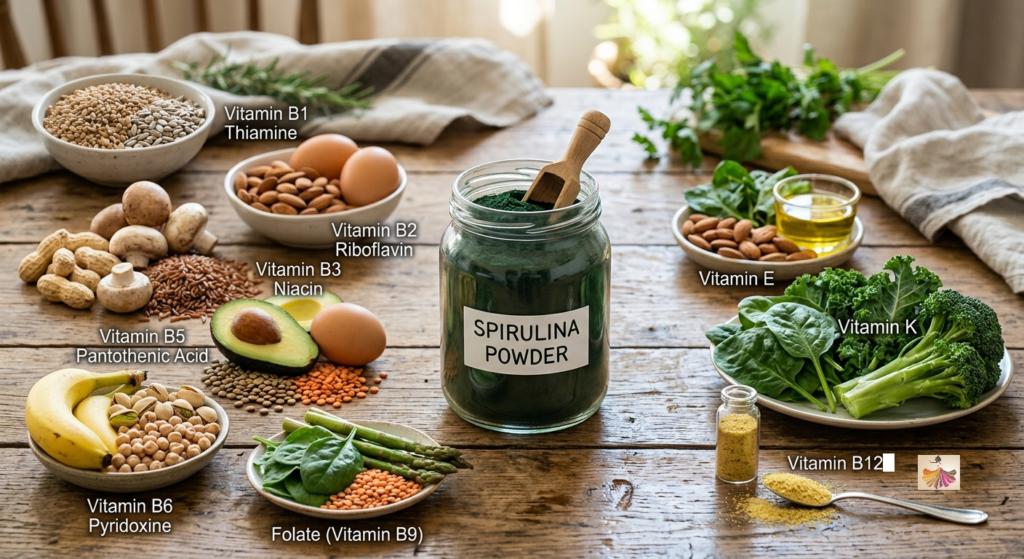
Vitamin B1 (Thiamine)
Thiamine helps convert carbohydrates into energy and supports nervous system function. Spirulina provides a notable amount of this vitamin, contributing to energy metabolism and brain health.
Vitamin B2 (Riboflavin)
Riboflavin is involved in cellular energy production and antioxidant defense. It supports healthy skin, vision, and red blood cell production.
Vitamin B3 (Niacin)
Niacin helps transform food into usable energy and supports cardiovascular health, digestive function, and nervous system activity.
Vitamin B5 (Pantothenic Acid)
Pantothenic acid is required for the synthesis of coenzyme A, a molecule essential for energy metabolism and hormone production.
Vitamin B6 (Pyridoxine)
Vitamin B6 participates in more than one hundred enzymatic reactions, including protein metabolism, neurotransmitter production, and immune regulation.
Folate (Vitamin B9)
Folate is crucial for DNA synthesis and cell division. It plays an especially important role during pregnancy and supports red blood cell formation.
Vitamin E
Vitamin-E functions as a fat-soluble antioxidant that protects cells against oxidative damage and supports immune function and skin health.
Vitamin K
Vitamin K is essential for blood clotting and bone mineralization. Spirulina contributes small but beneficial amounts of this nutrient.
Does Spirulina Contain Vitamin B12?
Spirulina contains compounds that resemble vitamin B12, but much of it is considered a biologically inactive analogue that may not adequately meet human vitamin B12 requirements. Therefore, spirulina should not be relied upon as the sole source of vitamin B12.
The broad spectrum of spirulina nutrients makes this algae an excellent addition to a balanced diet.
Minerals Found in Spirulina
In spirulina minerals are highly bioavailable and support numerous physiological processes.
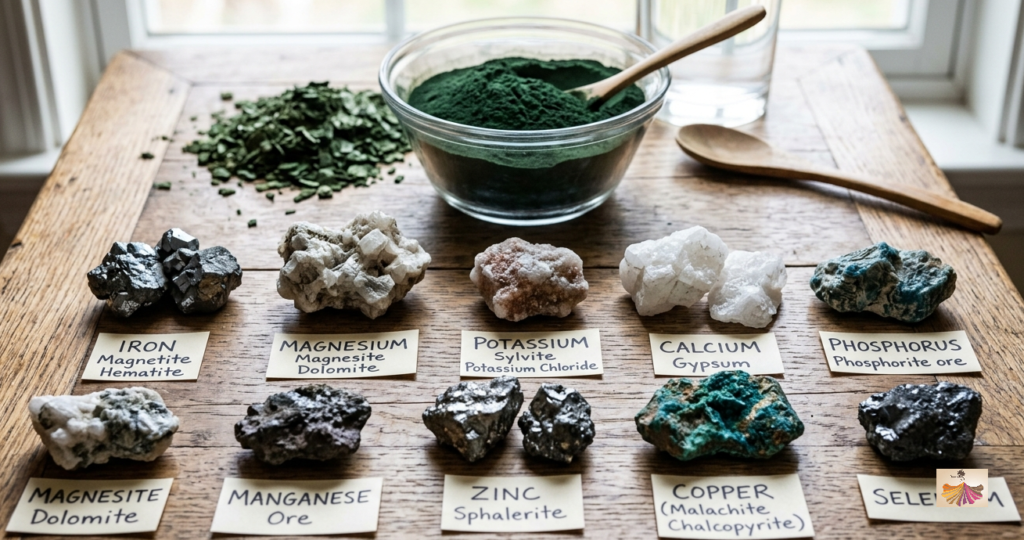
Iron
Iron is one of spirulina’s most abundant minerals. It is essential for hemoglobin production and oxygen transport throughout the body.
Adequate iron intake helps prevent fatigue, supports cognitive function, and promotes energy production. Spirulina’s iron is particularly valuable for individuals with increased iron requirements.
Magnesium
Magnesium participates in more than 300 biochemical reactions, including muscle contraction, nerve function, and blood pressure regulation.
The magnesium found in spirulina contributes to cardiovascular health, relaxation, and energy metabolism.
Potassium
Potassium is an electrolyte that regulates fluid balance, nerve transmission, and muscle contractions. Adequate intake supports heart rhythm and healthy blood pressure.
Calcium
Calcium is necessary for bone strength, muscle contractions, and nerve signaling. Spirulina provides modest amounts that contribute to daily mineral intake.
Phosphorus
Phosphorus works together with calcium to maintain healthy bones and teeth while also supporting cellular energy production.
Manganese
Manganese is involved in antioxidant defense, metabolism, and connective tissue formation.
Zinc
Zinc supports immune function, wound healing, reproductive health, and DNA synthesis.
Copper
Copper assists in iron metabolism, collagen formation, and antioxidant enzyme activity.
Selenium
Selenium supports thyroid function and acts as a component of antioxidant enzymes that protect cells from damage.
The mineral composition of spirulina nutrients contributes significantly to overall metabolic health and physical performance.
Antioxidants in Spirulina
Spirulina is exceptionally rich in antioxidant compounds that help neutralize harmful free radicals.
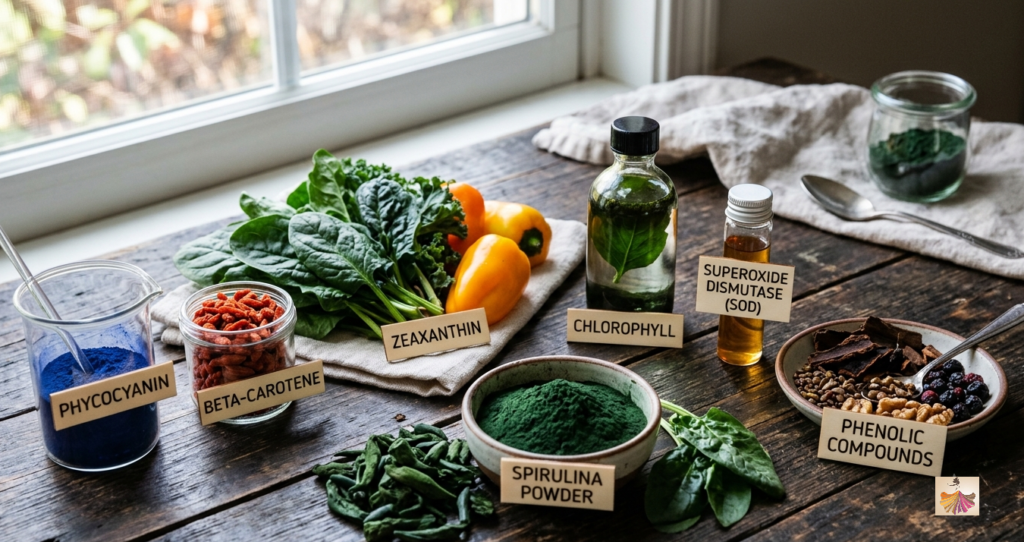
Phycocyanin
Phycocyanin is the blue pigment responsible for spirulina’s distinctive color and is considered its most powerful antioxidant.
What Is Phycocyanin?
Phycocyanin is a protein-bound pigment that scavenges free radicals and inhibits inflammatory pathways.
Health Benefits
- Reduces oxidative stress
- Supports immune health
- May help lower inflammation
- Protects cells against damage
- Supports cardiovascular wellness
Beta-Carotene
Beta-carotene is a precursor to vitamin A and an important antioxidant.
How It Helps
- Supports eye health
- Enhances immune function
- Promotes healthy skin
- Protects cells from oxidative damage
Zeaxanthin
Zeaxanthin is a carotenoid concentrated in the retina.
Benefits
- Protects the eyes from blue-light damage
- Supports long-term vision health
- Reduces oxidative stress in eye tissues
Chlorophyll
Chlorophyll is the green pigment involved in photosynthesis.
Health Functions
- Exhibits antioxidant activity
- Supports detoxification processes
- May contribute to cellular protection
Superoxide Dismutase (SOD)
SOD is an enzyme that neutralizes highly reactive oxygen molecules called superoxide radicals.
Benefits
- Protects tissues from oxidative injury
- Supports healthy aging
- Contributes to immune defense
Phenolic Compounds
Spirulina contains various phenolic compounds that possess antioxidant and anti-inflammatory properties.
Functions
- Protect cellular structures
- Support cardiovascular health
- Reduce oxidative stress
The impressive concentration of spirulina nutrients and antioxidants explains why spirulina has become one of the most researched superfoods in nutritional science.
Why Spirulina’s Nutritional Profile Matters
The combination of complete proteins, essential vitamins, bioavailable minerals, and potent antioxidants makes spirulina uniquely valuable among natural foods. These nutrients work together to support:
- Immune health
- Energy production
- Muscle recovery
- Heart health
- Healthy aging
- Brain function
- Eye health
- Cellular protection
Because of the extraordinary density of spirulina nutrients, even small servings can contribute meaningfully to daily nutrient intake.
Conclusion
Spirulina stands among the most nutrient-rich foods on Earth. Its exceptional protein quality, broad vitamin spectrum, abundant minerals, and powerful antioxidants make it a valuable addition to modern diets. The unique combination of spirulina nutrients supports numerous aspects of human health, from energy production and immune defense to cardiovascular wellness and cellular protection. Scientific research continues to uncover new benefits of this ancient superfood, reinforcing its reputation as one of nature’s most impressive nutritional resources. When consumed as part of a balanced diet, spirulina nutrients can help support overall wellness and provide concentrated nourishment in a convenient and natural form.