Cleaning Makeup Brushes: The Proper Technique You Need to Know
Cleaning makeup brushes is essential for maintaining their quality. Dirty brushes can harm your skin and ruin makeup application. They collect oil, bacteria, dead skin cells, and leftover makeup. These impurities affect both performance and hygiene. Let’s explore the proper technique for cleaning makeup brushes.
Why Is Cleaning Makeup Brushes Important?
Bacterial formation can be avoided with regular cleaning. Dirty brushes can irritate the skin. It also promotes consistent, faultless makeup application. Clean brushes last longer and stay in shape. Makeup brushes function poorly when not cleaned.
In addition, unclean brushes can clog pores and lead to acne breakouts. Dermatologists highlight that bacteria such as E. coli and Staphylococcus can grow on dirty tools. This increases the risk of skin infections. Clean brushes ensure that makeup products blend smoothly without patchiness. They also prevent color mixing from previous applications. Maintaining clean brushes is a key part of any skincare routine.
How Often Should You Clean Makeup Brushes?
Foundation brushes should be cleaned weekly. Eye brushes need cleaning every two weeks. Lip brushes should be cleaned after every use. Cleaning makeup brushes frequently prevents product buildup and bacteria growth.
Experts in 2025 recommend adjusting frequency based on usage. Brushes used with liquid or cream products need more frequent washing. Powder brushes can be cleaned less often but still regularly. Professional makeup artists clean brushes after every client for hygiene reasons. Regular cleaning also reduces product wastage and improves brush performance over time.
Tools Needed for Cleaning Makeup Brushes
Gather the right tools for effective cleaning. You’ll need:
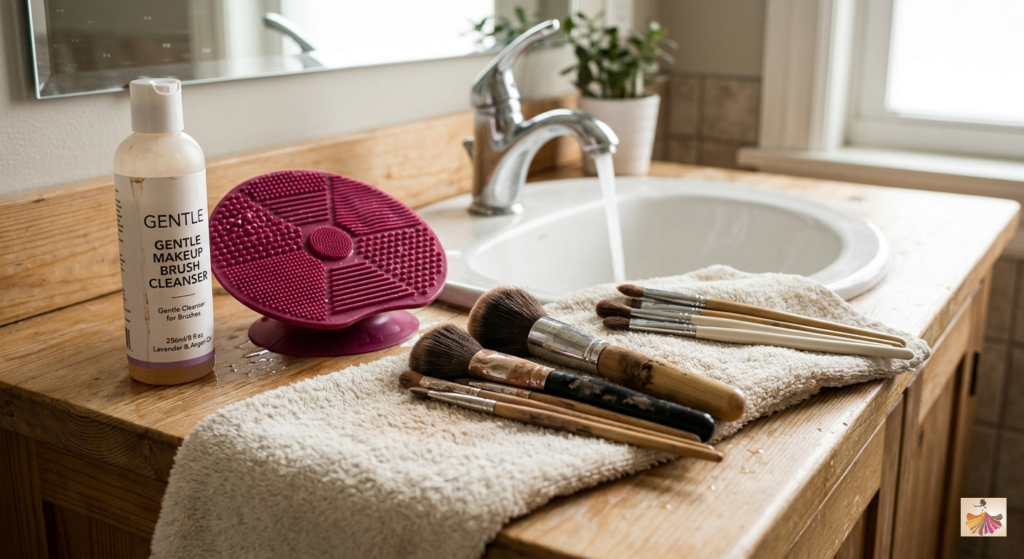
- Gentle shampoo or brush cleanser
- Silicone cleaning mat or textured glove
- Lukewarm water
- Clean towel
Having the right tools simplifies cleaning makeup brushes. You may use microfiber towels for faster drying. Brush cleaning bowls or containers can make rinsing easier. Specialized brush cleansers often include antibacterial ingredients. Some users prefer baby shampoo due to its mild formula. Using proper tools helps protect bristles from damage and extends brush lifespan.
Step-by-Step Guide to Cleaning Makeup Brushes
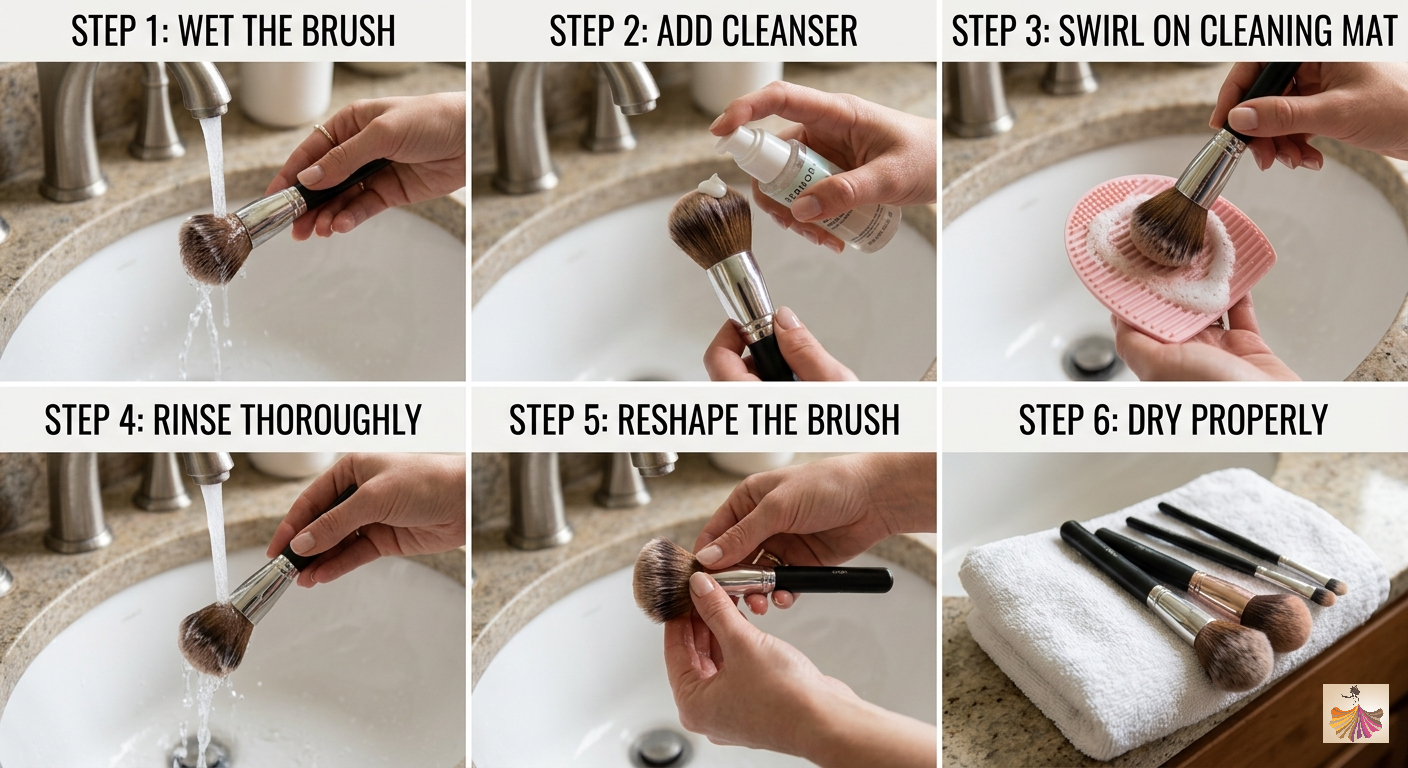
Follow these simple steps for the best results:
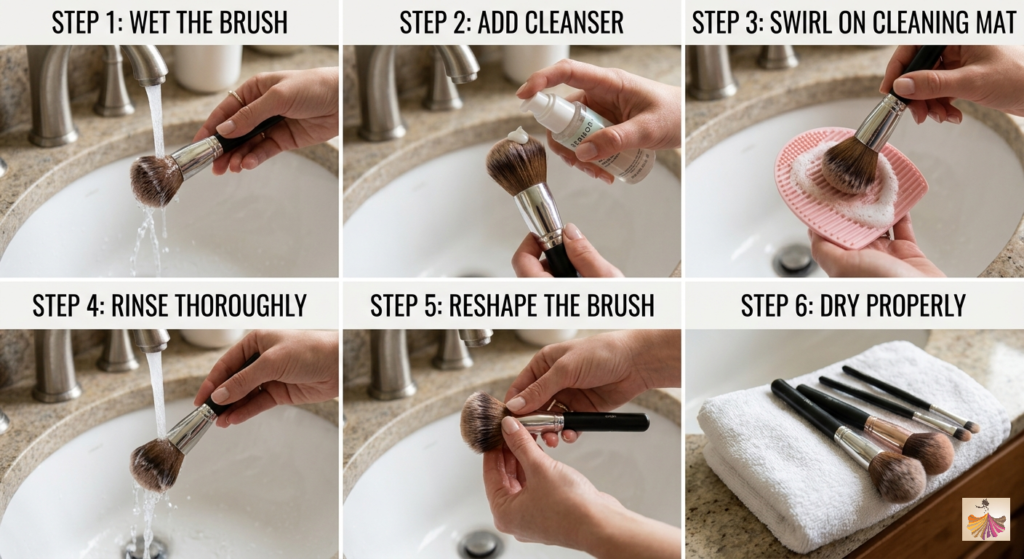
Step 1: Wet the Brush
Run lukewarm water over the bristles. Avoid wetting the handle. Water temperature is important. Hot water can weaken glue and damage bristles. Always hold brushes downward to prevent water from entering the ferrule. This helps maintain the structure of the brush.
Step 2: Add Cleanser
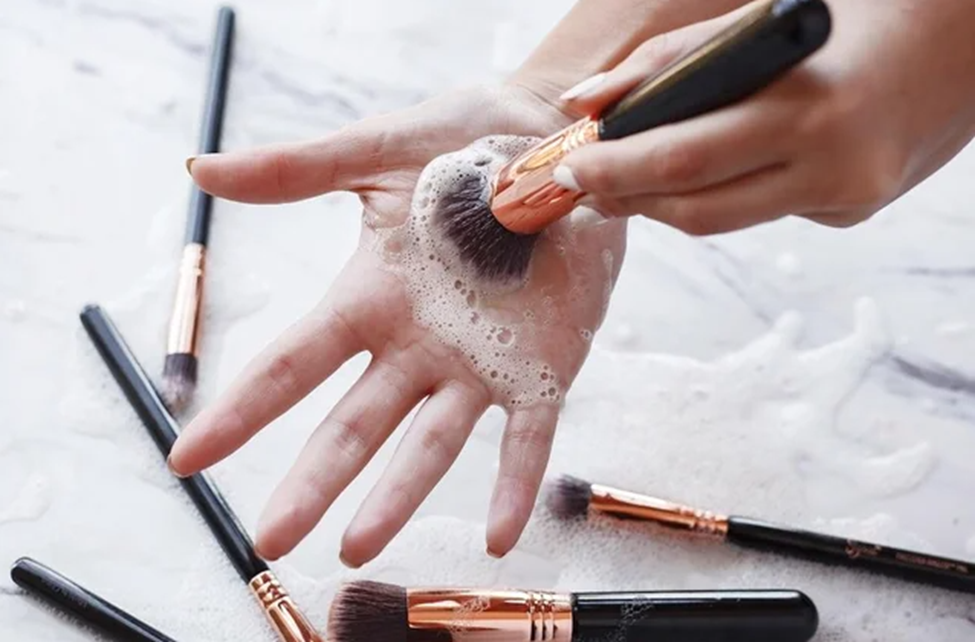
Use a small amount of shampoo or brush cleanser. Apply it directly to the bristles. Choose a cleanser based on brush type. Gentle formulas are best for natural hair brushes. Synthetic brushes can handle slightly stronger cleansers. Avoid using harsh soaps that strip moisture.
Step 3: Swirl on Cleaning Mat
Gently swirl the brush on a silicone cleaning mat. This removes product buildup and dirt. Use light pressure while swirling. Excess force can damage bristles. Textured mats help reach deep into the brush fibers. This ensures a thorough clean without harming the brush.
Step 4: Rinse Thoroughly
Rinse the brush under lukewarm water. Ensure no cleanser remains. Incomplete rinsing can leave residue. This may irritate the skin during use. Repeat rinsing until water runs clear. Clean brushes should feel soft and residue-free.
Step 5: Reshape the Brush
Gently squeeze out excess water. Reshape the bristles with your fingers. Reshaping helps maintain the original structure. It prevents fraying and uneven application. Always be gentle to avoid shedding.
Step 6: Dry Properly
Lay the brush flat on a clean towel. Let it air dry completely. Proper drying is crucial. Hanging brushes upside down is even better if possible. This prevents water from damaging the handle. Drying usually takes several hours depending on brush size.
Tips for Cleaning Makeup Brushes
- Use lukewarm water, not hot water.
- Avoid soaking the handle; it can loosen the glue.
- Clean one brush at a time for thorough results.
- Invest in a quality brush cleanser for deep cleaning.
- Use a silicone mat to simplify cleaning makeup brushes.
Always test new cleansers on a small area first. This ensures compatibility with your brushes. Store brushes in a clean, dry place after washing. Regular maintenance keeps brushes soft and effective. Using separate brushes for different products also reduces contamination.
Mistakes to Avoid When Cleaning Makeup Brushes
- Don’t submerge the entire brush in water.
- Avoid using harsh detergents or soaps.
- Never use a hairdryer to dry brushes.
- Don’t skip regular cleaning sessions.
- Avoid pulling on the bristles while cleaning.
Another common mistake is over-cleaning. Excessive washing can wear out brushes quickly. Using too much product can also leave residue. Skipping proper drying can lead to mold growth. Always handle brushes gently to maintain their quality.
Benefits of Regularly Cleaning Makeup Brushes
Regular cleaning offers several benefits:
- Prevents breakouts and skin irritation.
- Extends the lifespan of your brushes.
- Ensures smooth and precise makeup application.
- Removes bacteria, oils, and old makeup residue.
- Keeps your makeup colors true to their shades.
Clean brushes improve product performance. Makeup blends more evenly and looks more professional. Hygiene also becomes easier to maintain. Regular cleaning reduces long-term costs by preserving brush quality.
Advanced Techniques for Cleaning Makeup Brushes
Professionals use advanced methods of cleaning makeup brushes for better results.
Deep Cleaning Once a Month
- Use a deep cleanser or solid soap.
- Soak bristles gently without touching the handle.
- Clean stubborn residue with a silicone mat.
Deep cleaning removes buildup that regular washing may miss. It is especially useful for foundation and concealer brushes. Conditioning treatments can also be applied during deep cleaning to maintain softness.
Using Electric Brush Cleaners
- Attach the brush to the device.
- Let it spin in a cleaning solution.
- Rinse and spin dry for quick results.
Electric cleaners save time and effort. They reduce drying time significantly. These devices are ideal for people with large brush collections. They also provide consistent cleaning results.
Sanitizing Brushes with Alcohol Spray
- Spray alcohol on bristles after cleaning.
- Let it air dry for added hygiene.
This step adds an extra layer of protection. It helps kill remaining bacteria. However, alcohol should not be used excessively as it can dry out bristles.
Cleaning makeup brushes is an easy but important task. To ensure their excellence, use the right technique. Use appropriate tools and clean them on a regular basis. Keeping clean brushes will benefit your skin. To accomplish the greatest makeup impact, focus cleaning your makeup brushes.
FAQ’s
How often should I clean my makeup brushes?
Dermatologists recommend cleaning makeup brushes every 7–10 days for proper hygiene. Brushes used with liquid or cream products should be washed weekly, while eye brushes every two weeks. Powder brushes can be cleaned monthly if used lightly. Regular cleaning prevents bacteria, acne, and skin irritation.
What tools and products are best for cleaning makeup brushes?
The best tools include a gentle shampoo or dedicated brush cleanser, lukewarm water, and a clean towel. Silicone cleaning mats or textured gloves help remove deep residue effectively. Mild cleansers like baby shampoo are widely recommended to protect bristles. Avoid harsh soaps as they can damage brush fibers.
What is the step-by-step process for cleaning makeup brushes?
First, rinse the bristles under lukewarm water while keeping the handle dry. Apply a small amount of gentle cleanser and lather using your fingers or a mat. Rinse thoroughly until water runs clear, then squeeze out excess water. Finally, reshape the brush and lay it flat to air dry overnight.
Can I use household items to clean my makeup brushes?
Yes, household items like mild dish soap or baby shampoo can be used safely. These help break down oils and makeup residue effectively. However, strong detergents or alcohol should be avoided as they can dry out bristles. Gentle, non-irritating products are always the best choice.
How do I properly dry and store makeup brushes after cleaning?
After washing, gently squeeze out excess water and reshape the bristles. Lay brushes flat on a towel with the bristles hanging slightly off the edge to maintain shape. Avoid drying them upright, as water can damage the handle and glue. Store brushes in a clean, dry place to prevent dust and bacteria buildup.