How to Take Spirulina Safely: Dosage, Best Time, Benefits, and Side Effects
Spirulina is one of the most nutrient-dense superfoods available today. It is a blue-green algae that grows naturally in alkaline lakes and can also be cultivated in controlled environments. Spirulina has gained worldwide popularity because of its rich nutritional profile, including protein, vitamins, minerals, antioxidants, and plant compounds that support overall health. The World Health Organization (WHO) and the United Nations have recognized spirulina as a valuable food source due to its nutritional benefits. Research published in scientific journals has also shown that spirulina may support immune health, help reduce oxidative stress, and contribute to better nutritional status. Many people wonder how to take Spirulina correctly to receive its maximum health benefits.
The answer depends on the form of spirulina you choose, your age, health condition, and nutritional needs.
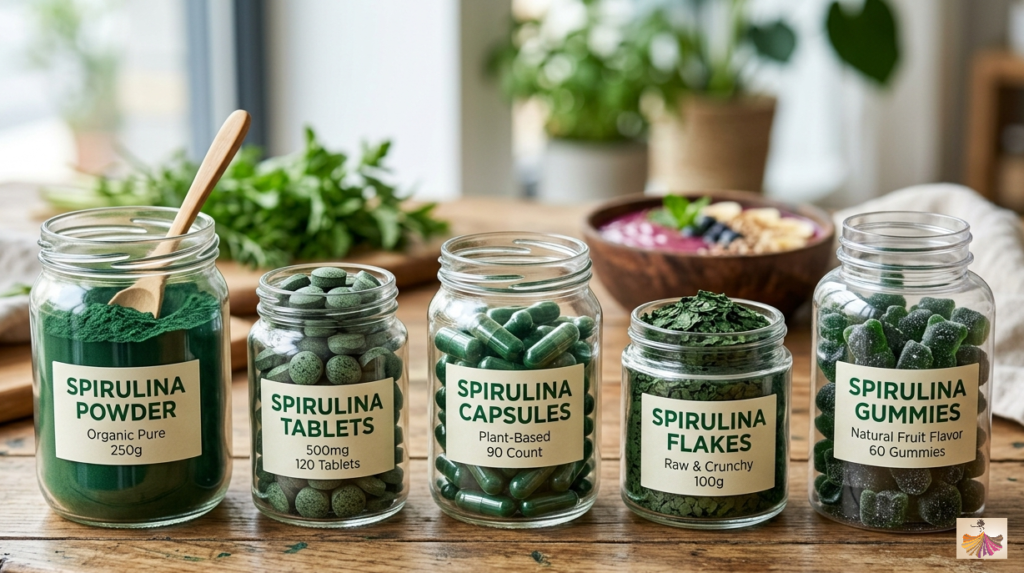
What Is Spirulina?
Spirulina belongs to a group of cyanobacteria that naturally produce nutrients through photosynthesis. The two most commonly used species are:
- Spirulina platensis
- Spirulina maxima
It contains:
- 55–70% protein
- Essential amino acids
- Iron
- Magnesium
- Potassium
- Vitamin B complex
- Beta-carotene
- Chlorophyll
- Phycocyanin antioxidants
Because of its nutritional density, spirulina is often considered a functional food and dietary supplement.
Different Forms of Spirulina
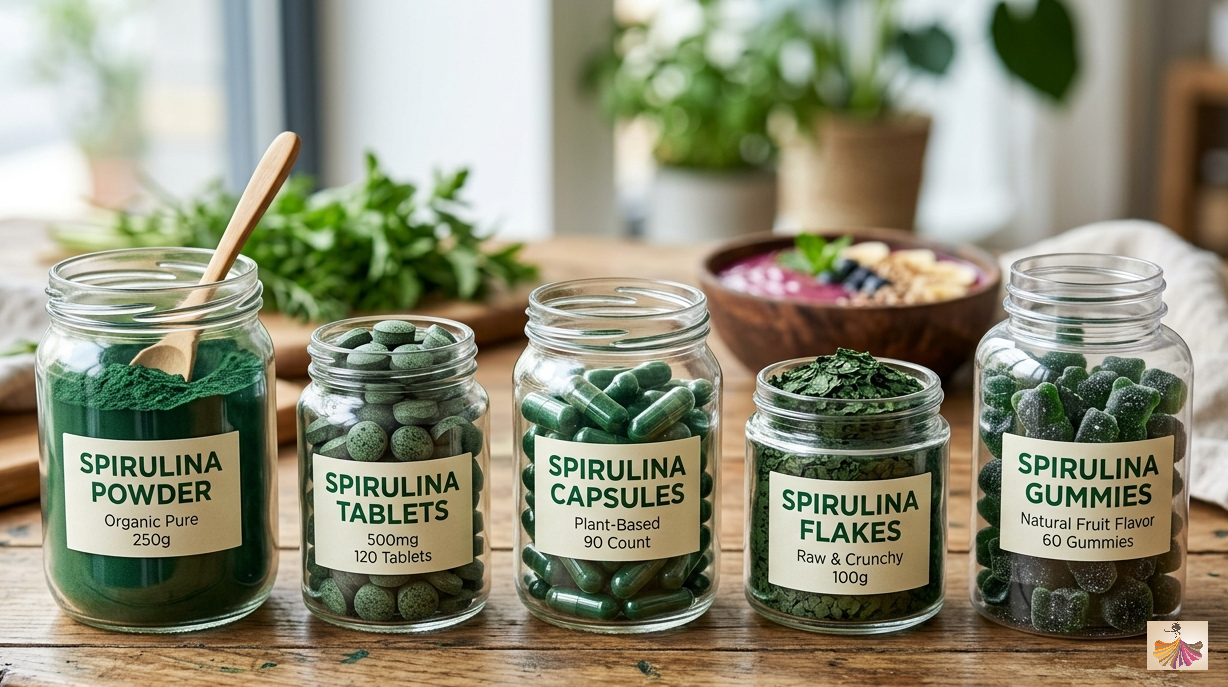
Understanding the various forms of spirulina is important when learning how to take Spirulina properly. Each form has its own advantages and usage methods.
1. Spirulina Powder
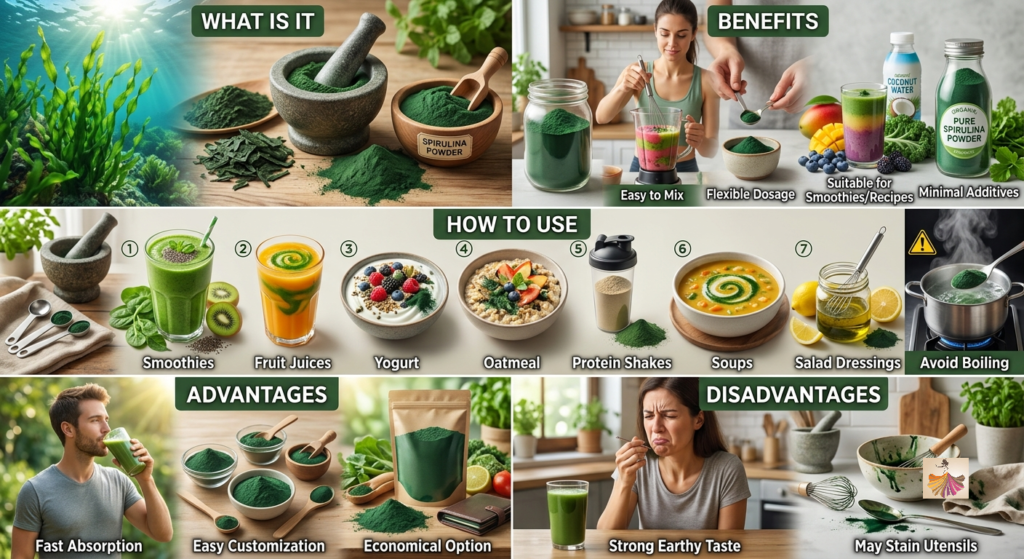
What Is Spirulina Powder?
Spirulina powder is produced by drying spirulina algae and grinding it into a fine green powder. It is one of the most popular and versatile forms available.
Benefits of Spirulina Powder
- Easy to mix into foods and beverages
- Allows flexible dosage adjustments
- Usually contains minimal additives
- Suitable for smoothies and recipes
How to Use Spirulina Powder
You can add spirulina powder to:
- Smoothies
- Fruit juices
- Yogurt
- Oatmeal
- Protein shakes
- Soups
- Salad dressings
Avoid adding spirulina to boiling foods because excessive heat may reduce some nutrients.
Advantages
- Fast absorption
- Easy customization of dosage
- Economical option
Disadvantages
- Strong earthy taste
- May stain utensils and containers
2. Spirulina Tablets
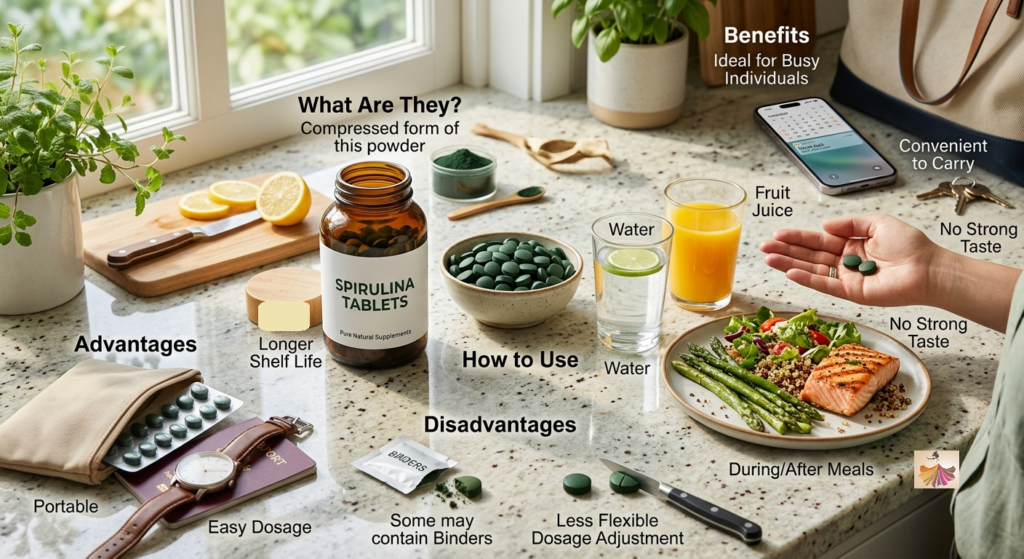
What Are Spirulina Tablets?
Spirulina tablets are compressed forms of spirulina powder without requiring mixing or preparation.
Benefits of Spirulina Tablets
- Convenient to carry
- No strong taste
- Easy to measure dosage
- Ideal for busy individuals
How to Use Spirulina Tablets
Take tablets with:
- Water
- Fruit juice
- During meals
- After meals
Many people prefer tablets because they make how to take Spirulina much easier and more convenient.
Advantages
- Portable
- Pre-measured dosage
- Longer shelf life
Disadvantages
- Less flexible dosage adjustments
- Some products may contain binders
3. Spirulina Capsules
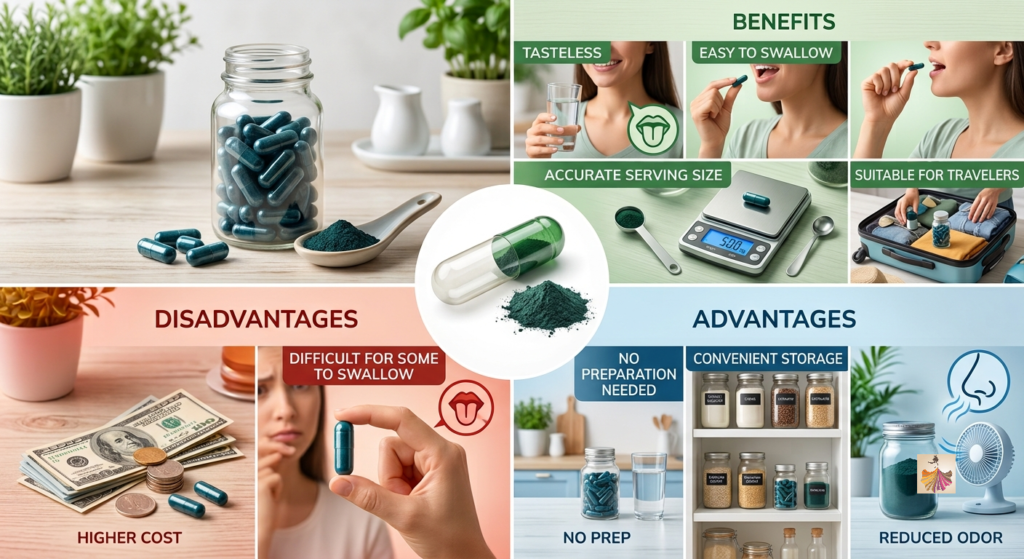
What Are Spirulina Capsules?
Capsules contain spirulina powder enclosed inside gelatin or vegetarian shells.
Benefits
- Tasteless
- Easy to swallow
- Accurate serving size
- Suitable for travelers
Advantages
- No preparation needed
- Convenient storage
- Reduced odor
Disadvantages
- Usually more expensive
- Larger capsules may be difficult for some people to swallow
4. Spirulina Flakes
What Are Spirulina Flakes?
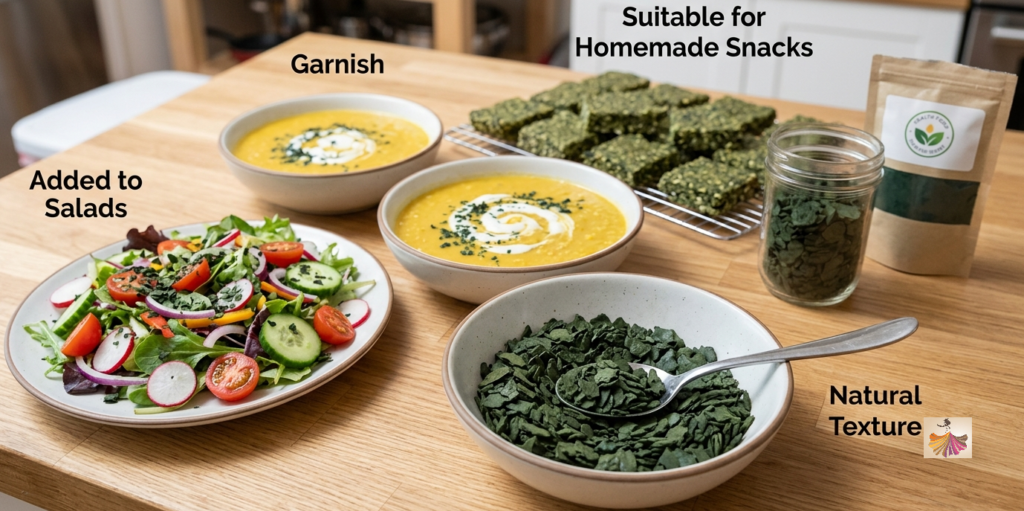
Spirulina flakes are dried pieces of algae commonly used in specialty health foods.
Benefits
- Added to salads
- Used as a garnish
- Suitable for homemade snacks
Advantages
- Less processed
- Natural texture
Disadvantages
- Less widely available
- Stronger taste
5. Spirulina Gummies
What Are Spirulina Gummies?
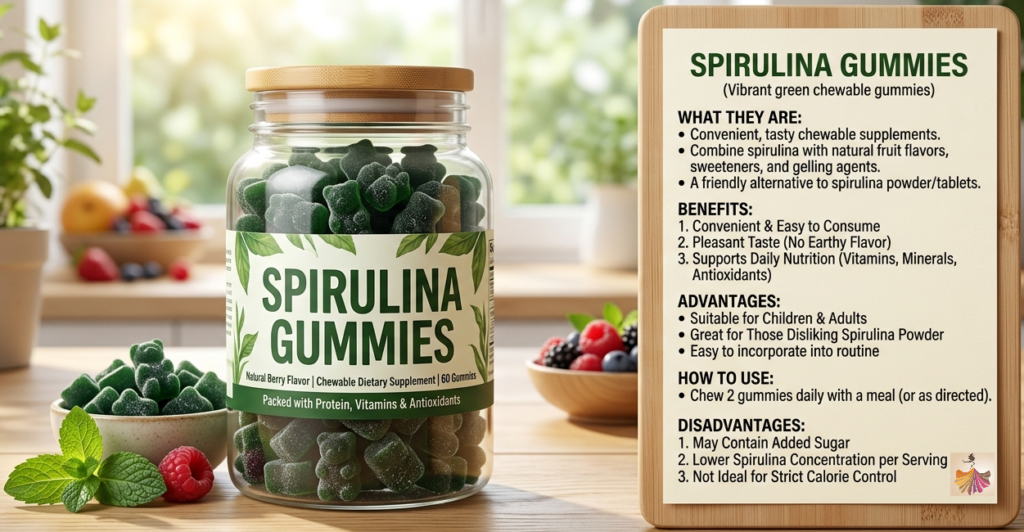
Spirulina gummies are chewable dietary supplements made by combining spirulina powder or extract with ingredients such as fruit flavors, sweeteners, and gelling agents. They offer a convenient and tasty alternative to spirulina powders and tablets. These gummies are especially popular among children and adults who dislike the earthy taste of traditional spirulina supplements. They provide many of the same nutrients found in spirulina, including protein, antioxidants, vitamins, and minerals. However, some products may contain added sugars or lower amounts of spirulina, so it is important to check the product label before purchasing.
Benefits
- Suitable for children
- Pleasant flavor
- Convenient option
Disadvantages
- May contain added sugar
- Lower spirulina concentration
- Not ideal for strict calorie control
6. Spirulina Added to Functional Foods
Some companies add spirulina to:
- Protein bars
- Energy drinks
- Snack foods
- Nutritional beverages
These products can be convenient, but users should always check the ingredient label because spirulina amounts may be very small.
Best Time to Take Spirulina
There is no single perfect time for everyone. However, experts generally suggest:
Morning
- Supports daily nutrient intake
- May help energy levels
Before Exercise
- Provides protein and antioxidants
- May support physical performance
Between Meals
- Helps nutrient absorption
- Easy to combine with beverages
Some people experience mild stomach discomfort if taken on an empty stomach. In that case, take it with meals.
Recommended Spirulina Dosage
When discussing how to take Spirulina, dosage is one of the most important considerations.
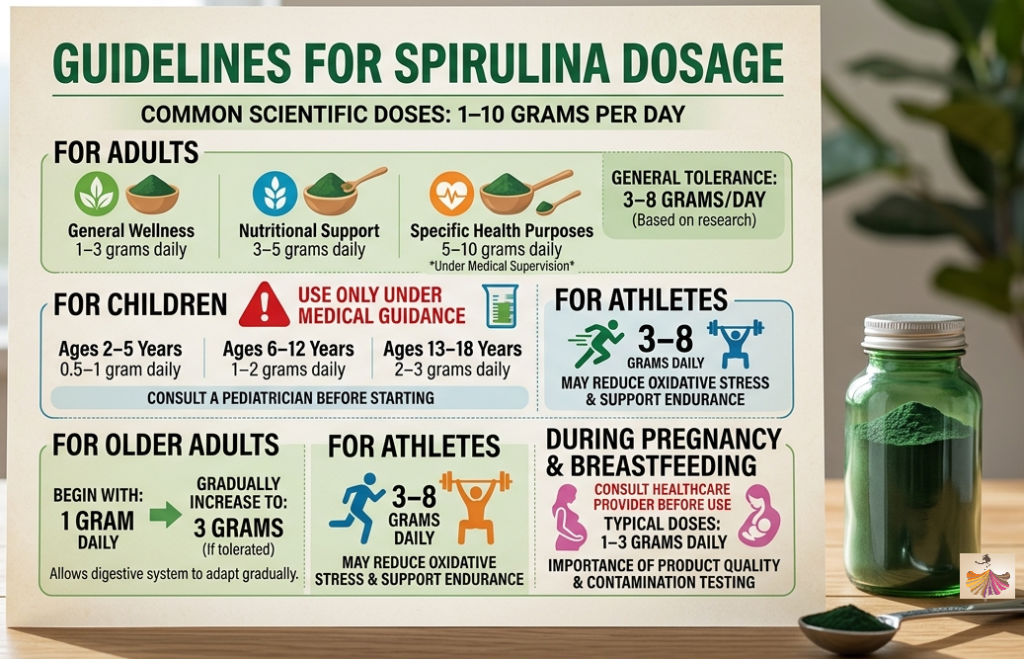
Scientific studies commonly use doses ranging from 1 to 10 grams per day.
Spirulina Dosage for Adults
General Wellness
1–3 grams daily.
Nutritional Support
3–5 grams daily.
Specific Health Purposes
5–10 grams daily under medical supervision.
Most research studies show that doses between 3 and 8 grams per day are generally well tolerated.
Spirulina Dosage for Children
Children should only use spirulina under medical guidance.
Ages 2–5 years
0.5–1 gram daily.
Ages 6–12 years
1–2 grams daily.
Ages 13–18 years
2–3 grams daily.
Because children have different nutritional needs, parents should consult a pediatrician before starting supplementation.
Spirulina Dosage for Older Adults
Adults over 65 years may begin with:
1 gram daily and gradually increase to 3 grams if tolerated.
This approach allows the digestive system to adapt gradually.
Spirulina Dosage for Athletes
Athletes and physically active individuals may consume:
3–8 grams daily.
Some studies suggest that spirulina supplementation may help reduce exercise-induced oxidative stress and support endurance.
Spirulina Dosage during Pregnancy
Pregnant women should only use spirulina after consulting their healthcare provider.
Typical doses range between:
1–3 grams daily.
However, product quality and contamination testing are extremely important during pregnancy.
Spirulina Dosage during Breastfeeding
Breastfeeding women should also seek medical advice before supplementation.
Typical doses generally range from:
1–3 grams daily.
How to Start Taking Spirulina
If you are new to spirulina, follow this gradual approach:
Week 1
0.5–1 gram daily.
Week 2
1–2 grams daily.
Week 3
2–3 grams daily.
Week 4
Continue with the desired maintenance dosage.
Starting slowly may reduce digestive side effects.
Ways to Add Spirulina to Your Diet
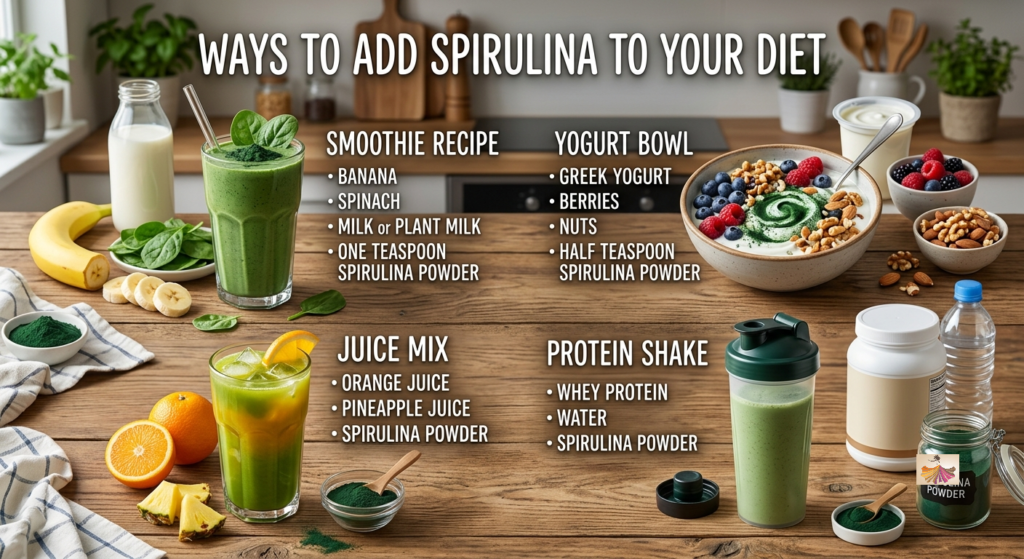
People often ask how to take Spirulina in a way that fits daily life. Here are practical methods:
Smoothie Recipe
- Banana
- Spinach
- Milk or plant milk
- One teaspoon spirulina powder
Yogurt Bowl
- Greek yogurt
- Berries
- Nuts
- Half teaspoon spirulina powder
Juice Mix
- Orange juice
- Pineapple juice
- Spirulina powder
Protein Shake
- Whey protein
- Water
- Spirulina powder
Who Should Use Spirulina?
Many people can benefit from spirulina supplementation because it is rich in protein, vitamins, minerals, and powerful antioxidants.

Vegetarians and Vegans
Vegetarians and vegans are among the people who may benefit the most from spirulina. Since plant-based diets can sometimes be low in certain nutrients, spirulina offers a concentrated source of plant protein, iron, and antioxidants. The protein in spirulina contains all essential amino acids, making it a valuable supplement for people who do not consume meat, fish, or dairy products. Its iron content may also help support healthy energy levels and reduce the risk of nutrient deficiencies.
People with Low Nutrient Intake
Individuals who do not eat a balanced diet or who frequently skip meals may use spirulina as nutritional support. People with poor eating habits may not get enough vitamins, minerals, and antioxidants from food alone. Spirulina can help improve overall nutrient intake by providing a wide range of essential nutrients in a small serving.
Older Adults
As people age, their nutritional needs change and appetite may decrease. Older adults may benefit from spirulina because it is nutrient-dense and easy to consume. The antioxidants found in spirulina, particularly phycocyanin and beta-carotene, may help protect cells from oxidative stress and support overall wellness. Its protein content may also help maintain muscle health in older individuals.
Athletes and Active Individuals
Athletes and physically active people may use spirulina to support their nutritional needs and recovery. Spirulina provides high-quality protein and antioxidants that may help reduce exercise-related oxidative stress and support muscle recovery after intense physical activity.
People Seeking Antioxidant Support
Anyone looking to increase their antioxidant intake may consider spirulina supplementation. Its unique compounds, including phycocyanin and beta-carotene, help combat free radicals and support overall health and immune function.
Who Should Not Use Spirulina?
Although spirulina is considered safe for most healthy people, certain individuals should avoid it or use it only under medical supervision. Understanding who should not take spirulina is important to prevent unwanted side effects and health complications.
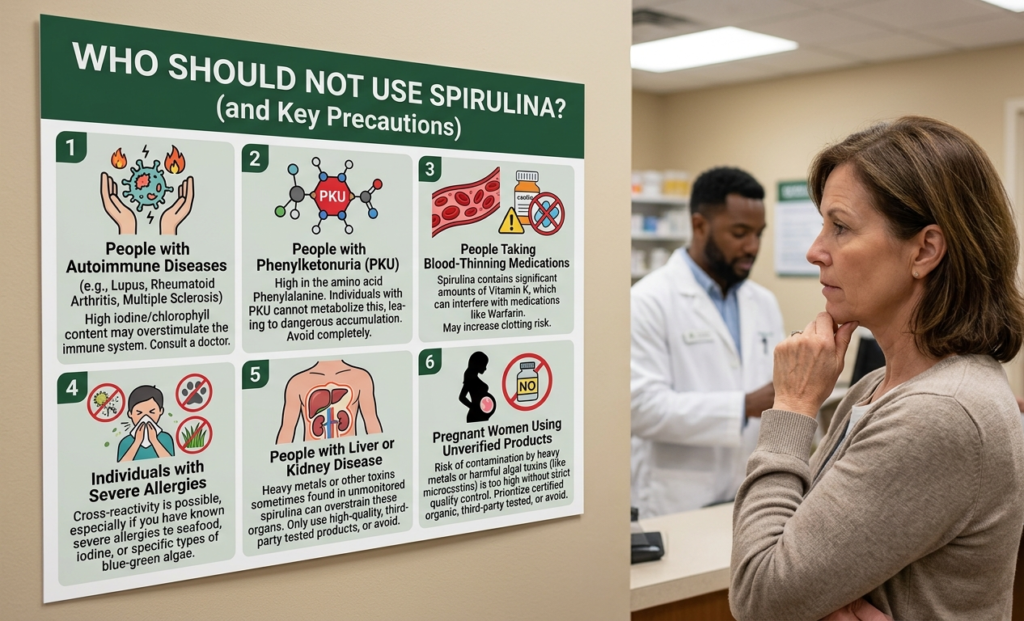
People with Autoimmune Diseases
Individuals with autoimmune disorders such as multiple sclerosis, lupus, and rheumatoid arthritis should consult their doctor before taking spirulina. Some studies suggest that spirulina may stimulate the immune system. In people with autoimmune conditions, increased immune activity could potentially worsen symptoms or trigger disease flare-ups.
People with Phenylketonuria (PKU)
People with Phenylketonuria (PKU), a rare genetic disorder, should avoid spirulina because it contains phenylalanine. Individuals with PKU cannot properly break down this amino acid, and its buildup in the body can lead to serious health problems.
People Taking Blood-Thinning Medications
Spirulina naturally contains vitamin K, which plays an important role in blood clotting. It may interfere with blood-thinning medications such as Warfarin. Anyone taking anticoagulant medicines should seek medical advice before using spirulina supplements.
Individuals with Severe Allergies
Although uncommon, some people may experience allergic reactions to spirulina. Symptoms can include skin rashes, swelling, itching, or difficulty breathing. Anyone who develops these symptoms should stop taking spirulina immediately and seek medical attention.
People with Liver or Kidney Disease
Individuals with liver or kidney disorders should speak with a healthcare professional before taking spirulina because their bodies may process nutrients differently, and supplementation may not be appropriate in certain cases.
Pregnant Women Using Unverified Products
Pregnant women should avoid low-quality or untested spirulina products. Contaminated supplements may contain heavy metals, harmful bacteria, or toxins called microcystins. Only high-quality, independently tested products should be considered during pregnancy and always under medical guidance.
How to Choose a High-Quality Spirulina Supplement
Understanding how to take Spirulina includes selecting safe products.
Look for products that are:
- Third-party tested
- Free from contaminants
- Produced by reputable manufacturers
- Certified for purity
Check labels for:
- Heavy metal testing
- Microbial testing
- Quality certifications
Storage Tips
To maintain quality:
- Store in a cool place.
- Keep away from direct sunlight.
- Seal containers tightly.
- Avoid moisture.
Proper storage preserves nutrient content.
Final Thoughts
Learning how to take Spirulina properly allows you to enjoy its nutritional benefits while minimizing risks. Spirulina comes in several forms, including powder, tablets, capsules, flakes, gummies, and fortified foods. The ideal choice depends on personal preference and lifestyle. Adults generally consume 1–5 grams daily, while higher doses should only be used under professional supervision. Children, pregnant women, older adults, and people with medical conditions should seek medical advice before supplementation. Most importantly, choose high-quality, contamination-tested products and begin with a small dose. When used responsibly, how to take Spirulina becomes simple, safe, and an effective way to support overall nutrition and wellness.