The Best Ways to Use Spirulina for Beautiful Skin and Strong Hair
In recent years, spirulina has become one of the most popular natural ingredients in the wellness and beauty industry. This blue-green algae is often called a superfood because of its exceptional nutritional profile and antioxidant properties. The global spirulina market continues to grow rapidly as more people seek natural and organic solutions for skincare and beauty.
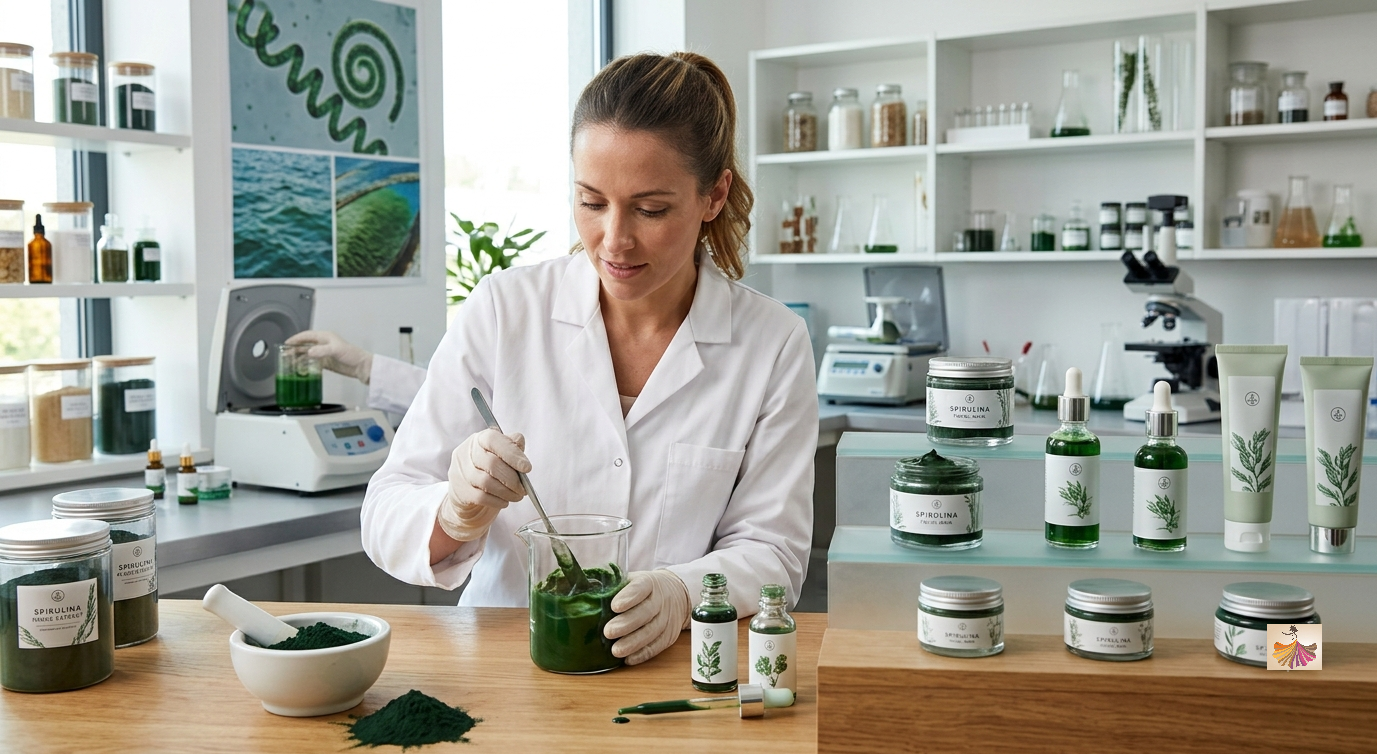
Scientific studies have shown that spirulina contains proteins, vitamins, minerals, and antioxidants that may support healthy skin and hair when used both internally and externally. This article explores spirulina as a natural and organic beauty product, its benefits, and simple DIY methods to use it directly at home.
Why Is Spirulina Good for Beauty?
Spirulina has gained significant attention in the beauty and wellness industry because of its exceptionally high concentration of antioxidants and essential nutrients. Beauty experts and researchers believe that many of spirulina’s beauty benefits come from compounds such as phycocyanin, beta-carotene, vitamin E, and chlorophyll, all of which help protect the skin from damage caused by environmental factors.
Every day, our skin is exposed to pollution, ultraviolet (UV) rays, cigarette smoke, and other environmental stressors. These factors generate free radicals, which are unstable molecules that can damage skin cells and accelerate the visible signs of aging, including dullness, fine lines, and uneven skin tone. The antioxidants found in spirulina help neutralize these free radicals, reducing oxidative stress and supporting healthier-looking skin.
Research has also shown that spirulina possesses anti-inflammatory properties. Inflammation can contribute to skin irritation, redness, and premature aging. By helping to calm inflammation, spirulina may support a more balanced and refreshed complexion. Additionally, spirulina contains proteins, vitamins, and minerals that nourish the skin and promote its natural renewal process. Regular use of spirulina, either through diet or natural DIY applications, may contribute to smoother, brighter, and more youthful-looking skin, making it a promising natural ingredient for beauty and skincare.
Spirulina for Healthy Skin
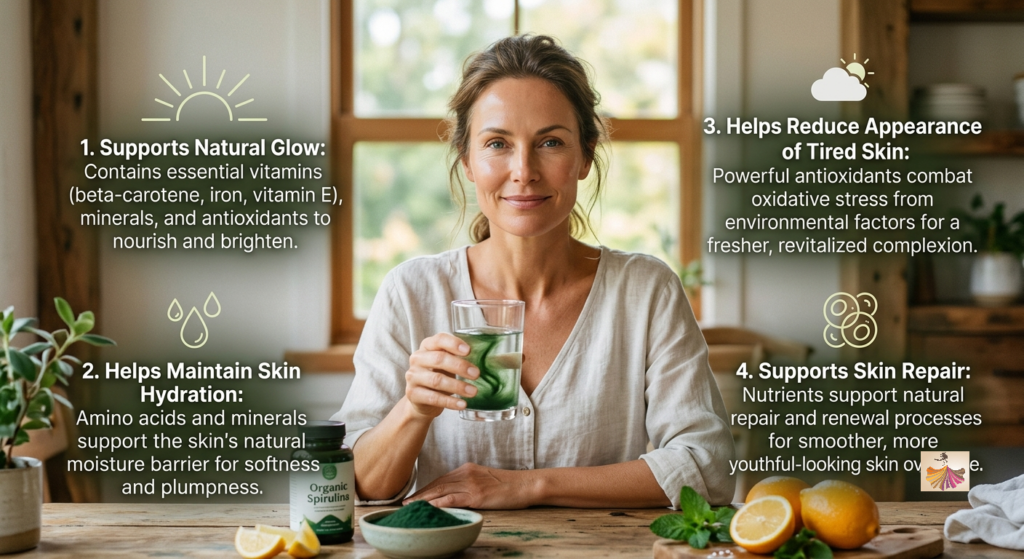
1. Supports Natural Glow
One of its most appreciated benefits is its ability to support a natural glow. Spirulina contains essential vitamins, minerals, and antioxidants, including beta-carotene, iron, and vitamin E, which help nourish the body and provide the nutrients needed for healthy-looking skin. With regular use as part of a balanced diet, many people notice that their skin appears brighter and more vibrant.
2. Helps Maintain Skin Hydration
Another important benefit of spirulina is its potential to help maintain skin hydration. It contains amino acids and minerals that support the skin’s natural moisture barrier, which is essential for keeping the skin soft, smooth, and supple. Proper hydration also helps the skin look plumper and healthier.
3. Helps Reduce the Appearance of Tired Skin
The powerful antioxidants found in spirulina may also reduce the appearance of tired and dull skin. By helping to combat oxidative stress caused by environmental factors, spirulina can contribute to a fresher and more revitalized complexion.
4. Supports Skin Repair
Spirulina contains nutrients that may support the skin’s natural repair and renewal processes. This can help maintain healthy skin function and contribute to a smoother, more youthful appearance over time.
Spirulina for Hair Beauty
Healthy, shiny, and strong hair often begins with proper nutrition, and spirulina is considered one of the most nutrient-dense natural foods that may support hair health. This blue-green algae contains a combination of iron, protein, vitamin A, and essential amino acids, all of which play important roles in maintaining healthy hair and scalp function.
Protein is one of the main building blocks of hair because hair strands are primarily made of a protein called keratin. Spirulina is exceptionally rich in plant-based protein, which may help provide the nutrients needed for stronger and healthier-looking hair. It also contains essential amino acids, which support the body’s natural processes involved in hair growth and repair.
Iron is another important nutrient found in spirulina. Adequate iron levels help support healthy blood circulation, allowing oxygen and nutrients to reach the hair follicles more efficiently. Proper nourishment of the hair follicles is essential for maintaining healthy hair growth.
Vitamin A contributes to the production of natural oils in the scalp, helping keep hair moisturized and reducing dryness. The combination of these nutrients makes spirulina a valuable natural ingredient for promoting healthier, shinier, and more resilient hair while also supporting overall scalp health and vitality.
DIY Spirulina Beauty Remedies at Home
The following methods use spirulina in its natural form without turning it into cosmetic products.
DIY Spirulina Face Mask for Glowing Skin
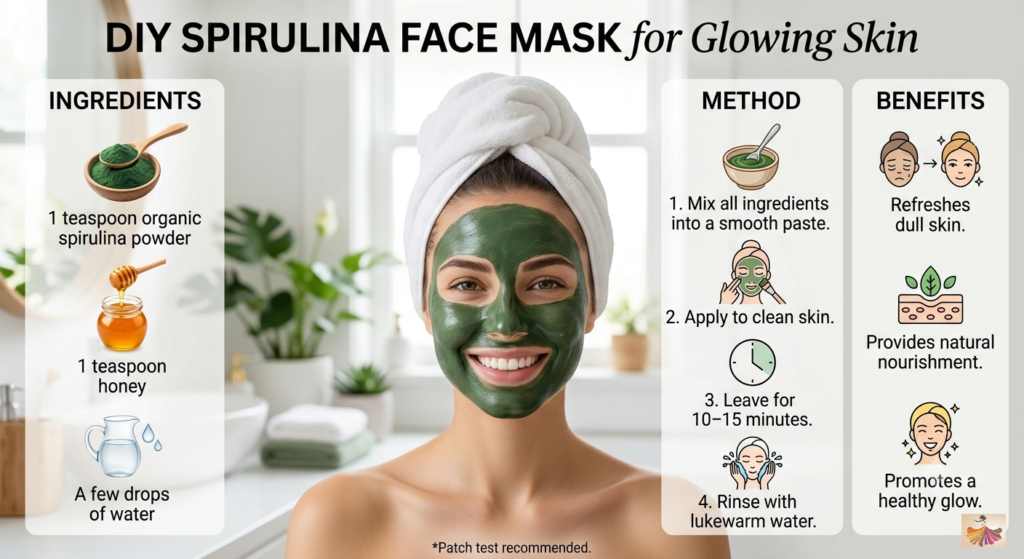
Ingredients
- 1 teaspoon organic spirulina powder
- 1 teaspoon honey
- A few drops of water
Method
- Mix all ingredients into a smooth paste.
- Apply to clean skin.
- Leave for 10–15 minutes.
- Rinse with lukewarm water.
Benefits
- Refreshes dull skin.
- Provides natural nourishment.
- Promotes a healthy glow.
DIY Spirulina and Yogurt Mask
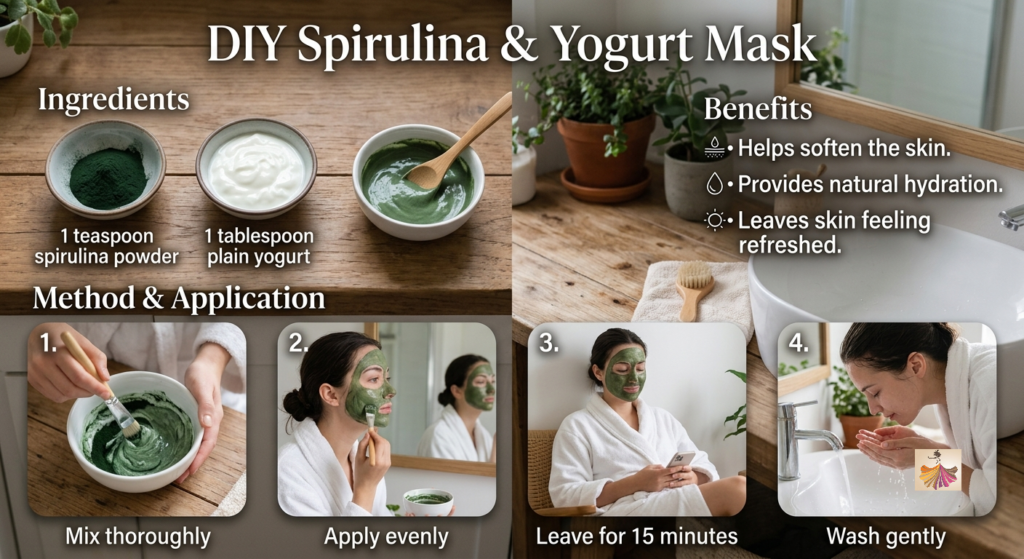
Ingredients
- 1 teaspoon spirulina powder
- 1 tablespoon plain yogurt
Method
- Mix thoroughly.
- Apply evenly on the face.
- Leave for 15 minutes.
- Wash gently.
Benefits
- Helps soften the skin.
- Provides natural hydration.
- Leaves skin feeling refreshed.
DIY Spirulina Hair Mask
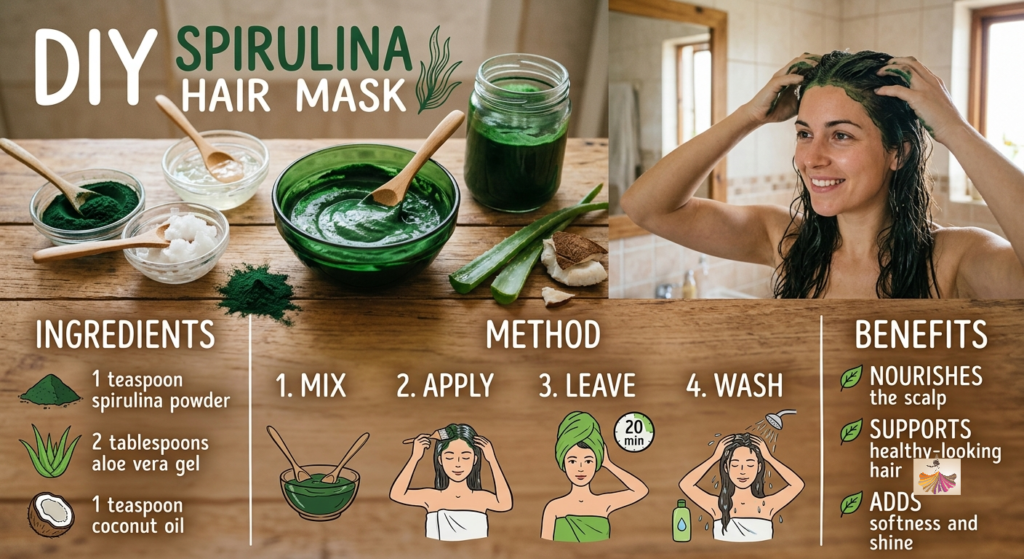
Ingredients
- 1 teaspoon spirulina powder
- 2 tablespoons aloe vera gel
- 1 teaspoon coconut oil
Method
- Mix all ingredients.
- Apply to scalp and hair.
- Leave for 20 minutes.
- Wash with a mild shampoo.
Benefits
- Nourishes the scalp.
- Supports healthy-looking hair.
- Adds softness and shine.
DIY Spirulina Bath Soak
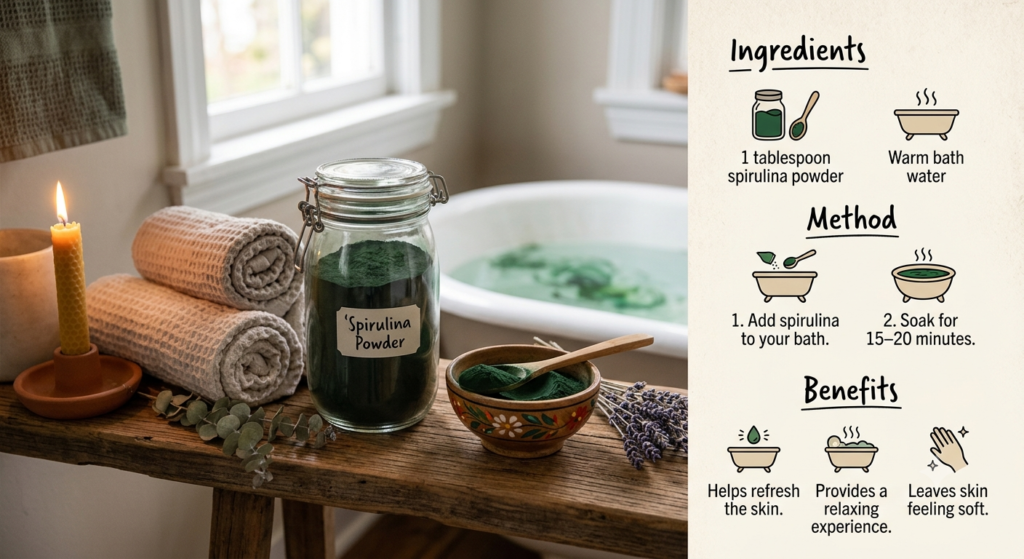
Ingredients
- 1 tablespoon spirulina powder
- Warm bath water
Method
Add spirulina to your bath and soak for 15–20 minutes.
Benefits
- Helps refresh the skin.
- Provides a relaxing experience.
- Leaves skin feeling soft.
DIY Spirulina and Aloe Vera Gel
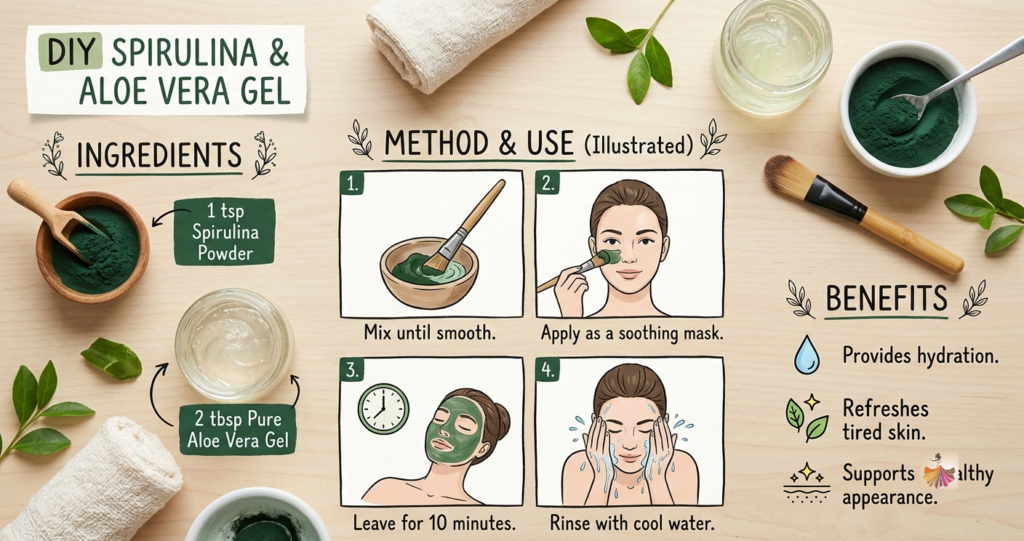
Ingredients
- 1 teaspoon spirulina powder
- 2 tablespoons pure aloe vera gel
Method
- Mix until smooth.
- Apply as a soothing mask.
- Leave for 10 minutes.
- Rinse with cool water.
Benefits
- Provides hydration.
- Refreshes tired skin.
- Supports a healthy appearance.
Can Spirulina Be Consumed for Beauty?
Yes, spirulina can be consumed as part of a healthy and balanced diet, and many people include it in their daily wellness routines because of its impressive nutritional profile. Although spirulina is not a miracle beauty treatment, its rich content of vitamins, minerals, antioxidants, protein, and essential nutrients may indirectly support beauty by improving overall health and well-being.
The condition of the skin and hair is often a reflection of what the body receives through nutrition. Spirulina contains nutrients such as iron, beta-carotene, B vitamins, and amino acids that help support normal body functions. When the body is properly nourished, it may contribute to healthier-looking skin, stronger hair, and improved vitality. Many people consume spirulina in powder, tablet, or capsule form and add it to smoothies, juices, or other foods. Regular consumption, as part of a nutrient-rich diet, may help support the body’s natural processes that are important for maintaining a healthy appearance.
Healthy nutrition can positively influence several aspects of beauty and wellness, including:
- Skin appearance: Proper nutrition may contribute to brighter and healthier-looking skin.
- Hair quality: Essential nutrients help support strong and healthy hair.
- Energy levels: Good nutrition promotes energy and vitality, which can contribute to a fresh and vibrant appearance.
- General well-being: Overall health often reflects in a person’s physical appearance and sense of wellness.
However, spirulina is not suitable for everyone. Individuals with certain medical conditions, autoimmune disorders, or allergies to algae and seafood should consult a healthcare professional before taking spirulina supplements. Pregnant or breastfeeding women and people taking medications should also seek medical advice before adding spirulina to their diet to ensure it is appropriate for their individual health needs.
Choosing Organic Spirulina
When buying spirulina, choose:
- Certified organic products.
- Reputable brands with quality testing.
- Products free from contaminants and heavy metals.
Quality is important because spirulina absorbs substances from its growing environment.
Safety Considerations
Before applying spirulina to the skin:
- Perform a patch test.
- Use clean ingredients.
- Stop use if irritation occurs.
People with algae allergies or certain autoimmune conditions should seek medical advice before using spirulina.
Final Thoughts
Spirulina is much more than a nutritional superfood. Its rich supply of antioxidants, vitamins, minerals, and proteins makes it a valuable natural and organic beauty ingredient. Simple DIY remedies such as face masks, hair masks, and bath soaks allow people to use spirulina directly at home without relying on commercial cosmetic products. As the demand for natural beauty solutions continues to rise in 2026, spirulina remains one of the most promising organic ingredients for supporting healthy skin and beautiful hair naturally.