Retinoids Combination Therapy: The Ultimate Guide to Better Skin Outcomes
Retinoids remain one of the most extensively studied and clinically proven classes of dermatological agents. They are derivatives of vitamin A and are widely used for acne, photoaging, pigmentation disorders, and skin rejuvenation. Modern dermatology increasingly relies on combination therapies rather than single-agent treatments because multiple pathways contribute to most skin conditions. Combination therapies improve efficacy, accelerate visible results, target different mechanisms simultaneously, and often provide superior long-term outcomes compared with monotherapy. Among the most important and evidence-supported combinations are:
- Benzoyl Peroxide + Retinoids for acne
- Retinoids + Hydroquinone for melasma
- Peptides + Retinoids for anti-aging
- Retinoids + Sunscreen for comprehensive skin protection
This article examines each combination in detail, including mechanisms of action, clinical benefits, synergistic effects, and current scientific evidence.
Understanding Retinoids
Retinoids are vitamin A derivatives that regulate cellular growth, differentiation, and skin renewal. Common topical retinoids include:
- Tretinoin
- Adapalene
- Tazarotene
- Retinol
- Retinaldehyde
Retinoids are considered the gold standard in topical anti-aging therapy because they stimulate collagen synthesis, accelerate epidermal turnover, improve pigmentation, and reduce wrinkles. Numerous clinical studies have demonstrated their effectiveness in acne management, photoaging, and hyperpigmentation. Tretinoin remains the most extensively studied topical retinoid with the strongest evidence base for skin rejuvenation and pigmentation improvement.
Key actions of retinoids include:
- Increased cell turnover
- Reduction of follicular plugging
- Stimulation of collagen production
- Regulation of melanocyte activity
- Improvement in skin texture
- Reduction in fine lines and wrinkles
Because retinoids affect multiple biological pathways, they serve as an ideal foundation for combination therapy.
1. Retinoids + Benzoyl Peroxide: The Gold Standard Acne Combination
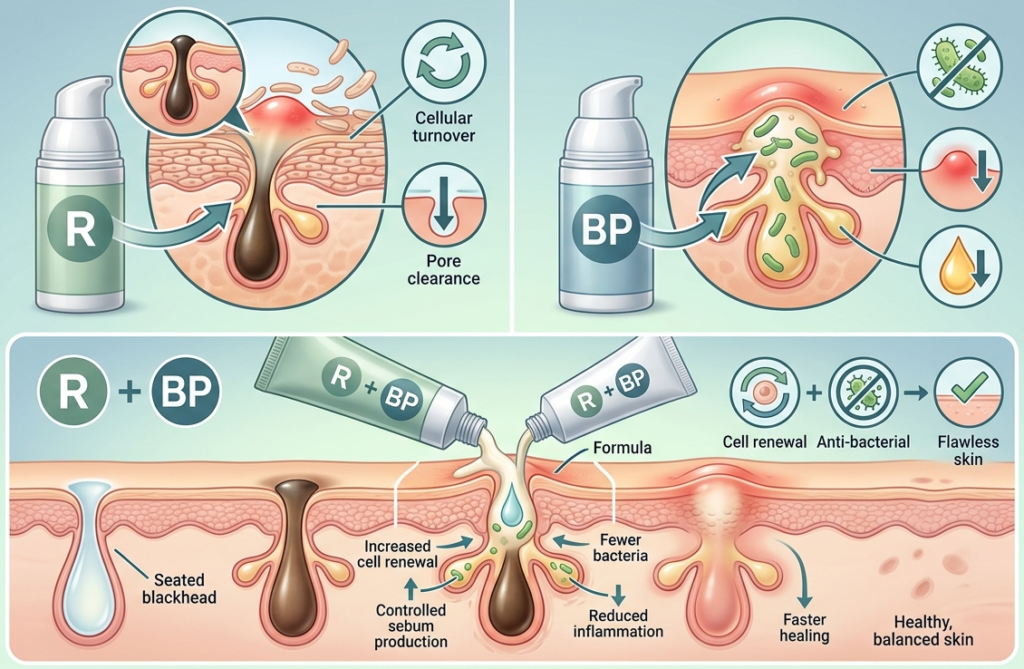
Why Acne Requires Combination Therapy
Acne vulgaris develops through several mechanisms:
- Excess sebum production
- Follicular hyper keratinization
- Cutibacterium acnes proliferation
- Inflammation
No single medication addresses all four factors effectively. This is why combination therapy has become the standard of care.
How Retinoids Work in Acne
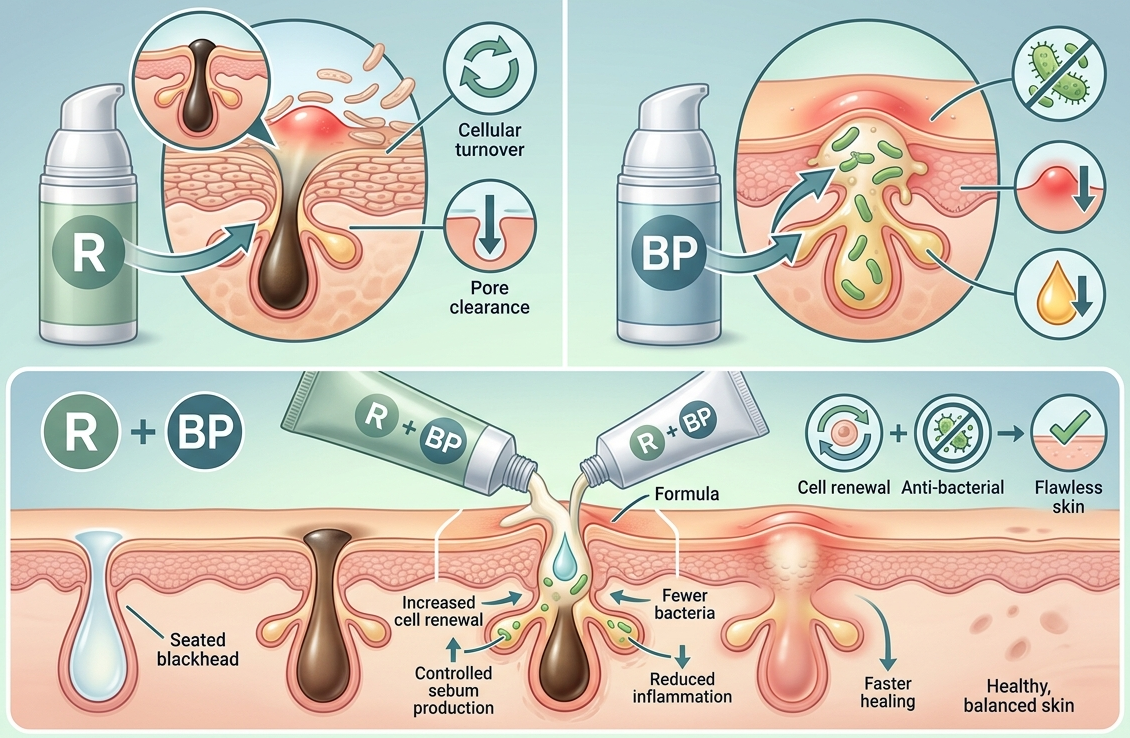
Retinoids normalize keratinocyte turnover.
They:
- Prevent clogged pores
- Reduce microcomedones
- Improve skin cell shedding
- Enhance penetration of other acne medications
Adapalene is particularly valuable because of its excellent stability and tolerability.
How Benzoyl Peroxide Works
Benzoyl peroxide (BPO) is one of the most effective topical antimicrobial agents.
Its benefits include:
- Rapid reduction of C. acnes bacteria
- Anti-inflammatory activity
- Reduction of antibiotic resistance
- Decreased pustules and inflammatory lesions
Unlike antibiotics, benzoyl peroxide does not promote bacterial resistance.
Why the Combination Works Better
The synergy occurs because each ingredient targets different acne pathways.
Retinoids Target
- Comedones
- Cell turnover abnormalities
- Follicular obstruction
Benzoyl Peroxide Targets
- Bacterial proliferation
- Inflammation
- Redness
Together they address nearly every major cause of acne.
Clinical Evidence of Enhanced Results
Among combination products, adapalene 0.1% plus benzoyl peroxide 2.5% is one of the most extensively studied acne treatments.
Clinical trials have consistently demonstrated:
- Faster lesion reduction
- Greater improvement in inflammatory acne
- Better clearance rates than either ingredient alone
- Reduced risk of future breakouts
Studies evaluating adapalene/BPO combinations have reported significantly greater reductions in total lesion counts compared with monotherapy, often showing improvements within the first 1–4 weeks and continuing through 12 weeks. Dermatology guidelines worldwide recognize this combination as a first-line treatment for mild-to-moderate acne.
Benefits of Retinoid + Benzoyl Peroxide Therapy
Faster Results
Patients typically notice earlier improvement than with retinoid monotherapy.
Improved Acne Clearance
Both inflammatory and non-inflammatory lesions improve simultaneously.
Prevention of New Lesions
Retinoids stop future comedone formation.
Reduced Antibiotic Dependence
BPO reduces the need for prolonged antibiotic use.
Long-Term Disease Control
The combination improves maintenance outcomes after active treatment.
Best Candidates
This combination is ideal for:
- Mild acne
- Moderate acne
- Comedonal acne
- Inflammatory acne
- Teenagers
- Adults with persistent acne
2. Retinoids + Hydroquinone: Advanced Melasma Management
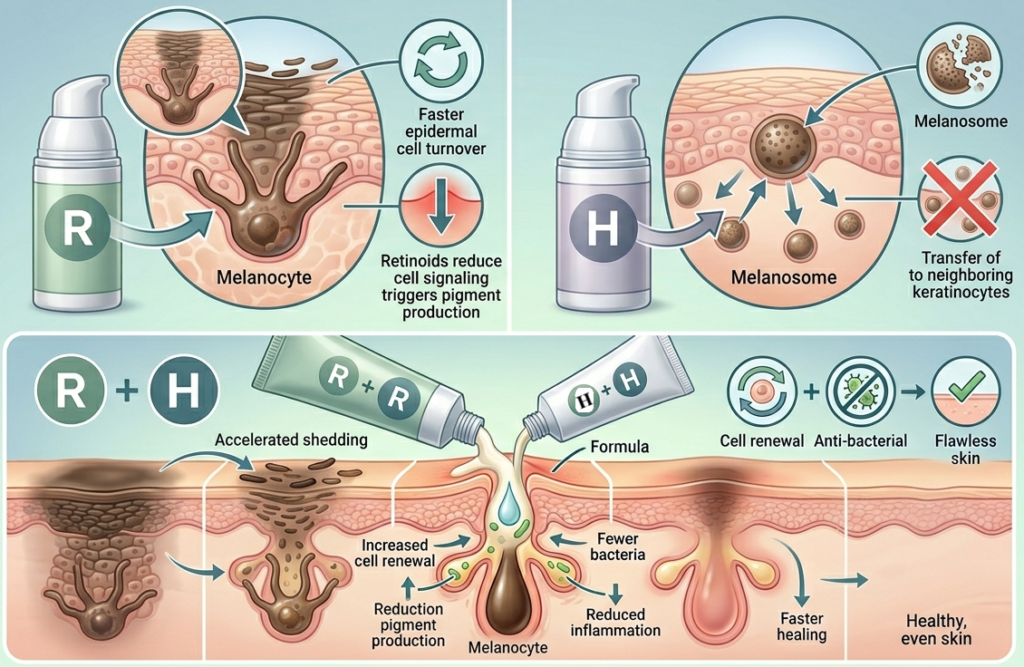
Understanding Melasma
Melasma is a chronic pigmentary disorder characterized by brown or gray-brown facial patches.
Common triggers include:
- Ultraviolet radiation
- Hormonal fluctuations
- Pregnancy
- Oral contraceptives
- Genetics
- Visible light exposure
Melasma remains one of the most difficult pigmentation disorders to treat.
How Hydroquinone Works
Hydroquinone is considered the gold standard depigmenting agent. It works by:
- Inhibiting tyrosinase activity
- Reducing melanin production
- Limiting melanocyte activity
Hydroquinone directly suppresses pigment formation at its source.
How Retinoids Improve Pigmentation
Retinoids contribute through several mechanisms.
They:
- Accelerate epidermal turnover
- Promote elimination of pigmented keratinocytes
- Improve hydroquinone penetration
- Enhance dispersion of melanin granules
These effects complement hydroquinone perfectly.
Why the Combination Is So Effective
Hydroquinone reduces melanin production. Retinoids accelerate removal of existing pigment. The result is a dual-action approach.
Hydroquinone
Stops pigment formation.
Retinoids
Remove accumulated pigment faster. This creates a synergistic depigmenting effect.
Evidence Supporting Combination Therapy
Dermatologists have relied on hydroquinone-retinoid combinations for decades. One of the most successful examples is the well-known triple-combination therapy consisting of:
- Hydroquinone
- Tretinoin
- Corticosteroid
This protocol has consistently demonstrated superior efficacy compared with hydroquinone alone. Research shows that adding tretinoin improves penetration, increases epidermal turnover, and accelerates pigment clearance. These mechanisms help explain why combination regimens generally outperform monotherapy in melasma management.
How Much Better Is the Combination?
Clinical studies evaluating hydroquinone-based combination regimens frequently show:
- Faster onset of pigment reduction
- Greater melasma severity score improvement
- Higher patient satisfaction
- Better overall clearance rates
Many patients begin observing visible improvement within 8–12 weeks when used consistently alongside strict sun protection.
Additional Advantages
Better Hydroquinone Penetration
Retinoids improve absorption through controlled epidermal remodeling.
Reduced Pigment Recurrence
Maintenance retinoid use may help prolong treatment benefits.
Improved Skin Texture
Patients often experience smoother skin and enhanced radiance.
Enhanced Uniformity
Combination therapy addresses uneven pigmentation more comprehensively.
Limitations
Potential concerns include:
- Irritation
- Dryness
- Peeling
- Post-inflammatory hyperpigmentation in sensitive skin
Dermatologist supervision is recommended, particularly when using prescription-strength hydroquinone.
3. Retinoids + Peptides: The Next Generation Anti-Aging Combination
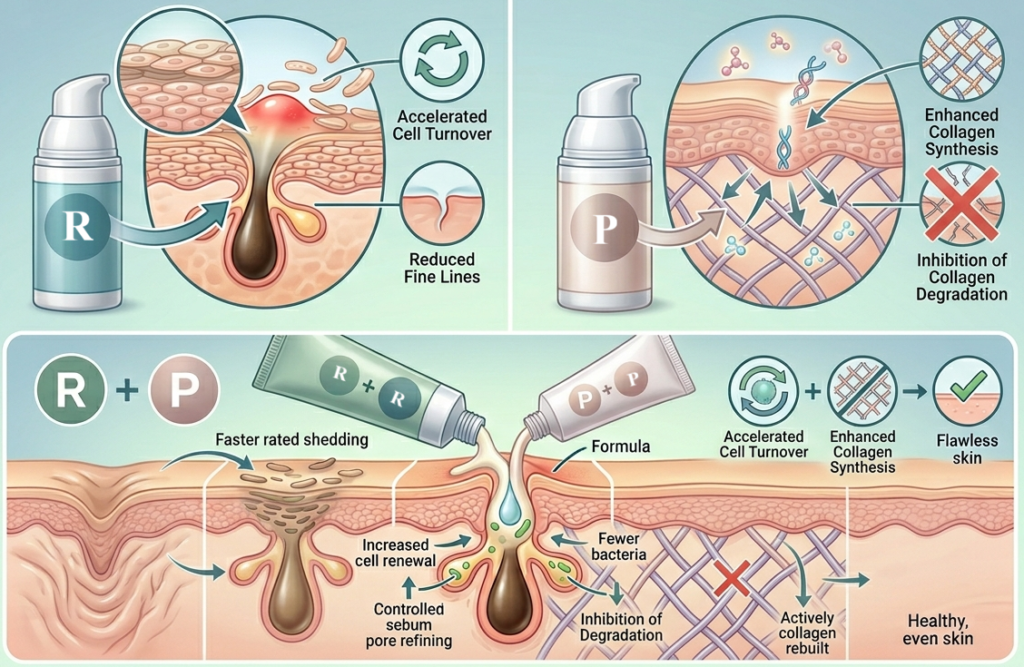
Skin Aging Is Multifactorial
Skin aging involves:
- Collagen loss
- Elastin degradation
- Reduced hydration
- Oxidative stress
- Slower cellular renewal
Targeting only one mechanism limits outcomes.
How Retinoids Fight Aging
Retinoids remain the benchmark anti-aging ingredient.
They:
- Stimulate collagen synthesis
- Increase epidermal thickness
- Improve cell turnover
- Reduce wrinkles
- Improve pigmentation
Tretinoin is widely regarded as the gold standard topical anti-aging therapy due to decades of clinical evidence.
How Peptides Work
Peptides are short chains of amino acids. They act as signaling molecules that communicate with skin cells.
Different peptides can:
- Stimulate collagen production
- Improve elastin synthesis
- Enhance wound repair
- Improve hydration
- Support skin barrier function
Common cosmetic peptides include:
- Palmitoyl pentapeptide-4
- Matrixyl peptides
- Copper peptides
- Acetyl hexapeptide-8
Peptides help strengthen the extracellular matrix and improve skin resilience.
Why Retinoids and Peptides Complement Each Other
Retinoids initiate collagen remodeling. Peptides provide additional signaling support. Together they target multiple anti-aging pathways.
Retinoids
Stimulate new collagen formation.
Peptides
Support collagen maturation and maintenance. This complementary activity can improve overall skin rejuvenation.
Synergistic Anti-Aging Benefits
Enhanced Collagen Production
Both ingredients support collagen pathways through different mechanisms.
Better Wrinkle Reduction
Fine lines and deeper wrinkles may improve more effectively.
Improved Elasticity
Peptides support structural proteins while retinoids remodel the dermis.
Stronger Skin Barrier
Many peptides help offset retinoid-associated irritation.
Improved Tolerability
Barrier-supportive peptides may reduce dryness and sensitivity.
Scientific Evidence
The strongest clinical evidence in anti-aging still belongs to retinoids. Research demonstrates that retinoids increase collagen synthesis and improve wrinkle appearance. Peptides have also shown promise in stimulating collagen and improving skin firmness. Experts increasingly view the combination as complementary rather than competitive because each ingredient works through distinct biological pathways.
Who Benefits Most?
Ideal candidates include:
- Individuals over 30
- Photoaged skin
- Fine wrinkles
- Early signs of aging
- Loss of elasticity
- Dull skin texture
Formulation Considerations
The most effective formulations typically include:
- Retinol or tretinoin
- Signal peptides
- Moisturizers
- Antioxidants
This approach maximizes efficacy while minimizing irritation.
4. Retinoids + Sunscreen: The Mandatory Combination
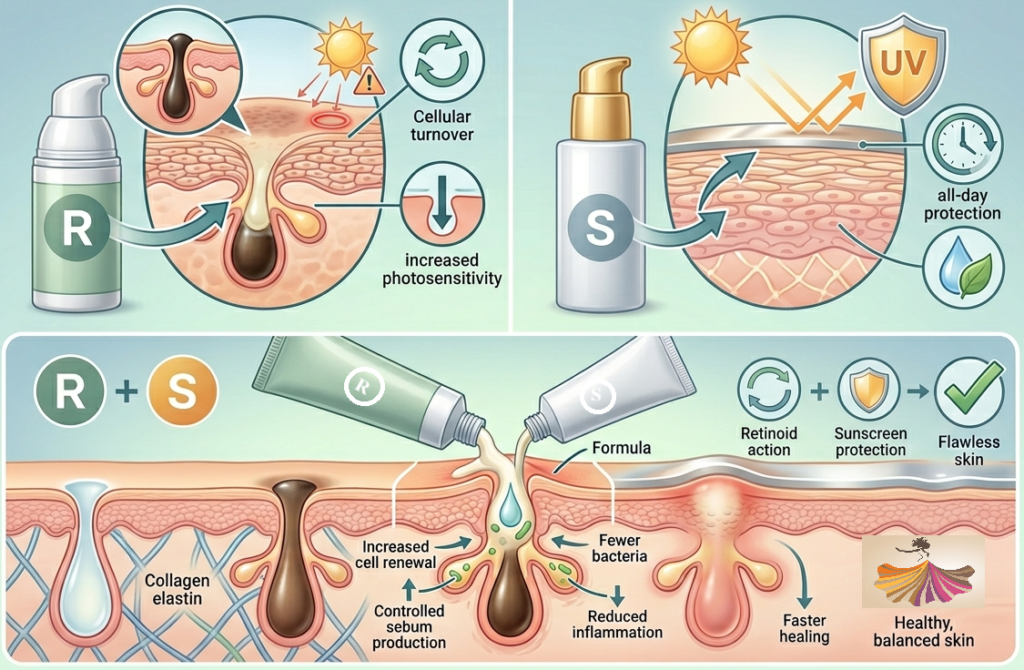
Why Sunscreen Is Non-Negotiable
No retinoid regimen is complete without sunscreen.
This is not optional.
It is essential.
Retinoids increase skin renewal and may increase sensitivity to environmental damage. Simultaneously, ultraviolet radiation remains the primary external cause of photoaging and pigmentation disorders.
The Role of Sunscreen
Broad-spectrum sunscreen protects against:
- UVA radiation
- UVB radiation
- Photoaging
- Hyperpigmentation
- DNA damage
Daily sunscreen use prevents further collagen breakdown and pigmentation worsening.
Why Retinoids Need Sunscreen Support
Retinoids repair existing damage. Sunscreens prevent new damage. This relationship creates one of the most important synergies in dermatology.
Retinoids
Correct damage.
Sunscreens
Prevent additional damage. Together they provide both treatment and prevention.
Impact on Anti-Aging Outcomes
Research consistently identifies photo protection as the foundation of anti-aging skincare. Without sunscreen:
- UV exposure degrades collagen
- Wrinkles progress faster
- Pigmentation recurs
- Retinoid benefits diminish
With sunscreen:
- Collagen preservation improves
- Pigmentation control improves
- Treatment results last longer
Experts routinely recommend combining topical retinoids with regular sunscreen use for optimal anti-aging outcomes.
Impact on Melasma
Melasma has a strong relationship with ultraviolet and visible light exposure. Even highly effective hydroquinone-retinoid protocols can fail if photo protection is inadequate. Daily sunscreen use:
- Reduces recurrence
- Improves treatment durability
- Prevents pigment reactivation
Strict photo protection is considered essential in melasma management.
Impact on Acne
Many acne patients overlook sunscreen. However, sunscreen can:
- Prevent post-inflammatory hyperpigmentation
- Reduce UV-induced inflammation
- Improve overall skin recovery
Modern non-comedogenic formulations are well tolerated in acne-prone skin.
Best Sunscreen Practices
For patients using retinoids:
- SPF 30 or higher
- Broad-spectrum protection
- Daily application
- Reapplication every two hours outdoors
- Consistent year-round use
These habits maximize treatment success.
Comparative Summary of Retinoid Combination Therapies
| Combination | Primary Condition | Main Benefit | Mechanism of Synergy |
| Retinoids + Benzoyl Peroxide | Acne | Faster acne clearance | Targets both comedones and bacteria |
| Retinoids + Hydroquinone | Melasma | Enhanced pigment reduction | Reduces melanin production and accelerates pigment removal |
| Retinoids + Peptides | Aging Skin | Improved collagen remodeling | Dual stimulation of structural proteins |
| Retinoids + Sunscreen | Universal Support | Long-term protection | Repairs damage while preventing new damage |
Conclusion
Combination therapy has transformed modern dermatology. Retinoids remain the central ingredient because of their ability to regulate cell turnover, stimulate collagen synthesis, improve pigmentation, and normalize skin function. However, their true potential is realized when paired with complementary agents. Benzoyl peroxide with retinoids represent one of the most effective evidence-based treatments for acne. Retinoids plus hydroquinone remain a cornerstone strategy for melasma and stubborn hyperpigmentation. Retinoids plus peptides offer a sophisticated anti-aging approach that supports collagen remodeling and skin resilience. Finally, retinoids plus sunscreen form the essential foundation for every successful skincare regimen.
Among all combinations, sunscreen remains the most important adjunct. Without daily photo protection, many of the gains achieved through retinoid therapy can be diminished by ongoing ultraviolet damage. As dermatological science continues to evolve, combination therapies will remain the preferred strategy because they address multiple biological pathways simultaneously, resulting in faster, more durable, and clinically superior outcomes.