The Ultimate Guide to the Skin Microbiome
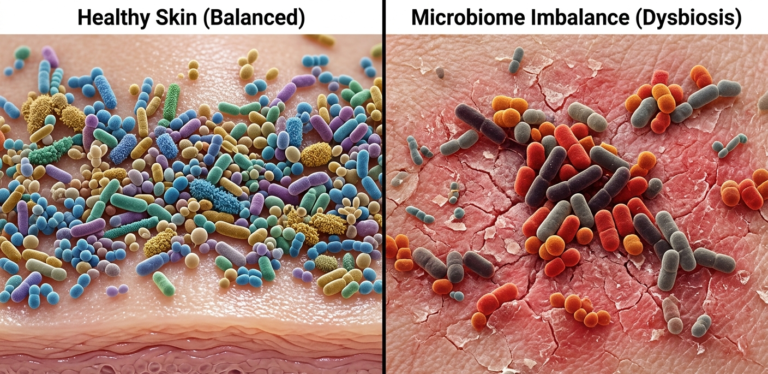
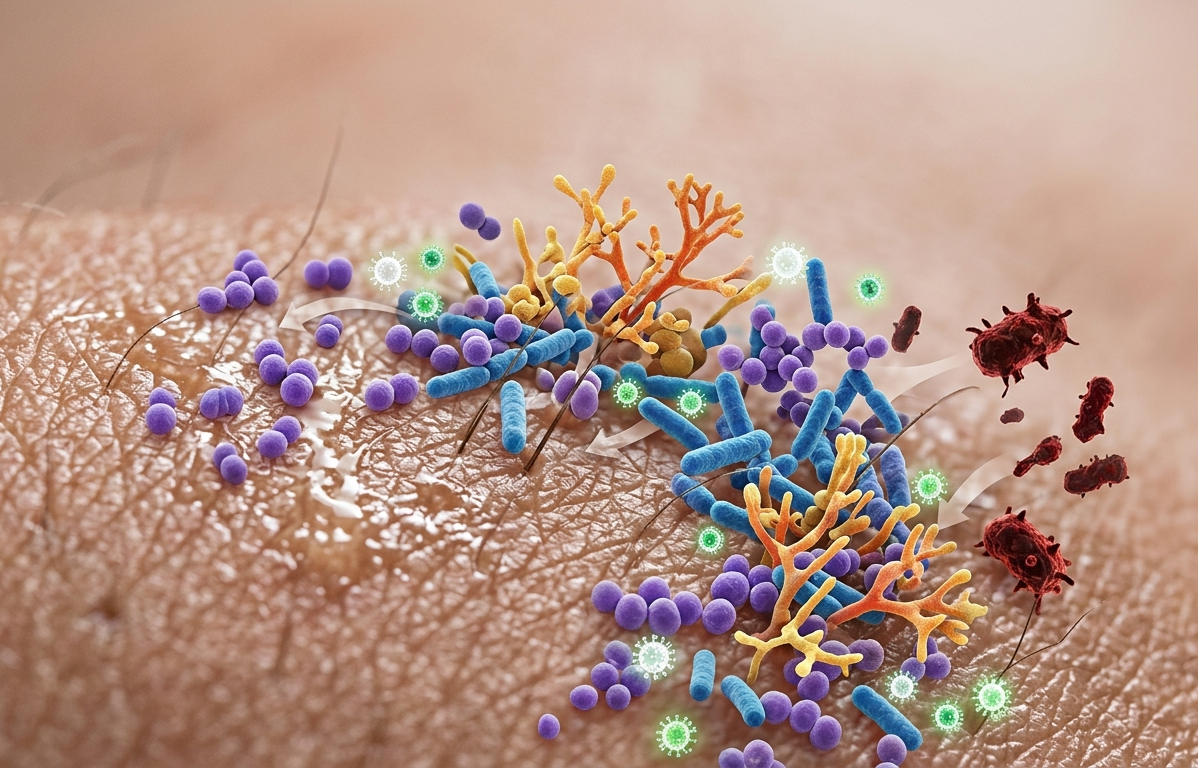
The skin is not just a protective outer layer. It is a living biological system. It interacts constantly with the environment. This includes air, bacteria, pollution, and skincare products. Modern dermatology has discovered that skin health depends heavily on invisible microorganisms. These microorganisms form a stable ecosystem. This ecosystem is called the skin microbiome. It plays a major role in keeping skin balanced and healthy.
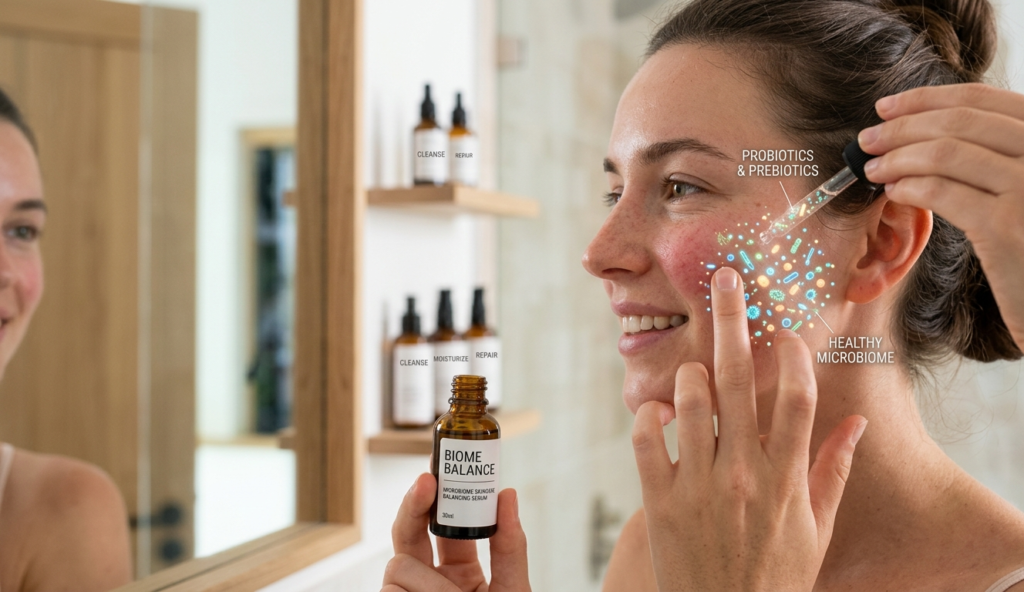
Instead of only treating surface issues like dryness or acne, skincare science is now focusing on internal balance. This shift has led to the rise of microbiome-based skincare approaches. These approaches focus on supporting the skin’s natural defense system rather than stripping it.
Definition of Skin Microbiome
The skin microbiome refers to all microorganisms living on the skin surface. These include bacteria, fungi, viruses, and microscopic organisms. They live in harmony with the human body when balanced. Each area of the skin has a different microbial composition. The face, scalp, and hands all have unique microbial environments. These organisms feed on sweat, natural oils, and skin cells.
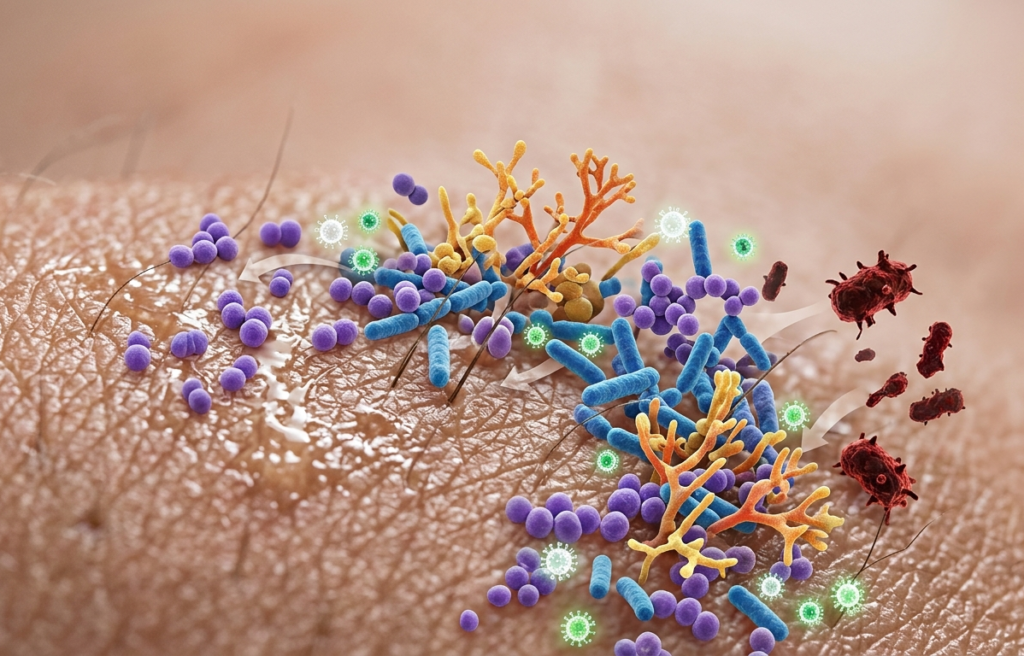
A healthy microbiome acts like a biological shield. It prevents harmful pathogens from entering the skin. It also competes with bad bacteria for space and nutrients. This helps reduce infections and inflammation. The microbiome also communicates with the immune system. It trains the skin to respond correctly to external threats. When balanced, it supports smooth, calm, and resilient skin.
Importance of Microbiome in Skin Health
The skin microbiome is essential for maintaining barrier strength. It protects against environmental damage such as UV exposure, pollution, and toxins. It also helps regulate the skin’s natural acidity level. A balanced microbiome supports hydration retention. It prevents excessive water loss from the skin. This helps maintain softness and elasticity.

It also plays a major role in controlling inflammation. When the microbiome is stable, the skin reacts less aggressively to triggers. This reduces redness, acne flare-ups, and sensitivity. However, disruption can lead to skin problems. Over-cleansing, harsh chemicals, and antibiotics can damage microbial balance. This can weaken the skin barrier and increase irritation. A healthy microbiome is therefore directly linked to overall skin wellness. It is not just a supporting factor. It is a core foundation of skin health.
Evolution of Skincare: Traditional vs Microbiome-Focused
Traditional skincare focused mainly on surface-level treatment. The goal was to remove oil, dirt, and dead skin cells. Strong cleansers and exfoliants were widely used. While this approach provided short-term cleanliness, it often caused long-term damage. It stripped away natural oils and beneficial bacteria. This weakened the skin barrier over time. As research advanced, dermatologists discovered the importance of microbial balance. They realized that not all bacteria are harmful. Many are essential for healthy skin function.
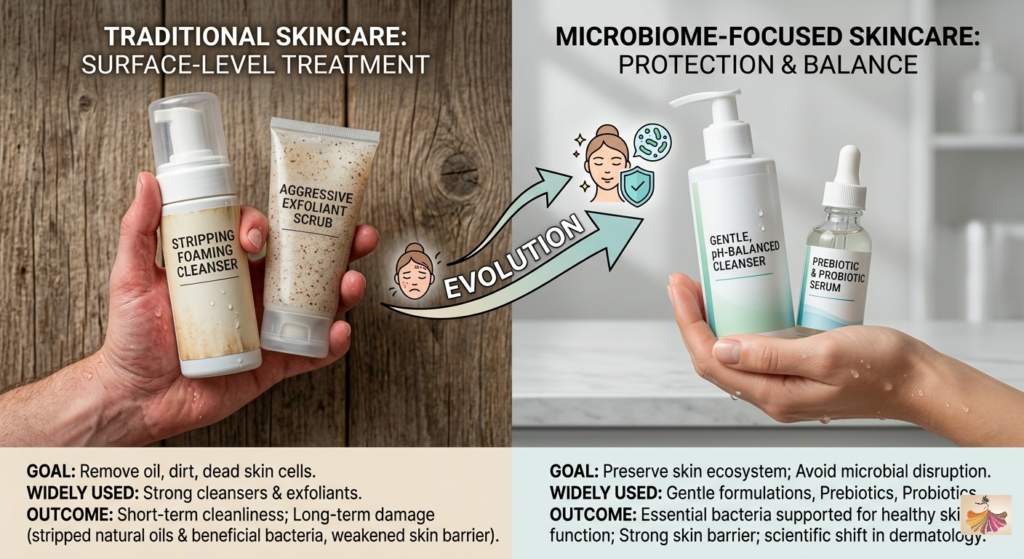
This led to a new skincare philosophy. Instead of aggressive cleansing, the focus shifted to protection and balance. Gentle formulations became more important. Modern skincare now aims to preserve the skin ecosystem. It avoids unnecessary disruption of microbial life. This evolution marks a major scientific shift in dermatology.
Overview of Microbiome-Friendly Skincare
Microbiome-friendly skincare is designed to support natural skin flora. It avoids ingredients that disrupt microbial balance. Harsh sulfates, strong alcohols, and aggressive exfoliants are minimized. Instead, these products use gentle cleansing agents. They also include ingredients that feed beneficial bacteria. These are known as prebiotics, probiotics, and post-biotics.

Prebiotics act as food for good bacteria. Probiotics introduce beneficial microorganisms. Post-biotics are byproducts that support skin barrier function. These products help restore balance in damaged skin. They reduce inflammation and improve hydration. They also strengthen the skin’s natural defense system. Over time, microbiome-friendly skincare helps create more stable and resilient skin. It supports long-term improvement instead of temporary results.
Conclusion
The understanding of skin has evolved significantly. It is no longer viewed as a simple protective layer. It is now recognized as a complex living ecosystem. The skin microbiome plays a central role in this ecosystem. It influences hydration, immunity, and overall skin appearance. Maintaining its balance is essential for long-term skin health. Skincare science has moved from aggressive treatment to gentle support. The focus is now on preservation rather than destruction. This shift represents a major advancement in dermatology. It combines biology, chemistry, and skincare innovation. It also reflects a more sustainable approach to beauty and skin health.
FAQ’s
Discover More about Skincare from Styleminers
________________________________________________________________________________________________________________
Microbiome Skincare: Your Guide to Better Skin Products
Microbiome Skincare Ingredients You Need for Better Skin Health
Skin Microbiome Imbalance: Important Things You Need to Know
Skin Microbiome: Complete Concept of the Skin Ecosystem
Exploring Skin Microbiome Composition for Better Skincare Results
Moisturizer for Day & Night: How to Choose the Right Option
Exfoliate Your Skin the Right Way- Ideal Frequency Explained
Use Sunscreen Daily: Why It’s More Important Than You Think
Are Natural or Organic Skincare Products Better for My Skin?