Microbiome Skincare: Your Guide to Better Skin Products
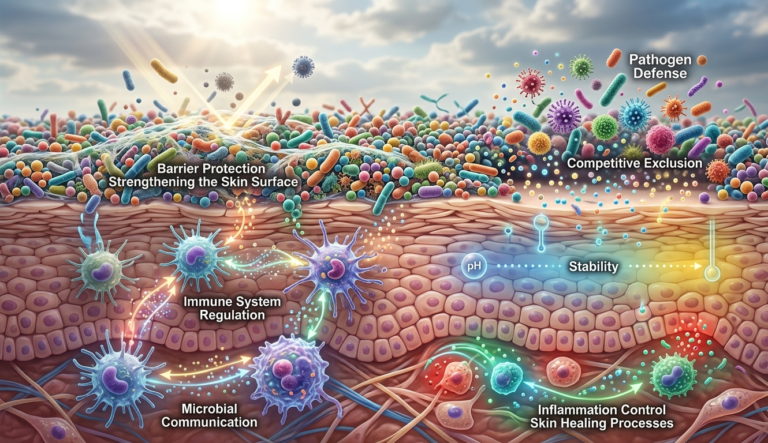
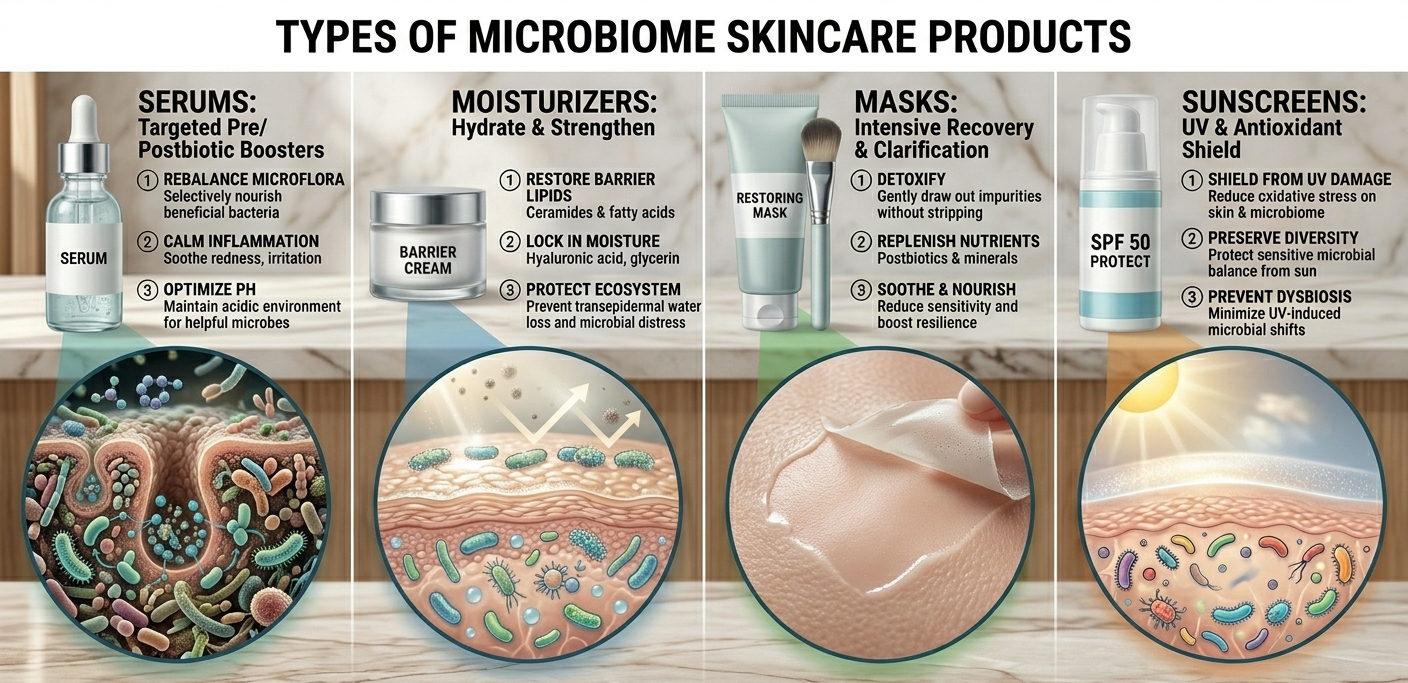
Microbiome skincare focuses on protecting and restoring the natural balance of microorganisms on the skin. This balance is essential for a strong skin barrier, proper hydration, and reduced inflammation. Modern skincare products are now designed to support this ecosystem instead of disrupting it. Each product type plays a unique role in maintaining microbiome health. From cleansing to sun protection, every step in a routine can either support or harm the skin’s microbial balance.
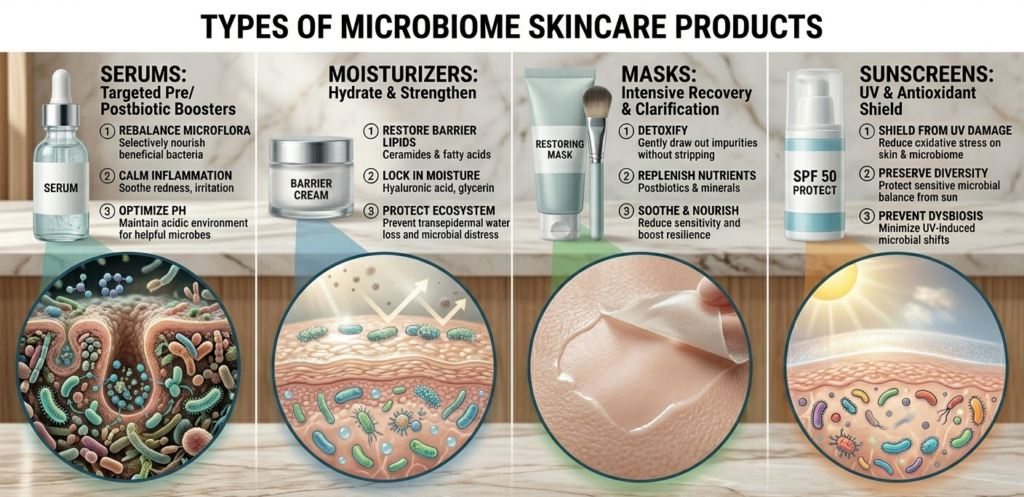
Understanding the different types of microbiome skincare products helps in building an effective and gentle routine. The key categories include cleansers, toners and essences, serums, moisturizers, masks, and sunscreens. Each of these works differently but contributes to overall skin health.
Cleansers (Gentle, Low pH)
Cleansers are the foundation of any skincare routine. Their main function is to remove dirt, oil, makeup, and environmental pollutants from the skin. However, traditional cleansers can be too harsh. They often strip away natural oils and beneficial bacteria. This can disrupt the microbiome and weaken the skin barrier. Microbiome-friendly cleansers are designed to be gentle and maintain a low pH level. The natural pH of the skin is slightly acidic, usually around 4.5 to 5.5. This acidity helps beneficial bacteria thrive while keeping harmful microbes in check. Low pH cleansers support this balance instead of disturbing it.
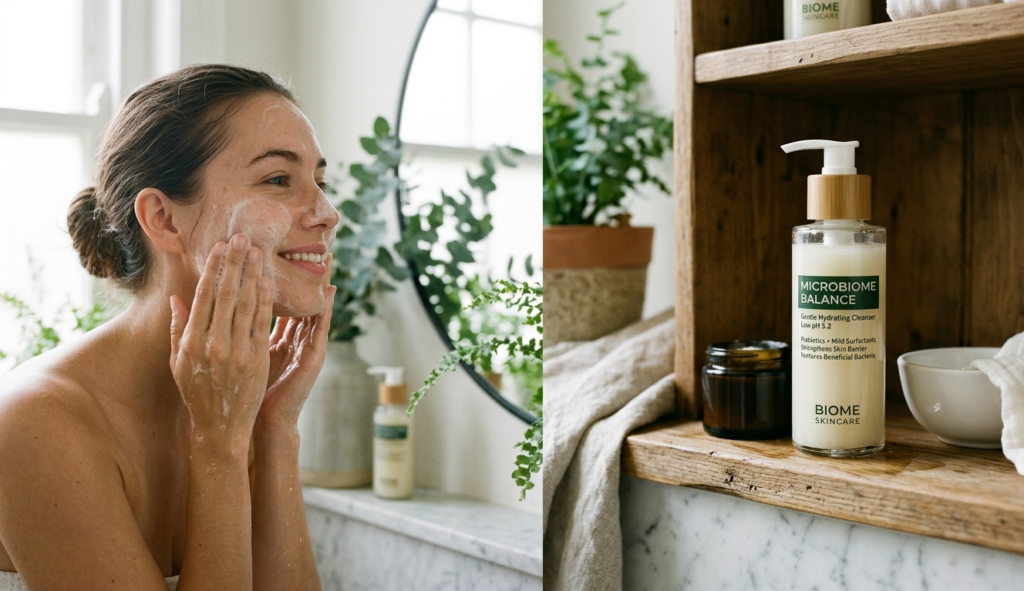
These cleansers often contain mild surfactants that clean the skin without causing damage. Many also include prebiotic ingredients that nourish beneficial bacteria. This ensures that cleansing does not lead to dryness or irritation. Using a gentle cleanser twice a day is usually enough. Over-cleansing should be avoided, as it can lead to microbiome disruption. A balanced cleansing routine helps maintain hydration and prepares the skin for the next steps.
Toners and Essences
Toners and essences are lightweight liquid products applied after cleansing. They play an important role in restoring hydration and balancing the skin. In microbiome skincare, these products support microbial health and improve the skin environment. Toners help remove any remaining impurities after cleansing. They also rebalance the skin’s pH level. A balanced pH is crucial for maintaining a healthy microbiome. Many modern toners include soothing and hydrating ingredients that reduce irritation.

Essences are similar to toners but are more concentrated. They focus on delivering active ingredients deeper into the skin. Microbiome-friendly essences often contain fermented ingredients, probiotics, or postbiotics. These compounds help strengthen the skin barrier and support beneficial bacteria. Regular use of toners and essences improves skin texture and hydration. They also enhance the absorption of serums and moisturizers applied afterward. This step is especially important for people with sensitive or dehydrated skin.
Serums
Serums are highly concentrated treatments designed to target specific skin concerns. They have a lightweight texture that allows active ingredients to penetrate deeply into the skin. In microbiome skincare, serums are formulated to repair and protect the skin barrier. Microbiome-focused serums often contain prebiotics, probiotics, or postbiotics. These ingredients help restore balance and reduce inflammation. They also support the growth of beneficial bacteria while limiting harmful ones.
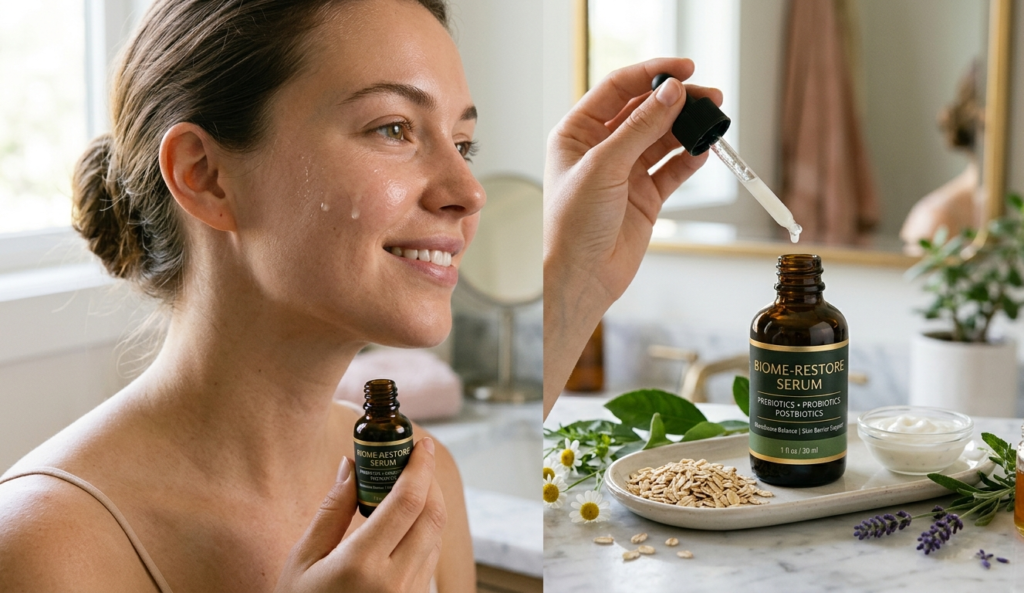
Serums can address various issues such as acne, redness, dryness, and sensitivity. For example, a serum with probiotic extracts can help calm irritated skin. A serum with prebiotics can improve microbial diversity and strengthen the skin’s natural defenses. Because serums are potent, they require only a small amount. They are usually applied after toners or essences and before moisturizers. Consistent use leads to visible improvements in skin health and resilience.
Moisturizers
Moisturizers are essential for maintaining hydration and protecting the skin barrier. They create a protective layer that locks in moisture and prevents water loss. In microbiome skincare, moisturizers also play a key role in supporting microbial balance. Microbiome-friendly moisturizers often include ingredients that nourish beneficial bacteria. These may include prebiotics, ceramides, and fatty acids. Together, they help strengthen the skin barrier and maintain hydration.
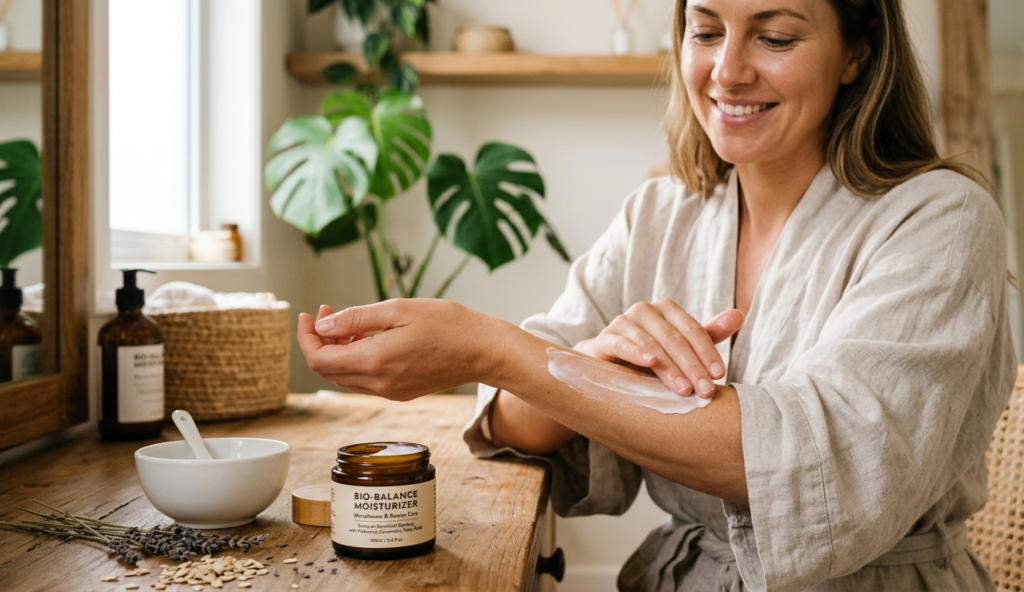
A strong skin barrier is essential for preventing irritation and infection. When the barrier is damaged, harmful microbes can penetrate the skin more easily. This leads to inflammation and sensitivity. Moisturizers also help soothe the skin and reduce redness. They are suitable for all skin types, including oily and acne-prone skin. Choosing the right moisturizer ensures that the skin remains balanced, hydrated, and protected throughout the day.
Masks
Masks are intensive treatments used once or twice a week. They provide deep nourishment and targeted care for the skin. In microbiome skincare, masks are designed to restore balance and improve overall skin health. There are different types of masks, including clay masks, sheet masks, and cream masks. Microbiome-friendly masks often contain soothing and hydrating ingredients. They may also include prebiotics, probiotics, or fermented extracts.
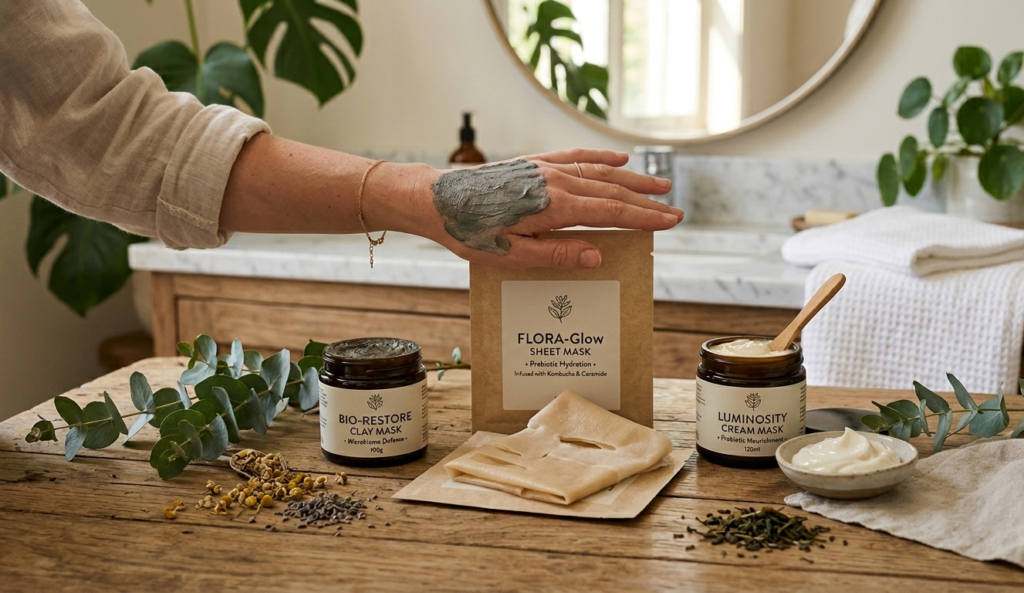
Masks help deliver active ingredients more effectively. They create a temporary barrier that allows the skin to absorb nutrients deeply. This makes them ideal for repairing damage and boosting hydration. Using masks regularly can improve skin texture and brightness. They also help calm irritated skin and support the microbiome. However, overuse should be avoided, especially with exfoliating masks, as it can disrupt the skin barrier.
Sunscreens
Sunscreen is one of the most important steps in any skincare routine. It protects the skin from harmful ultraviolet (UV) radiation. UV exposure can damage the skin barrier and disrupt the microbiome. Microbiome-friendly sunscreens provide protection without causing irritation. They often include soothing and hydrating ingredients that support the skin barrier. Some formulations also contain antioxidants to reduce oxidative stress.
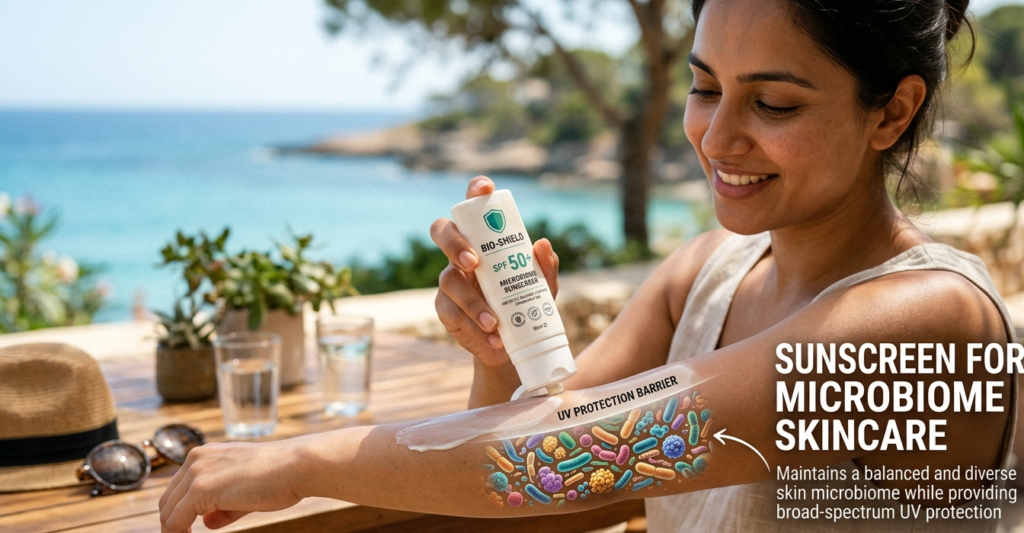
There are two main types of sunscreens: physical (mineral) and chemical. Mineral sunscreens use ingredients like zinc oxide to reflect UV rays. They are generally gentler and more suitable for sensitive skin. Regular use of sunscreen helps prevent premature aging, pigmentation, and inflammation. It also protects the skin microbiome from environmental damage. Applying sunscreen daily is essential for maintaining healthy and resilient skin.
Conclusion
Microbiome skincare products are designed to work in harmony with the skin’s natural ecosystem. Each product type plays a specific role in maintaining balance and improving skin health. Gentle cleansers protect beneficial bacteria, toners and essences restore hydration, serums deliver targeted treatment, moisturizers strengthen the barrier, masks provide deep nourishment, and sunscreens protect against environmental damage. By choosing microbiome-friendly products and using them consistently, it is possible to support the skin’s natural defenses. This leads to healthier, more balanced, and more resilient skin over time.
FAQ’s
More Stories To Know About Microbiome Skincare From Styleminers
________________________________________________________________________________________________
Exploring Skin Microbiome Composition for Better Skincare Results
The Ultimate Guide to the Skin Microbiome
Skin Microbiome: Complete Concept of the Skin Ecosystem
Skin Microbiome Imbalance: Important Things You Need to Know
Microbiome Skincare Ingredients You Need for Better Skin Health