Determine Your Skin Type in Just One Minute
Knowing your skin type is critical for implementing an efficient basic skincare routine. It allows you to select the appropriate items and avoid irritation. But how can you determine your skin type? Let’s look at each stage in detail.

Why Is Knowing Your Skin Type Important?
To develop an effective basic skincare routine, you must first understand your skin type. Different skin types have distinct requirements and challenges. Using the wrong items might intensify skin problems. For example, heavier lotions and creams may clog pores on oily skin. Similarly, powerful exfoliants might irritate delicate skin. Understanding your skin type allows you to select appropriate products. It also improves the efficacy of your regular skincare routine.
Step 1: The Bare-Faced Test
- The bare-faced test is a simple way to determine your skin type. It requires no special tools or products.
- The first step is to clean your face with a moderate cleanser. Then dry your skin using a towel. Do not apply any product afterward.
- Wait for about an hour. During this time, avoid touching your face. This restores your skin to its original form.
- After an hour, observe your skin closely. Pay attention to the how it feels and looks.

Dry skin is characterized by tightness and flakiness.
1. Oily skin is indicated by a glossy complexion, particularly in the T-zone.
2. Combination skin is oily in the T-zone but dry on the cheeks.
3. Normal skin is defined by its comfort and balance.
This method provides a quick way to detect your skin type. It provides the foundation for developing an effective basic skincare program.
Step 2: The Blotting Sheet Test
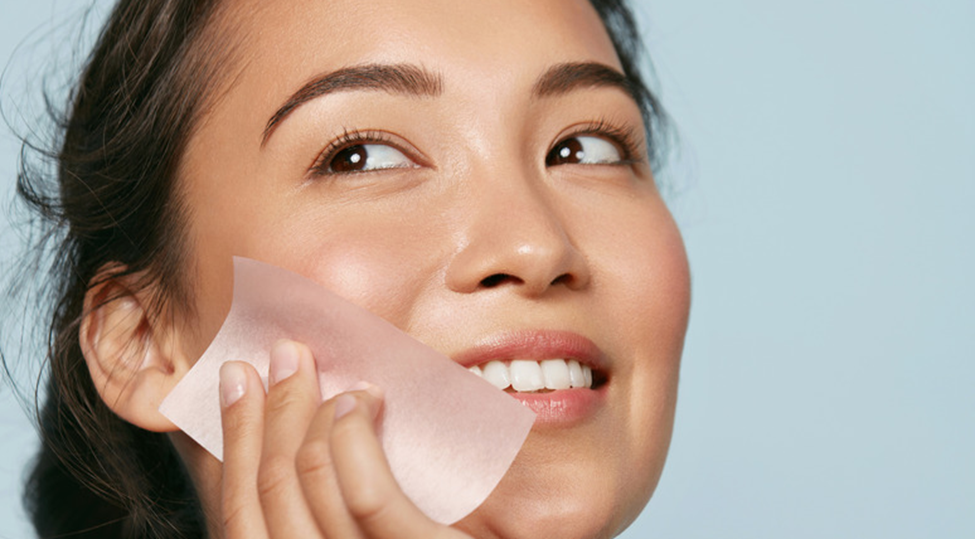
- The blotting sheet test helps confirm your skin type. It is especially useful for distinguishing between oily and combination skin.
- Take a blotting paper and gently press it on different areas of your face – forehead, nose, cheeks, and chin.
- Examine the sheet under good lighting.
- If the sheet shows little or no oil, you most likely have dry skin.
- If there is oil in all areas, your skin is oily.
- Oil only in the T-zone indicates combination skin.
- A small amount of oil from all areas suggests normal skin.
This test provides a more detailed way to determine your skin type. It also helps you select the right products for your basic skincare routine.
Step 3: Observe Your Skin’s Sensitivity
- Skin sensitivity is another thing to consider. It affects how your skin responds to cosmetics.
- Pay attention to how your skin reacts to new cosmetics. Are you experiencing redness, itching, or stinging? If so, you most likely have sensitive skin.
- Sensitive skin demands delicate treatments with calming ingredients. Avoid using strong exfoliants and perfumes.
- Understanding your sensitivity level is critical when developing a basic skincare routine. It guarantees that you avoid goods that could cause irritation.

Step 4: Analyzing Your Pores
- Pore size can also help you determine your skin type. It indicates how much oil your skin produces.
- Stand in front of a brightly lit mirror. Look closely at your pores, especially on your nose and cheeks.
- Small, scarcely noticeable pores suggest dry or normal skin.
- Large, visible pores, especially in the T-zone, indicate oily or mixed skin.
- If your pores are continuously enlarged, you probably have oily skin.
- Pore size analysis is a solid way to understand your skin’s demands. It assists you in selecting appropriate products for your basic skincare routine.

Step 5: Consider How Your Skin Feels Throughout the Day
- Your skin’s behavior throughout the day provides valuable clues. It helps you accurately determine your skin type.

- If your skin feels tight or flaky by lunchtime, it’s probably dry.
- Skin appearance with extra shine and slippiness is known as an oily skin.
- Combination skin shines solely in the T-zone.
- Normal skin is balanced, with no extra oil or dryness.
Observing these changes helps you select the right products. It also helps you establish an effective basic skincare routine.
Step 6: Seasonal Changes and Hormonal Influences
- Your skin type may change with seasons or hormonal fluctuations. This can affect your basic skincare routine. For example, skin can become dry in winter but oily in summer. Hormonal changes, like puberty or pregnancy, can also impact skin type.

- Pay attention to how your skin reacts to these changes. Adjust your basic skincare routine accordingly. This keeps your skin healthy and balanced all year round.
Step 7: Consult a Dermatologist
- If you’re doubtful, visit a dermatologist. They can professionally determine your skin type.
- Dermatologists utilize new instruments and techniques to assess your skin. They also make individualized product recommendations.

- This is particularly useful if you have sensitive or problematic skin. A dermatologist’s guidance helps you create an effective basic skincare routine.
How to Build a Basic Skincare Routine Based on Your Skin Type
- Once you determine your skin type, you can build a customized basic skincare routine. Here’s how:
- Dry Skin: Use hydrating cleansers and rich moisturizers. Avoid harsh exfoliants.
- Oily Skin: To make choice for foaming cleansers and lightweight, oil-free moisturizers. Use mattifying products.
- Combination Skin: Balance is key. Use lightweight products in oily areas and richer ones in dry areas.
- Normal Skin: Maintain balance with gentle cleansers and light moisturizers.
- Sensitive Skin: Choose fragrance-free, hypoallergenic products. Avoid alcohol-based toners and strong acids.
Customizing your basic skincare routine offers the best results. It meets your skin’s individual needs while also promoting overall wellness.
Common Mistakes When Determining Your Skin Type
When determining your skin type, avoid the following frequent mistakes:
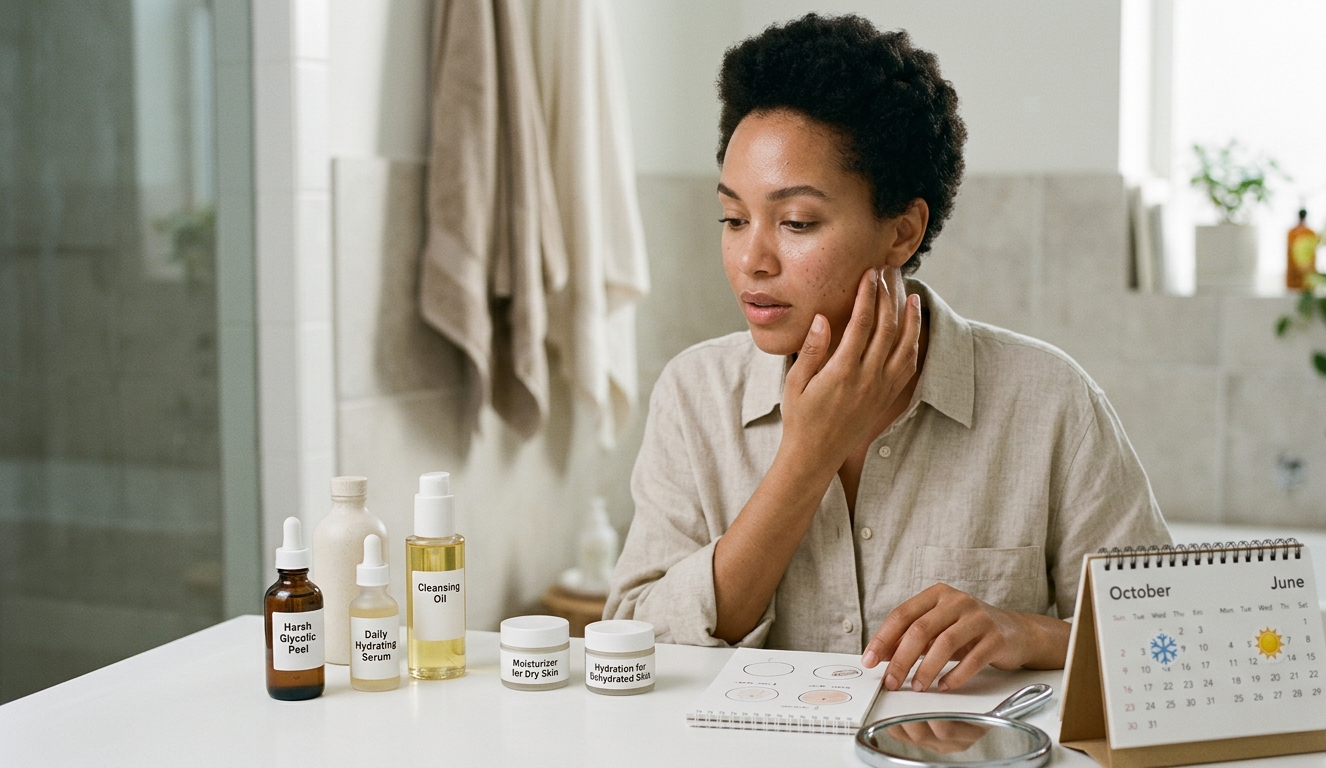
- Use harsh products before testing. This can cause changes in your skin’s behavior.
- Confusing dehydrated and dry skin. Dehydration refers to a shortage of water, not oil.
- Relying on a single method. Combining numerous processes yields accurate results.
- Disregarding seasonal and hormonal changes. Your skin type may change throughout time.
By avoiding these mistakes, you get a clear understanding of your skin type. This allows you to develop a more effective fundamental skincare routine.
Knowing how to determine your skin type is the founadation of an effective basic skincare routine. It assists you in selecting the correct products, resulting in healthier and more colorful skin. Following these specific guidelines will allow you to precisely determine your skin type. This alleviates discomfort and improves product effectiveness. Customize your basic skincare routine to meet your skin’s demands. Maintain consistency and make any required adjustments to get the best outcomes. Begin today and give your skin the attention it deserves!
FAQ’s
Why is it important to determine my skin type?
Knowing your skin type helps choose correct products. It prevents irritation, breakouts, and skin imbalance and supports building a simple effective routine. It improves overall skin health and appearance.
What are the main skin types?
Main types include normal, oily, dry, and combination. Sensitive skin is also widely recognized today. Each type behaves differently under daily conditions. Each requires specific care and product choices.
How can I determine my skin type at home?
You can test skin type easily at home. Use simple observation methods after cleansing face. Try bare-faced or blotting sheet methods. Watch oil, dryness, and skin comfort levels.
What is the bare-faced test for skin type?
Wash your face with a gentle cleanser. Leave skin bare without applying any products. Wait around thirty to sixty minutes. Observe shine, dryness, or tight feeling.
How does the blotting sheet test work?
Press blotting paper on different face areas. Check how much oil appears on sheet. More oil indicates oily or combination skin. Little oil suggests dry or normal skin.
FAQ’s
Can my skin type change over time?
Yes, skin type can change over time. Aging affects oil production and skin texture. Hormones and lifestyle also influence skin condition. Climate and products can alter skin behavior.
How do seasonal changes affect my skin type?
Cold weather often makes skin feel drier. Hot weather increases oil and sweat production. Humidity affects hydration and skin balance. Skin needs adjustment with changing seasons.
What products should I avoid for sensitive skin?
Avoid products with strong fragrances or alcohol. Stay away from harsh exfoliants and chemicals. Do not use products causing burning sensations. Choose gentle, calming, and fragrance-free formulas.
Can I have more than one skin type on my face?
Yes, combination skin is very common today. Different areas show different oil levels. T-zone is often oily and shiny. Cheeks may feel dry or normal.
Should I consult a dermatologiast to determine my skin type?
Consulting a dermatologist gives accurate skin analysis. They identify hidden issues and sensitivities. They suggest suitable products and treatments. Helpful for long-term skincare planning and results.