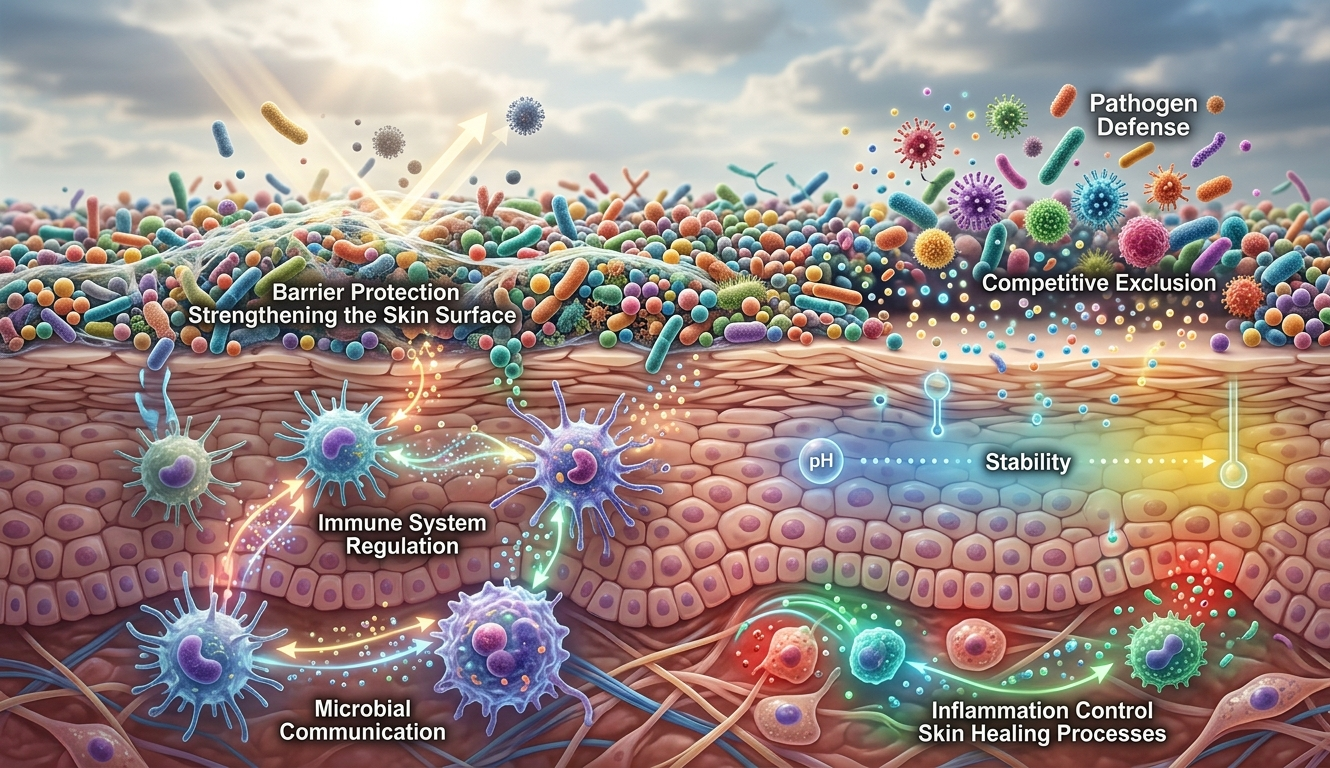
Skin Microbiome: Complete Concept of the Skin Ecosystem
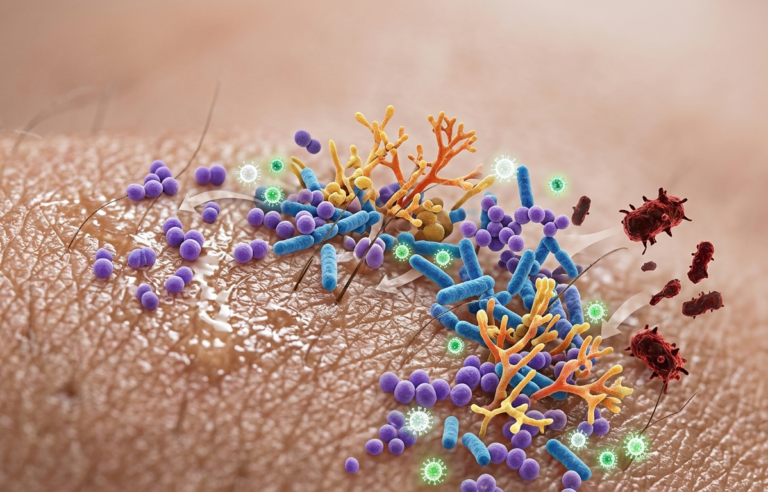
The skin is the largest organ of the human body. It is active and constantly changing. It is not just a physical barrier but also home to millions of microorganisms. This living community is called the skin microbiome. It includes bacteria, fungi, viruses, and even mites. These organisms exist in a delicate balance. Each type plays a unique role. Some live on the surface. Others settle deeper in hair follicles and glands.
The composition of microbes varies across the body. Oily areas host different species than dry areas. Warm and moist regions support another group. Factors like climate, hygiene, age, and diet influence this ecosystem. When the balance is stable, the skin functions properly. When it is disrupted, issues like acne, eczema, and infections may appear. Understanding this microbial system is essential for maintaining healthy skin. It forms the foundation for all the functions discussed below.
Barrier Protection and Strengthening of the Skin Surface
The skin’s outermost layer is called the stratum corneum. It acts as the first line of defense. Microorganisms enhance this protective layer. They form a natural coating over the skin. This layer blocks harmful chemicals, pollutants, and allergens. It also helps seal in moisture. This prevents dehydration and dryness. The skin microbiome supports the production of lipids. These lipids strengthen the skin barrier. They fill small gaps between skin cells. This keeps the surface smooth and intact. Beneficial microbes also help repair minor damage. Small cracks or injuries can weaken the barrier. Microbes stimulate repair processes that restore integrity.
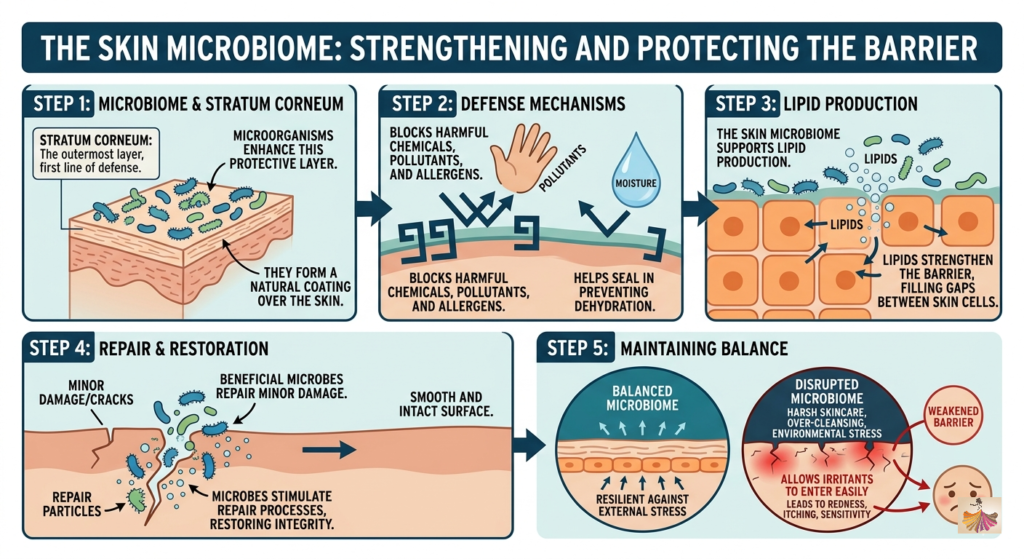
When the microbial balance is disturbed, the barrier weakens. Harsh skincare products, over-cleansing, and environmental stress can disrupt it. A weakened barrier allows irritants to enter easily. This leads to redness, itching, and sensitivity. Maintaining microbial balance ensures long-term barrier strength. It keeps the skin resilient against external stress.
Immune System Regulation and Microbial Communication
The skin is deeply connected to the immune system. It acts as an early warning system. Microorganisms interact with immune cells constantly. They send signals that help the immune system learn and adapt. The skin microbiome plays a key role in educating immune responses. It teaches the body to distinguish between harmful and harmless agents. This prevents unnecessary immune reactions. For example, harmless environmental particles should not trigger inflammation. Balanced microbes help avoid such overreactions. They maintain immune tolerance.
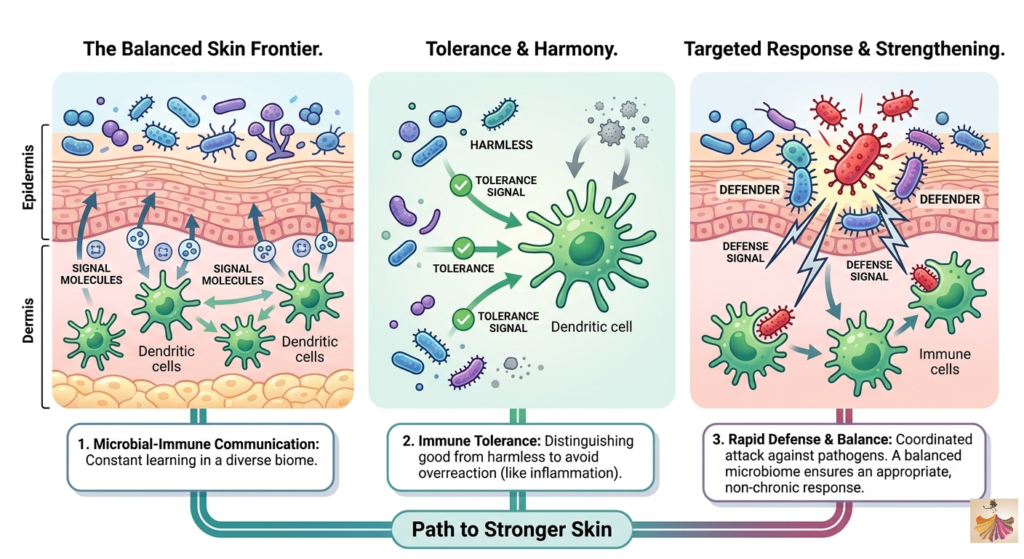
Microbial signals also activate defense mechanisms when needed. If harmful bacteria try to invade, the immune system responds quickly. This coordination is essential. Without it, the body may either underreact or overreact. Both situations can harm the skin. Under-reaction can lead to infections. Overreaction can cause chronic conditions like eczema or psoriasis. A stable microbial environment ensures proper immune balance. It supports calm, healthy skin. Disruption in this system can confuse immune responses. This highlights the importance of maintaining microbial harmony.
Pathogen Defense and Competitive Exclusion Mechanisms
The skin is constantly exposed to harmful microorganisms. These include bacteria, fungi, and viruses. Beneficial microbes act as a defense army. They compete with harmful organisms for space and nutrients. This process is known as competitive exclusion. The skin microbiome prevents pathogens from settling on the skin. When beneficial microbes occupy available space, harmful ones cannot grow easily. This reduces the risk of infections. In addition, some microbes produce antimicrobial substances. These substances actively kill or inhibit harmful bacteria.
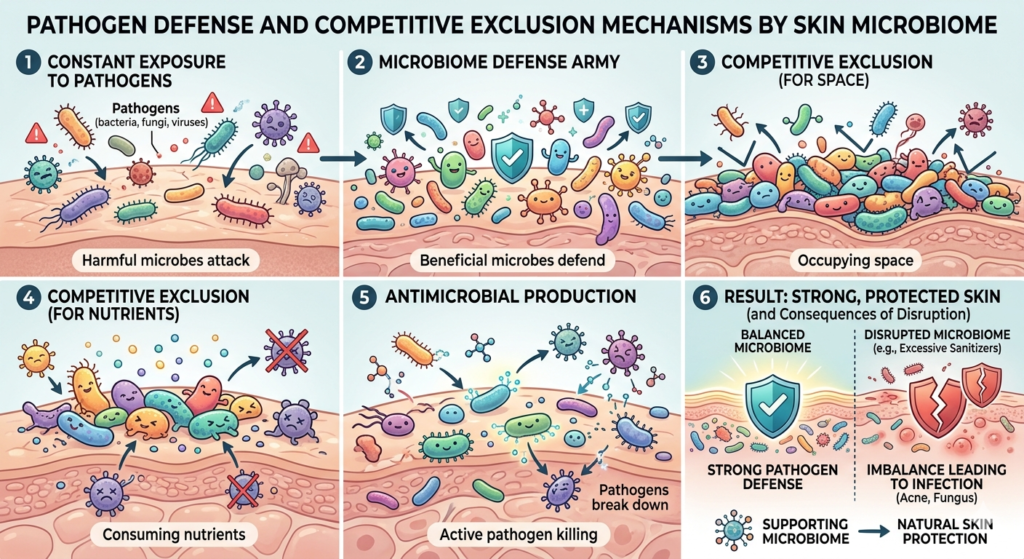
This natural defense system is highly effective. It works continuously without conscious effort. However, it depends on balance. If beneficial microbes are reduced, harmful organisms can take over. This imbalance can lead to infections, acne, or fungal growth. External factors can disrupt this defense system. Excessive use of antibacterial products can remove both good and bad microbes. This weakens natural protection. Supporting beneficial microbes helps maintain strong pathogen defense. It allows the skin to protect itself naturally and effectively.
pH Balance Maintenance and Chemical Stability of the Skin
The skin has a slightly acidic surface. This is often referred to as the acid mantle. The ideal pH range is around 4.5 to 5.5. This acidity is essential for skin health. The skin microbiome plays a major role in maintaining this pH level. Beneficial microbes produce acids as part of their metabolism. These acids help keep the skin environment stable. A balanced pH supports healthy enzyme activity. These enzymes are responsible for processes like cell turnover and lipid production.
An acidic environment also discourages harmful microbes. Many pathogens prefer neutral or alkaline conditions. By maintaining acidity, beneficial microbes limit their growth. This adds another layer of protection. When the pH balance is disturbed, problems can occur. Harsh soaps and alkaline products can raise the skin’s pH. This weakens the barrier and allows harmful bacteria to thrive. It can lead to dryness, irritation, and infections. Maintaining the natural pH supports overall skin function. It ensures that all biological processes work efficiently.
Inflammation Control and Skin Healing Processes
Inflammation is the body’s response to injury or infection. It is necessary for healing. However, excessive inflammation can damage the skin. It can cause redness, swelling, and discomfort. Microorganisms help regulate this response. The skin microbiome sends signals that control inflammation levels. Beneficial microbes can reduce excessive immune reactions. They produce compounds that calm the skin. This helps prevent chronic inflammation.
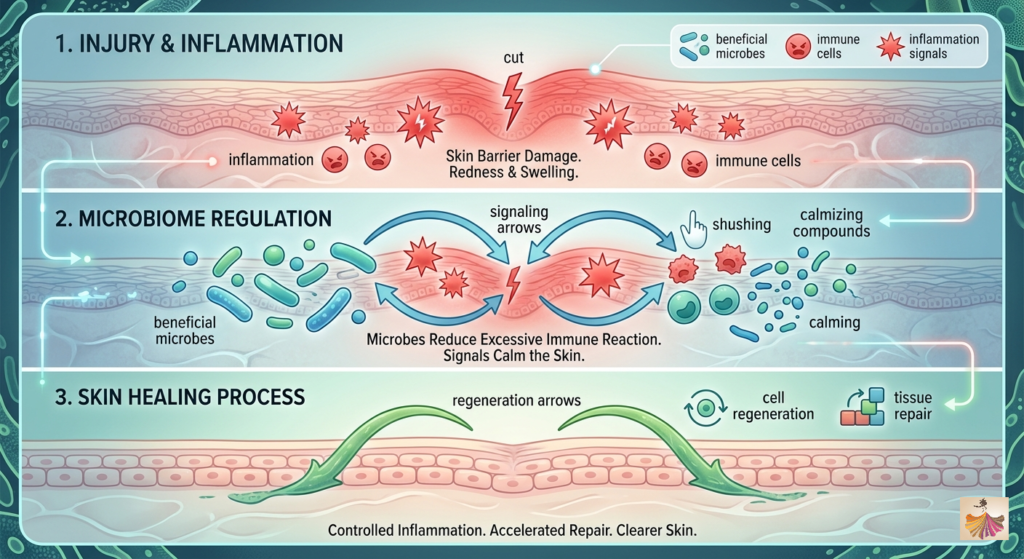
Controlled inflammation supports faster healing. When the skin is injured, microbes help coordinate the repair process. They promote cell regeneration and tissue repair. This leads to quicker recovery and less scarring. Imbalance in microbial populations can lead to uncontrolled inflammation. This is linked to conditions like acne, rosacea, and dermatitis. In such cases, harmful microbes trigger strong immune responses. This results in persistent irritation. Maintaining microbial balance helps keep inflammation in check. It ensures that the skin heals properly without unnecessary damage. Healthy microbial activity supports clear, calm, and balanced skin over time.
Conclusion: The Essential Role of Microbial Balance in Skin Health
The skin is more than a protective covering. It is a complex and active ecosystem. At the heart of this system is the skin microbiome. This invisible community performs vital functions every day. It strengthens the skin barrier, regulates immune responses and protects against harmful pathogens and maintains pH balance. It also controls inflammation and supports healing. Each of these functions is interconnected. When one aspect is disrupted, others are affected. This shows how important microbial balance truly is. Modern lifestyles can easily disturb this balance. Harsh skincare products, pollution, and stress all play a role. Maintaining a healthy microbial environment should be a priority.
Supporting the skin microbiome does not require complicated steps. Gentle cleansing, proper hydration, and mindful product choices can help. Avoiding overuse of strong chemicals is also important. Small changes can lead to noticeable improvements. In the end, healthy skin depends on harmony. A balanced microbial community ensures that the skin functions at its best. Understanding and caring for this system leads to stronger, calmer, and more resilient skin over time.
FAQ’s
More Stories to Know About Microbiome Skincare From Styleminers
____________________________________________________________________________________________________________________________________
The Ultimate Guide to the Skin Microbiome
Exploring Skin Microbiome Composition for Better Skincare Results
Skin Microbiome Imbalance: Important Things You Need to Know
Microbiome Skincare Ingredients You Need for Better Skin Health