The Truth About Retinoids Dermatitis, Peeling, and Redness
Introduction
Retinoids are among the most effective ingredients used in modern dermatology. They are widely prescribed for acne vulgaris, photoaging, hyperpigmentation, and several disorders of keratinization. Despite their remarkable benefits, retinoids are also associated with a characteristic group of side effects. These adverse reactions are especially common during the early weeks of treatment. Many patients discontinue retinoids because they misunderstand these effects. Some assume the treatment is harming their skin. Others stop therapy before the skin has time to adapt.
In reality, most retinoid-related side effects are predictable, temporary, and manageable. Understanding the side effect profile of retinoids is essential for successful treatment outcomes. This article provides a detailed overview of the most common adverse effects associated with retinoid therapy, including irritation, dryness, peeling, erythema, burning sensation, retinoid dermatitis, purging, and photosensitivity.
Understanding Why Retinoids Cause Side Effects
Before discussing individual side effects, it is important to understand why they occur. Retinoids accelerate skin cell turnover and stimulate epidermal renewal. They alter keratinocyte differentiation and influence hundreds of genes involved in skin growth and repair. These biological effects are beneficial in the long term. However, during the adjustment phase, the skin barrier can temporarily become disrupted. This period is often called the retinization phase. Most adverse effects occur during this adaptation period. Research shows that irritation reactions are particularly common during the first several weeks of treatment.
1. Common Effects of Retinoids
Overview
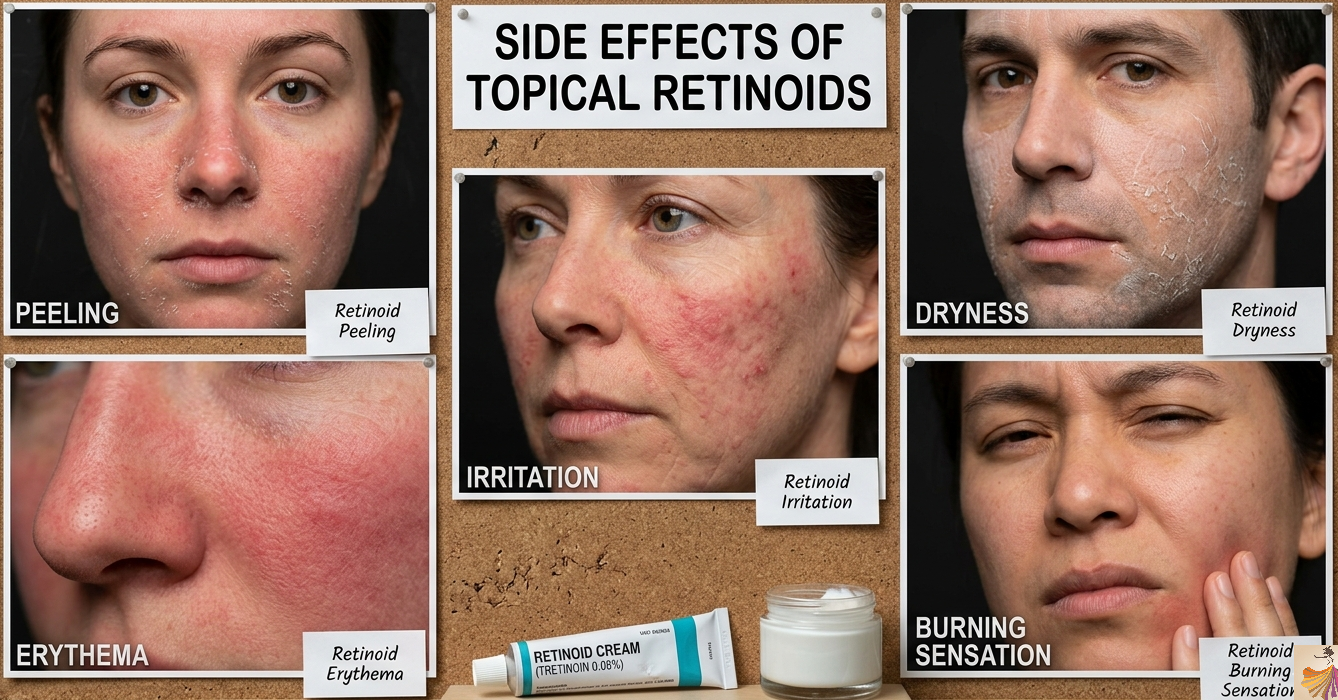
The most frequently reported retinoid side effects include:
- Irritation
- Dryness
- Peeling
- Erythema
- Burning sensation
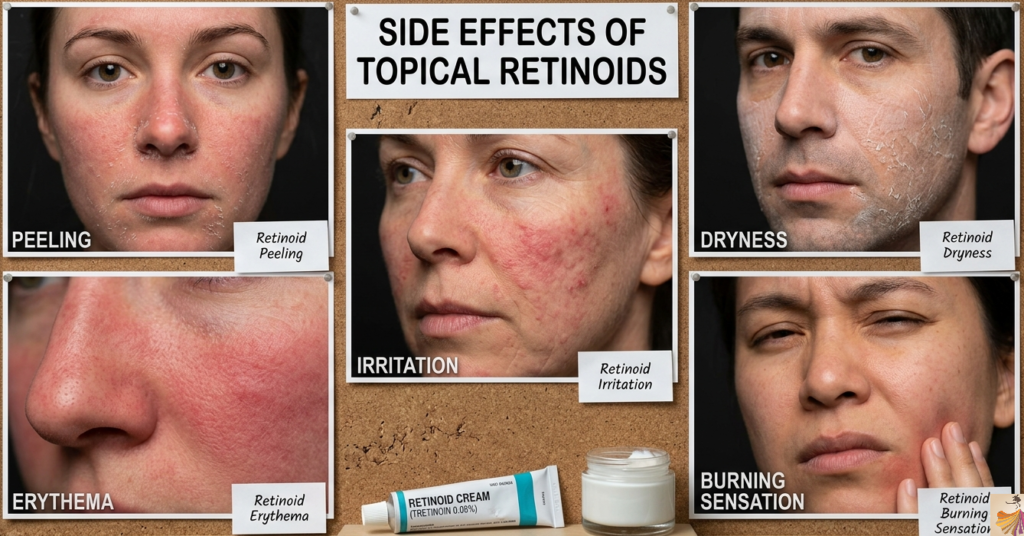
These reactions are collectively known as the retinoid reaction or retinoid irritation syndrome. Clinical reviews consistently identify these as the most common topical retinoid adverse effects.
Irritation
What Is Retinoid Irritation?
Irritation is the most common adverse effect of topical retinoids. Patients often describe it as:
- Skin sensitivity
- Tightness
- Tenderness
- Discomfort
- Stinging
Irritation usually develops during the first few weeks of therapy. The severity varies among individuals. Some people experience mild discomfort. Others develop significant inflammation.
Why Does Irritation Occur?
Retinoids accelerate epidermal turnover. This rapid renewal temporarily affects the skin barrier. The barrier becomes less efficient at retaining moisture and protecting against external irritants. Research suggests that retinoid-induced irritation is associated with inflammatory mediators such as cytokines that are released during early treatment.
Factors That Increase Irritation
Several factors increase irritation risk:
High Retinoid Concentrations
Stronger formulations often produce more irritation.
Frequent Application
Daily use at treatment initiation may overwhelm sensitive skin.
Pre-Existing Sensitive Skin
Patients with eczema or rosacea may experience greater irritation.
Combination Therapy
Using retinoids together with:
- Chemical exfoliants
- Benzoyl peroxide
- Alcohol-based products
Can increase irritation.
Dryness
Why Retinoids Cause Dry Skin
Dryness is one of the earliest side effects. Retinoids increase epidermal turnover. As older cells shed more rapidly, water loss from the skin surface temporarily increases. This process weakens moisture retention. The result is xerosis, commonly known as dry skin.
Clinical Features of Dryness
Patients may experience:
- Tight skin
- Rough texture
- Flaking
- Increased sensitivity
- Dull appearance
Dryness is particularly common around:
- Eyes
- Mouth
- Nose
- Chin
These areas naturally possess a thinner skin barrier.
How Long Does Dryness Last?
For most patients:
- Mild dryness lasts several weeks.
- Improvement occurs as the skin adapts.
- Consistent moisturizer use shortens recovery time.
The adaptation period differs among individuals. Some adapt within weeks. Others require several months.
Peeling
What Is Retinoid-Induced Peeling?
Peeling occurs because retinoids accelerate the shedding of superficial skin cells. This process is medically called desquamation. Peeling is not necessarily a sign of damage. In many cases, it reflects increased epidermal turnover.
Appearance of Peeling
Peeling may appear as:
- Fine flakes
- Patchy scaling
- Visible shedding
- Rough skin texture
It often affects:
- Forehead
- Nose
- Chin
- Cheeks
Why Peeling Is Common
Retinoids reduce the cohesion between skin cells. This allows older cells to detach more rapidly. As a result, visible peeling becomes common during early treatment. Clinical reviews consistently identify peeling as one of the hallmark adverse effects of topical retinoids.
Erythema
What Is Erythema?
Erythema refers to skin redness. It is one of the most recognizable retinoid side effects. Patients often notice diffuse redness after initiating therapy.
Mechanism of Erythema
Several mechanisms contribute:
Inflammatory Response
Retinoids stimulate biological activity within the epidermis. Temporary inflammation may develop.
Increased Blood Flow
The skin responds to irritation by increasing local circulation. This creates visible redness.
Barrier Disturbance
Barrier disruption allows environmental triggers to produce stronger inflammatory responses.
Clinical Presentation
Erythema may range from:
- Mild pinkness
- Patchy redness
- Diffuse facial erythema
Severe redness often indicates excessive irritation.
Burning Sensation
What Does Retinoid Burning Feel Like?
Patients frequently describe:
- Stinging
- Burning
- Tingling
- Warmth
The sensation typically occurs shortly after product application.
Why Burning Occurs
The skin barrier becomes temporarily compromised.
As a result:
- Nerve endings become more exposed.
- Water loss increases.
- Sensitivity rises.
These changes contribute to the burning sensation. Research consistently lists burning and stinging among the most common retinoid adverse effects.
When Burning Becomes Concerning
Persistent burning may indicate:
- Overuse
- Barrier damage
- Contact dermatitis
- Product incompatibility
Patients experiencing severe burning should seek professional advice.
2. Retinoid Dermatitis
Definition
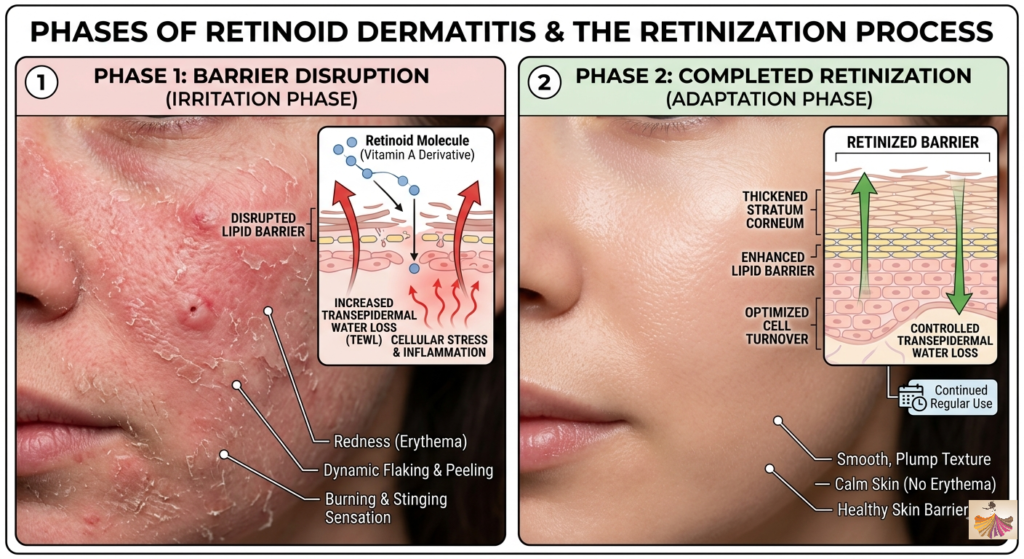
Retinoid dermatitis is an irritant dermatitis caused by topical retinoid use. It represents an exaggerated form of the normal retinization response. Modern reviews describe retinoid dermatitis as a condition characterized by redness, peeling, burning, itching, and barrier dysfunction.
2.1 Barrier Disruption Phase
What Happens to the Skin Barrier?
The outer skin barrier consists of:
- Corneocytes
- Lipids
- Natural moisturizing factors
Together they prevent water loss and block irritants. Retinoids temporarily alter this structure. The barrier becomes less efficient during early treatment.
Consequences of Barrier Disruption
Barrier disruption can lead to:
- Increased dryness
- Increased redness
- Heightened sensitivity
- Water loss
- Environmental irritation
These effects explain why many patients feel their skin is becoming worse before it improves.
Clinical Signs
Common signs include:
- Red patches
- Scaling
- Flaking
- Tightness
- Itching
- Burning
The severity varies depending on retinoid strength and skin type.
2.2 The Retinization Process
What Is Retinization?
Retinization is the adaptation phase that occurs when skin becomes accustomed to retinoids. This process is normal. Almost all patients experience some degree of retinization.
Duration of Retinization
Retinization usually lasts:
- 2–6 weeks in many patients
- Longer in sensitive skin
As adaptation occurs:
- Irritation decreases.
- Barrier function improves.
- Tolerability increases.
Why Retinization Is Important
Retinization allows patients to achieve long-term benefits.
These include:
- Acne reduction
- Improved texture
- Better pigmentation
- Enhanced collagen production
Without completing retinization, many patients discontinue treatment prematurely.
3. Purging Phenomenon
What Is Skin Purging?
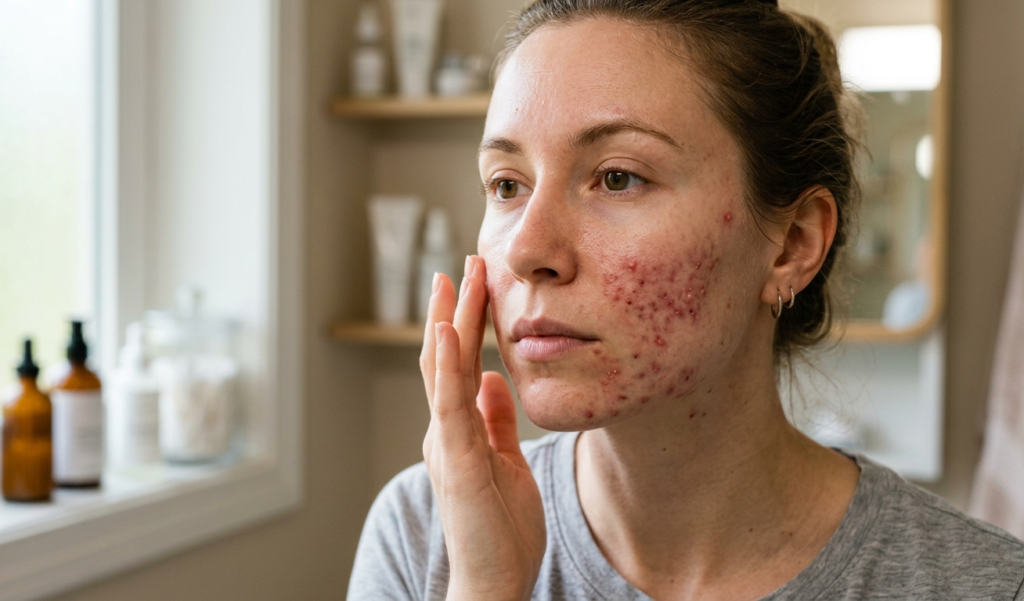
The term skin purging describes a temporary increase in acne lesions after initiating retinoid therapy. It is one of the most frequently discussed retinoid side effects. However, scientific literature on purging remains limited. Some experts consider it a real clinical phenomenon related to accelerated cell turnover, while others suggest that some cases may actually represent irritation rather than true purging.
Why Purging Occurs
Retinoids accelerate epidermal renewal. Microcomedones that would normally emerge slowly reach the skin surface more rapidly. This can create the appearance of worsening acne. Dermatologists often describe retinoids as accelerating the life cycle of existing acne lesions.
Clinical Features of Purging
Purging may include:
- Whiteheads
- Blackheads
- Papules
- Small inflammatory lesions
It usually appears in areas where acne commonly occurs.
How Long Does Purging Last?
Most reports suggest:
- Purging begins within weeks.
- It often improves within 4–8 weeks.
- Persistent worsening beyond several months requires evaluation.
Clinical experts emphasize that improvement should gradually follow the initial flare.
Purging vs Breakout
Purging
- Occurs after starting retinoids
- Appears in acne-prone areas
- Improves over time
Irritant Breakout
- Associated with excessive irritation
- May spread unpredictably
- Accompanied by redness and burning
Distinguishing between these two conditions is important.
Psychological Impact of Purging
Purging can be emotionally challenging. Patients often fear treatment failure. Some discontinue therapy prematurely. Patient education is therefore critical. Understanding that temporary worsening may occur improves treatment adherence and long-term success.
4. Photosensitivity
Understanding Photosensitivity
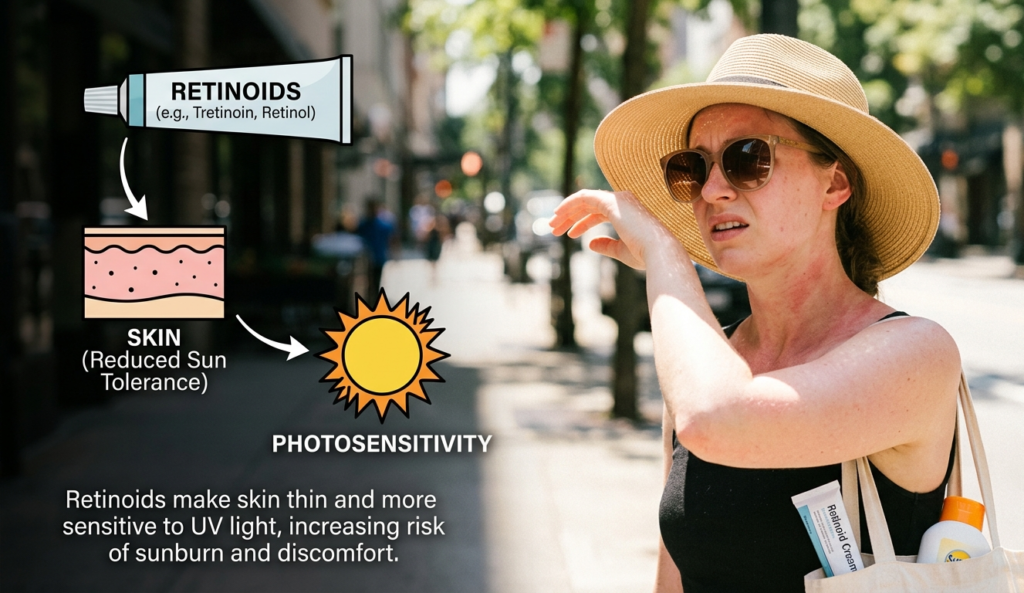
Photosensitivity is one of the most widely discussed retinoid-related concerns. Many patients believe retinoids directly make skin highly sun-sensitive. The reality is more nuanced.
Do Retinoids Cause Direct Photosensitivity?
Current evidence suggests that topical retinoids do not function as classic photosensitizing agents. However, they can indirectly increase susceptibility to UV-related irritation. This occurs because:
- The skin barrier is temporarily weakened.
- Newer skin cells become exposed.
- Irritation thresholds are reduced.
As a result, patients may experience greater sensitivity to sunlight.
Why UV Protection Is Essential
Retinoid-treated skin is more vulnerable to environmental stress. Without proper protection:
- Redness may worsen.
- Irritation may increase.
- Pigmentation problems may develop.
For these reasons, dermatologists strongly recommend daily sunscreen use.
Clinical Consequences of Poor Sun Protection
Inadequate UV protection can contribute to:
Persistent Erythema
Sun exposure may intensify redness.
Post-Inflammatory Hyperpigmentation
Inflamed skin is more susceptible to pigment changes.
Reduced Treatment Success
Excessive UV exposure can counteract many benefits of retinoid therapy.
Sunscreen Recommendations
Most dermatology guidelines recommend:
- Broad-spectrum sunscreen
- SPF 30 or higher
- Daily application
- Reapplication during prolonged outdoor exposure
These measures significantly improve retinoid tolerability and treatment outcomes.
Factors That Influence Retinoid Side Effects
Not all patients experience side effects equally. Important influencing factors include:
Retinoid Type
Tretinoin generally produces more irritation than retinol. Adapalene often demonstrates superior tolerability.
Concentration
Higher concentrations increase adverse effect risk.
Application Frequency
More frequent application increases irritation.
Skin Type
Sensitive skin reacts more strongly.
Formulation Technology
Encapsulation systems may improve tolerability. Recent formulation research has focused heavily on reducing irritation while maintaining efficacy.
Managing Retinoid Side Effects
Most adverse effects can be minimized.
Common strategies include:
- Gradual treatment initiation
- Alternate-night application
- Barrier-supporting moisturizers
- Gentle cleansers
- Avoidance of harsh exfoliants
- Daily sunscreen use
These approaches improve patient adherence and treatment success.
Conclusion
Retinoids remain among the most effective therapies in modern dermatology. However, their benefits are frequently accompanied by temporary side effects. The most common reactions include irritation, dryness, peeling, erythema, and burning sensation. More significant reactions may manifest as retinoid dermatitis, while some patients experience temporary acne worsening known as purging. In addition, retinoid-treated skin may become more vulnerable to UV-related irritation, making sun protection essential. Importantly, most side effects occur during the normal retinization process and improve as the skin adapts. Proper patient education, gradual treatment introduction, and consistent skincare support allow most individuals to successfully complete retinoid therapy and achieve its substantial dermatologic benefits.