Basic Skincare Routine: Essential Steps You Need to Know in 2025
A basic skincare plan is essential for healthy, radiant skin. It cleanses, hydrates, and protects your skin. But what exactly constitutes a basic skincare routine? Let’s go over the main procedures in detail.

1. Cleansing – The Foundation of Every Routine
- Cleansing is the first step in a basic skincare routine. It removes dirt, oil, and impurities. This prevents clogged pores and breakouts.
- Choose a gentle cleanser suited to your skin type. For oily skin, use a foaming cleanser. Dry skin benefits from a hydrating, creamy cleanser.
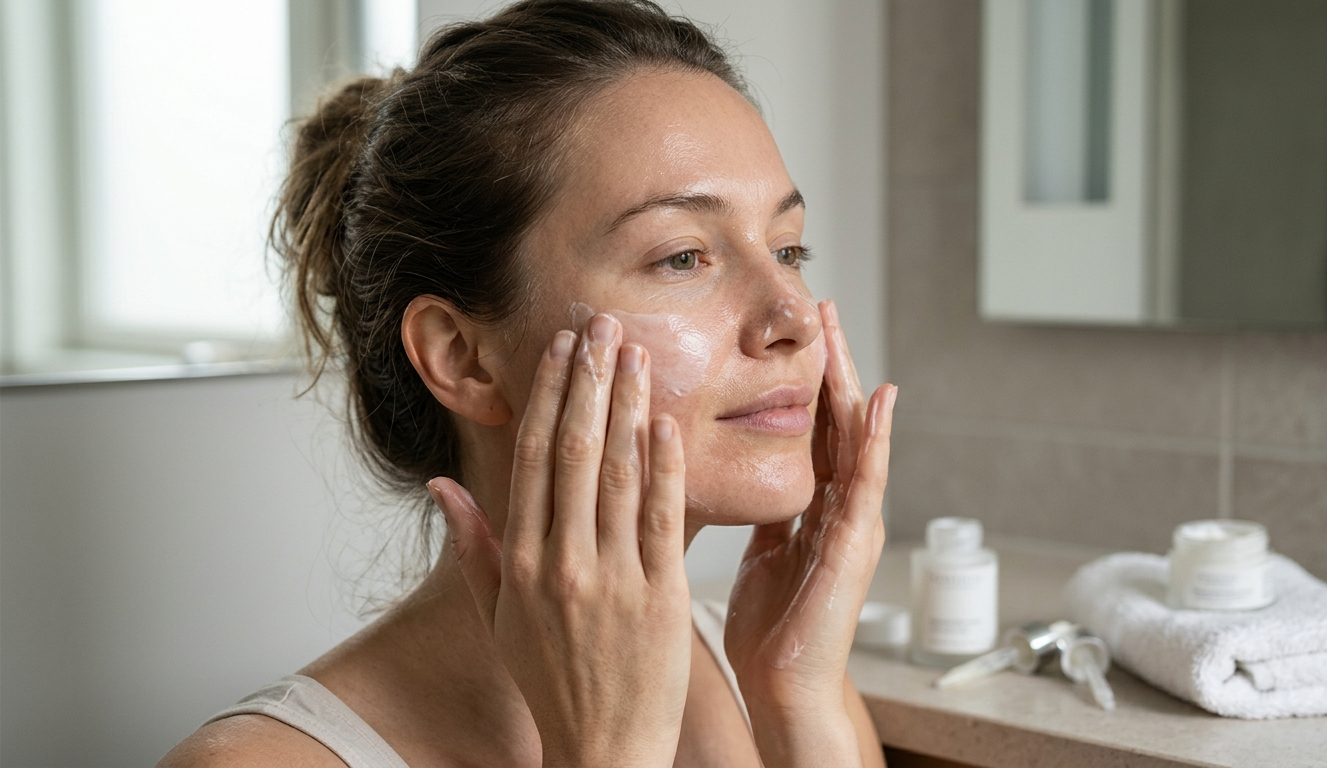
- Cleanse your face twice a day – morning and night. Use lukewarm water to avoid stripping natural oils. Gently massage the cleanser in circular motions. Rinse thoroughly and pat dry.
- Cleansing prepares your skin for the next steps. It ensures that products absorb better. Never skip this essential step in your basic skincare routine.

2. Toning – Balancing and Refreshing
- Toning follows cleansing in a basic skincare routine. It eliminates any remaining residue and adjusts your skin’s pH.
- Select an alcohol-free toner to avoid irritation. Hydrating toners are effective for dry skin. Acid-based exfoliating toners are beneficial for oily and acne-prone skin.
- Apply toner with a cotton pad or your hands. Gently apply it to your face and neck. This process refreshes and prepares your skin for optimal product absorption.
- Toning helps tighten pores and balance moisture levels. It is an underappreciated yet necessary component in a basic skincare routine.

3. Moisturizing – Locking in Hydration
- Moisturize to keep your skin supple and hydrated. It retains moisture and enhances the skin barrier.
- Choose a moisturizer for your skin type. Gel-based moisturizers are ideal for oily skin. Cream-based solutions are ideal for dry, sensitive skin.
- Use moisturizer twice day, after cleaning and toning. Gently massage it in upward strokes. Remember to moisturize your neck as well!
- This process avoids dryness and flakiness. It also provides a smooth base for cosmetics. Moisturizing is an essential aspect of any basic skincare routine.
4. Sun Protection – Shielding from Harmful Rays
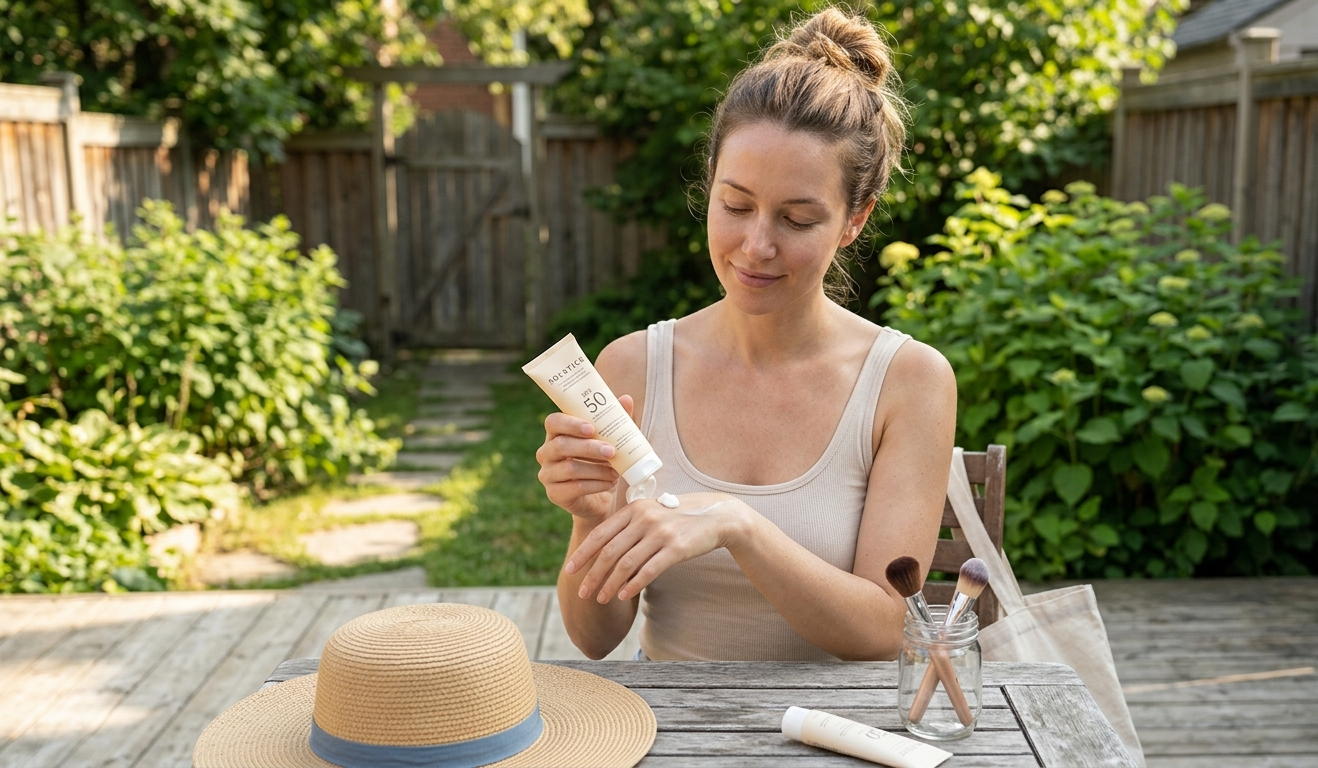
- Sun protection is vital in a basic skincare routine. It prevents premature aging, sunburn, and skin cancer.
- Choose a broad-spectrum sunscreen with at least SPF 30. To make choice for a lightweight, non-greasy formula.
- Apply sunscreen every morning as the last step. Reapply every two hours if exposed to the sun. Don’t forget your neck, ears, and hands.
- Even on cloudy days, UV radiation can harm your skin. Daily sun protection is essential for maintaining long-term skin health. It completes the basic skincare routine.
5. Exfoliating – Removing Dead Skin Cells
- Exfoliation is an optional yet useful procedure. It eliminates dead skin cells, resulting in a brighter complexion.
- There are two forms of exfoliants: physical and chemical. Physical scrubs contain tiny particles that buff away dead skin. Chemical exfoliants include acids that dissolve dead cells.
- Limit exfoliating to once or twice a week. Excessive exfoliation might cause skin irritation. Be gentle and avoid using harsh scrubs.
- This step improves the efficacy of other products. It also cleanses your pores and removes dullness. Exfoliation should be included on occasion in your basic skincare routine.

6. Eye Cream – Targeting Delicate Areas
- The skin surrounding the eyes is sensitive and thin. It requires specific attention in basic skincare routine.
- Eye creams treat puffiness, dark circles, and fine wrinkles. Choose one that contains moisturizing and anti-aging compounds.
- Apply a small amount using your ring finger. Gently pat around the eye area without pulling the skin.
- This step keeps your eyes looking fresh and youthful. It is particularly useful if you have specific under-eye concerns.

7. Face Masks – Extra Boost of Nourishment
- Face masks provide additional moisture and minerals. They address certain skin issues, such as dullness or acne.
- Apply a face mask once or twice per week. Choose the one that best suits your skin type and requirements.
- Clay masks are ideal for oily face, while moisturizing sheet masks benefit dry skin.
- Use after cleansing and toning. After leaving it on for the suggested amount of time, rinse or massage the residue in.
- Face masks improve the effectiveness of your basic skincare routine.

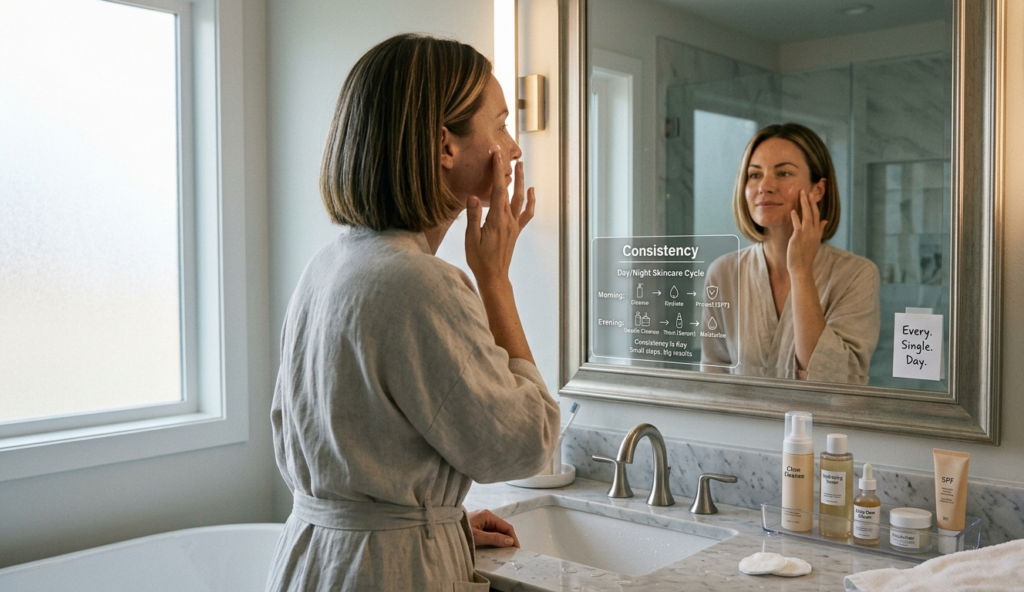
8. Consistency – The Key to Results
- A basic skincare routine only works if done consistently. Results take time and patience.
- Stick to the routine daily, morning and night. Avoid switching products frequently.
- Give each product at least four weeks to show results. Consistency leads to healthy, glowing skin.
9. Adjusting to Your Needs
- Each person’s skin is unique. Customize your basic skincare routine to meet your skin’s specific demands.
- Monitor your skin and adjust products as needed. Adjust your schedule to accommodate seasonal variations.
- If you’re unsure, see a dermatologist for personalized guidance.
A basic skincare routine is essential for maintaining healthy skin. It includes cleansing, toning, moisturizing, and sun protection. Exfoliating, applying eye cream, and using face masks all have extra benefits. Consistency and customization are required for optimal results. You may achieve beautiful, healthy skin by taking these important steps. Begin your basic skincare routine today for long-lasting beauty.
FAQ’s
What is a basic skincare routine?
A basic routine includes cleansing, moisturizing, and sun protection. Some add treatment products for specific skin concerns. These steps keep skin clean, hydrated, and protected daily.
Why is cleansing important in a basic skincare routine?
Cleansing removes dirt, oil, and daily impurities. It prevents clogged pores and breakouts. It helps other products absorb better into skin.
Do I need to use a toner every day?
Toner is optional, not always necessary daily. It helps balance skin pH after cleansing. Many dermatologists say you can skip it safely.
How often should I moisturize my face?
Moisturize your face at least twice daily. Apply after cleansing morning and night. It keeps skin hydrated and strengthens barrier.
Is sunscreen necessary even on cloudy days?
Yes, sunscreen is needed even on cloudy days. UV rays still reach your skin through clouds. Daily SPF prevents aging and skin damage.
How often should I exfoliate my skin?
Exfoliate your skin one to two times weekly. It removes dead skin cells and unclogs pores. Over-exfoliation can irritate and damage skin.
Can I skip moisturizer if I have oily skin?
No, oily skin still needs moisturizer daily. Use lightweight, oil-free formulas for balance. Skipping can increase oil production further.
When should I start using eye cream?
Start eye cream in your mid-twenties or earlier. Use it when noticing dryness or fine lines. It protects delicate under-eye skin area.
Are face masks essential in a basic skincare routine?
Face masks are optional, not essential daily. They provide extra hydration or deep cleansing. Use them weekly based on skin needs.
How long does it take to see results from a basic skincare routine?
Results usually appear after four to eight weeks. Skin needs time to renew and adjust. Consistency is key for visible improvements.