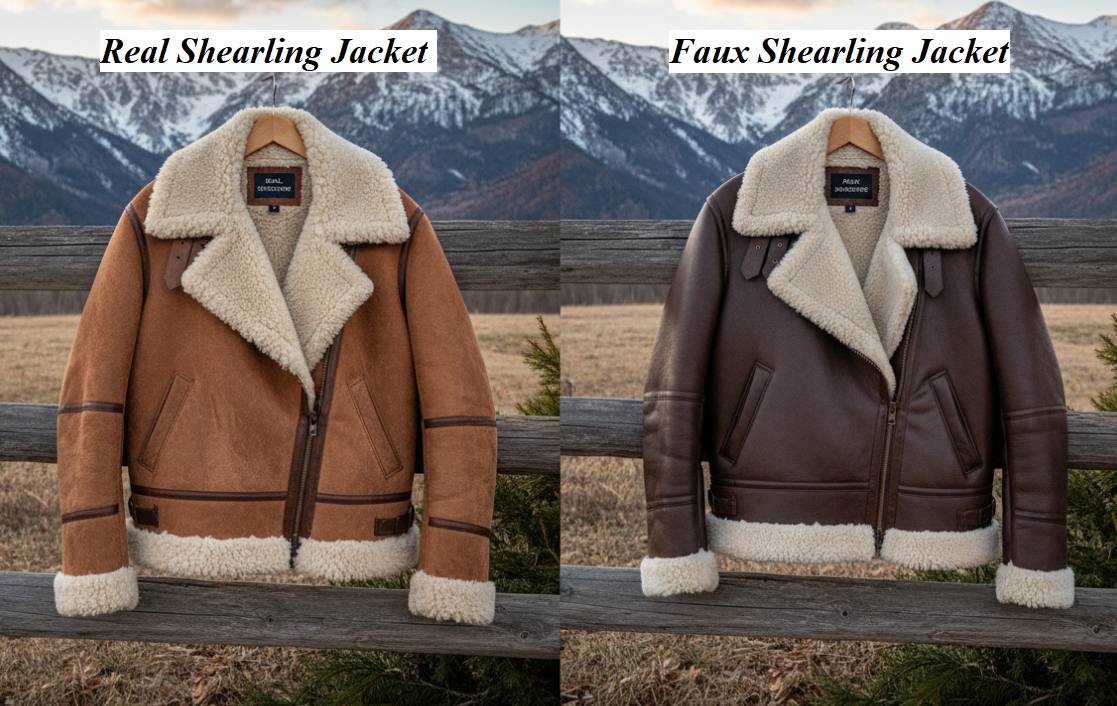
Is Real Shearling Jacket Better Than Faux? Here’s What to Know
Jackets come in many styles. They serve both fashion and function. One popular choice is shearling. But there’s a key difference between faux and real shearling jacket. Understanding this difference can help you decide which one to buy. Let’s dive into the details.
1. What is Real Shearling?
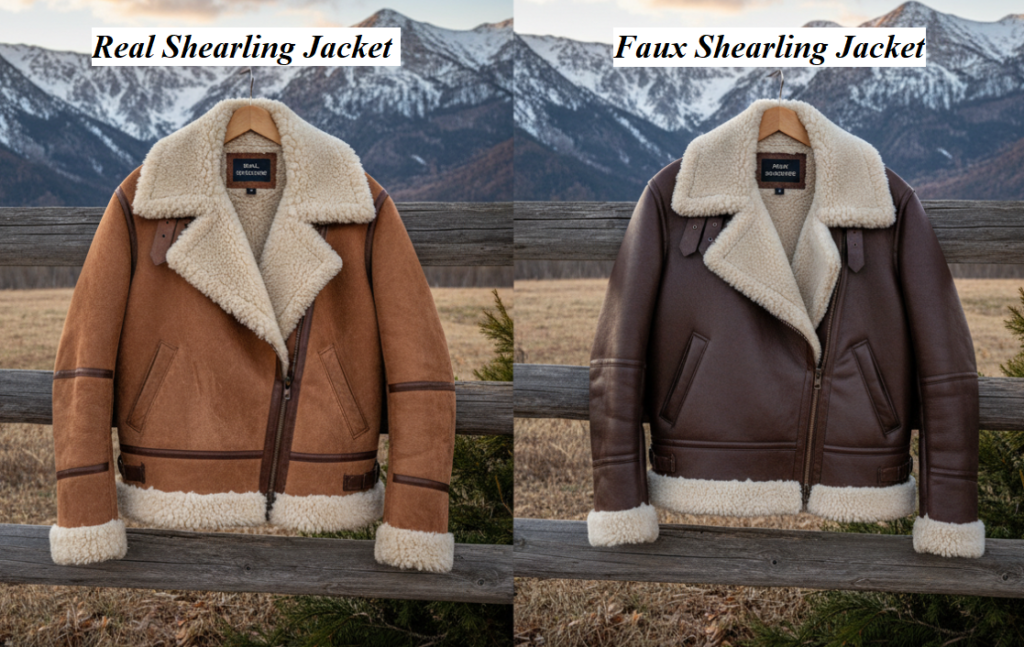
Real shearling is made from lamb or sheep skin. It’s natural and luxurious. The jacket has a suede exterior. Inside, it’s lined with soft wool. This wool is attached to the hide itself. Real shearling is very warm, perfect for cold weather. It has a unique texture and feel. No two real shearling jackets are the same. Each jacket has its own character.
High-quality shearling jackets use premium lambskin. Modern tanning improves softness and flexibility. Natural lanolin adds moisture resistance. Authentic shearling develops a rich patina. Luxury brands certify ethical sourcing standards.
2. What is Faux Shearling?
Faux shearling is artificial. It’s created from synthetic fibers. This can include polyester or acrylic materials. Faux shearling mimics the look of real shearling. But it’s cheaper to produce. These jackets are more affordable. Faux shearling is usually lighter than real shearling. They can come in various colors and styles.
Many faux shearling jackets use recycled polyester. Production costs remain significantly lower. Vegan consumers prefer synthetic alternatives. Some versions improve insulation technology. However, durability still remains limited.
3. Key Differences Between Faux and Real Shearling
Here are the main points of comparison:
- Material: Real shearling is made from animal skin and wool. Faux shearling uses synthetic fibers.
- Warmth: Real shearling is extremely warm. Faux shearling offers some warmth but not as much.
- Price: Real shearling jackets are expensive. Faux shearling is more budget-friendly.
- Durability: Real shearling can last for decades. Faux shearling usually wears out faster.
- Feel: Real shearling has a unique, soft texture. Faux shearling is softer but lacks that natural feel.
Real shearling jackets age beautifully over time. Faux versions may pill with wear. Real shearling offers better breathability. Synthetic options resist water slightly better. Investment value favors genuine shearling.
4. Warmth and Insulation
Real shearling is very warm. The wool lining keeps heat close to your body. It’s breathable too. This helps to regulate body temperature. You stay warm without sweating. Faux shearling offers some warmth. But it can’t match real shearling. Synthetic fibers don’t breathe as well. So, you may feel sweaty or overheated. Faux shearling works for mild winters, but it’s less effective in extreme cold.
Natural air pockets insulate efficiently. Real shearling jackets perform in freezing climates. Wool fibers wick away moisture. Synthetic linings trap humidity inside. Real shearling adapts to temperature changes.
5. Cost and Affordability
One big difference is the price. Real shearling is expensive. The cost reflects the quality and durability. Real shearling jackets are an investment. They can last many years with proper care. Faux shearling is budget-friendly. It’s ideal for fashion trends that change often. You can try different styles without spending much. However, it may need replacing sooner.
Real shearling jackets retain resale value. Vintage pieces sell at premium prices. Faux versions depreciate quickly. Cost per wear favors genuine shearling. Quality craftsmanship increases long-term savings.
6. Environmental Impact
Real shearling is a natural product. It’s biodegradable. However, it involves animal use, which some people avoid. Some people feel that real shearling is more sustainable. Faux shearling is synthetic. It’s made from plastic materials, which come from fossil fuels. This can contribute to pollution. Faux shearling doesn’t biodegrade easily. For some, this is a disadvantage.
Real shearling jackets reduce waste impact. Ethical farms follow strict regulations. Faux production increases microplastic pollution. Recycling synthetic fibers remains challenging. Longevity reduces overall environmental footprint.
7. Durability and Longevity
Real shearling is very durable. A well-cared-for shearling jacket can last decades. The wool inside resists flattening over time. The outer suede also wears well. Faux shearling doesn’t last as long. The fibers can lose their softness. The synthetic wool may flatten with regular use. Over time, it may start to look worn. Faux jackets need replacing more frequently.
Real shearling jackets resist cracking and tearing. Natural fibers maintain structure longer. Faux materials weaken with friction. Proper storage extends garment lifespan. Quality stitching improves durability significantly.
8. Care and Maintenance
Real shearling requires special care. It’s best to clean it professionally. Avoid washing it in a machine. With proper care, it stays beautiful for years. Faux shearling is easier to clean. Most faux jackets are machine washable. This makes them easier to care for. However, they still need gentle treatment.
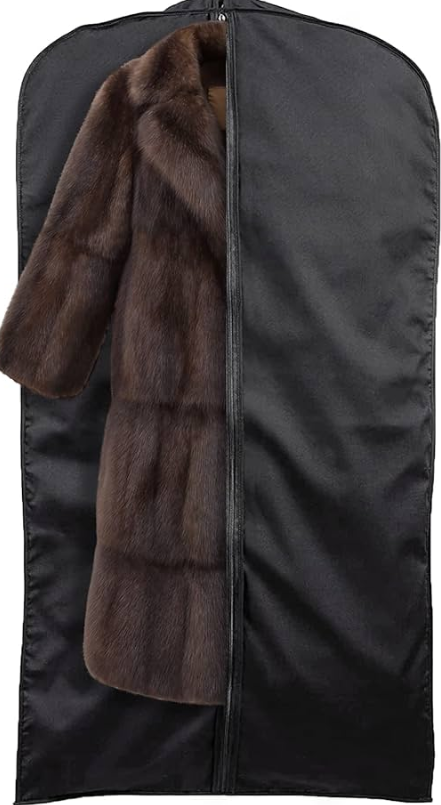
Store shearling jackets in breathable garment bags. Avoid direct sunlight exposure. Let wet jackets air dry naturally. Use suede brushes for surface cleaning. Conditioning preserves leather flexibility.
9. Style Options
Real and faux shearling jackets come in plenty of styles. Real shearling typically displays a more conventional look. It exists in basic colors such as beige, brown, and black. Faux shearling has a more adaptable style. It’s available in a variety of bright colors and styles. Faux may be ideal for those seeking contemporary style.
Modern shearling jackets feature oversized silhouettes. Cropped styles suit street fashion trends. Belted designs create structured shapes. Reversible options increase versatility. Minimalist designs remain highly popular.
10. Ethical Choices
Many people consider ethics when shopping for a jacket. Some individuals reject real shearling because it contains animal components. Faux shearling is a cruelty-free choice. However, because it uses synthetic components, it has negative environmental consequences. In this regard, each option has advantages and disadvantages.
Ethical shearling jackets use certified humane sourcing. Transparency improves consumer trust. Faux options reduce animal concerns. Environmental trade-offs remain significant. Buyers must balance values carefully.
Which Jacket is Right for You?
Choosing between real and faux shearling jacket depends on your needs. Real shearling offers warmth, durability, and luxury. It’s ideal for harsh winters. Faux shearling is budget-friendly, trendy, and cruelty-free. It’s great for mild winters or style experiments. Consider your budget, values, and climate. Each jacket type has its advantages.
Real shearling jackets suit long-term investments. Faux options suit seasonal fashion updates. Climate should guide your decision. Quality determines overall satisfaction. Choose based on lifestyle priorities.
FAQ’s
Is real shearling warmer than faux shearling?
Yes, real shearling is warmer. Natural wool traps heat efficiently. It also regulates temperature better than synthetics.
Which is more expensive: real shearling or faux shearling?
Real shearling is more expensive. It uses genuine sheepskin and wool. Faux shearling costs much less to produce.
Are faux shearling jackets environmentally friendly?
Faux shearling is not fully eco-friendly. It is made from synthetic plastic fibers. These materials do not biodegrade easily.
How long do real shearling jackets last compared to faux shearling?
Real shearling jackets can last decades. Faux versions typically last a few years. Natural fibers resist wear better.
Which is easier to care for: real or faux shearling?
Faux shearling is easier to maintain. Many styles are machine washable. Real shearling requires professional cleaning.