Samsung Galaxy Watch 9: Smarter Health, Better Fitness
The Samsung Galaxy Watch 9 is Samsung’s 2026 mainstream smartwatch. It sits below the rugged Watch Ultra2, but it borrows several of that model’s health and performance ideas. Samsung unveiled the watch on July 22, 2026, and sales began on August 7. The launch brings a new Snapdragon Wear Elite platform, Wear OS 7 with One UI 9 Watch, a brighter sapphire display, larger batteries, and a stronger focus on personalized health guidance. Samsung positions it as an everyday health companion rather than a specialist sports computer.
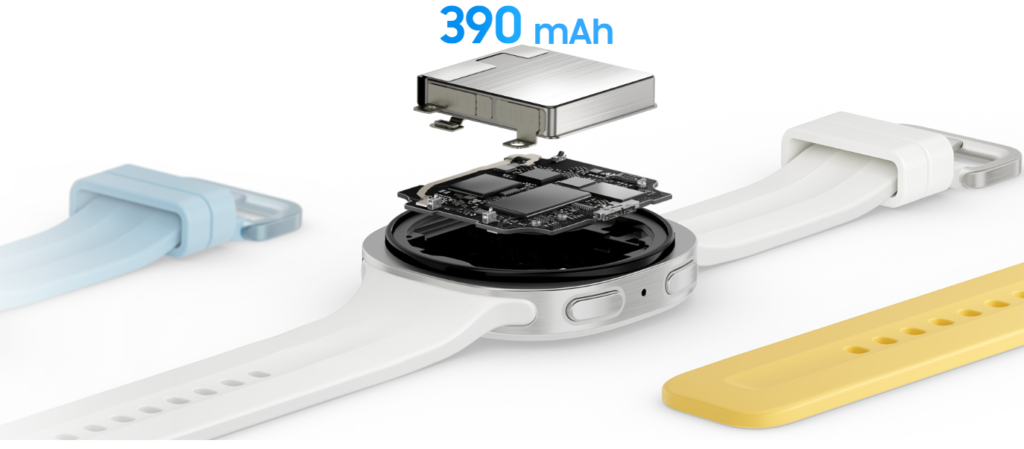
What makes this generation interesting is the balance. Samsung Galaxy Watch 9 keeps the familiar round Galaxy Watch identity, yet it gets meaningful internal changes. The 40mm version moves to a 390mAh battery, while the 44mm model uses 445mAh. Samsung says the smaller battery is 20 percent larger than the previous 40mm model. The new processor is also designed to make health monitoring and everyday interactions faster and more efficient.
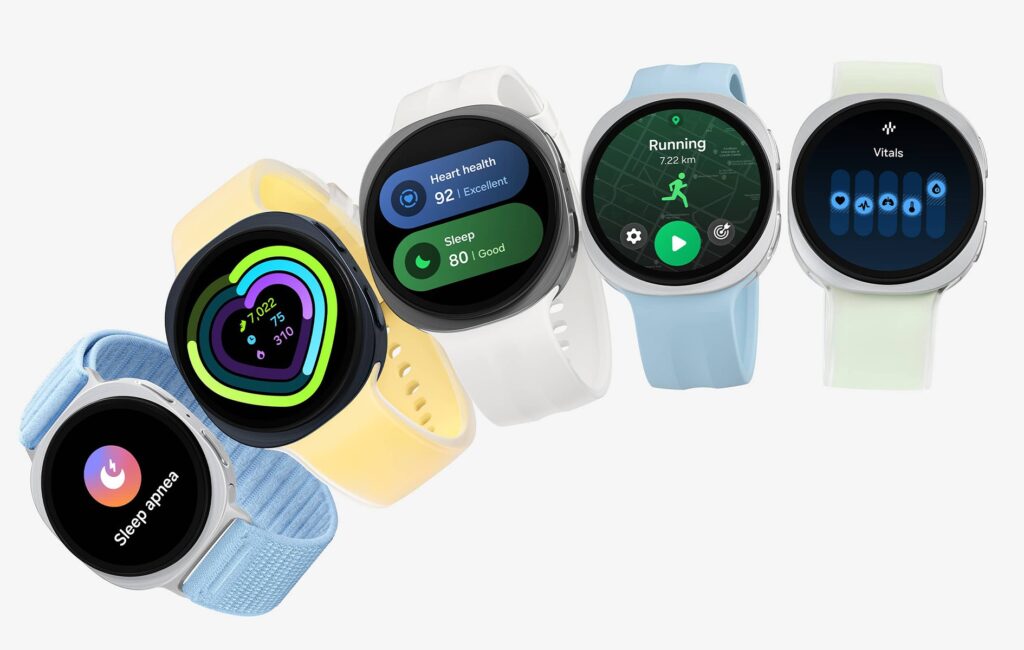
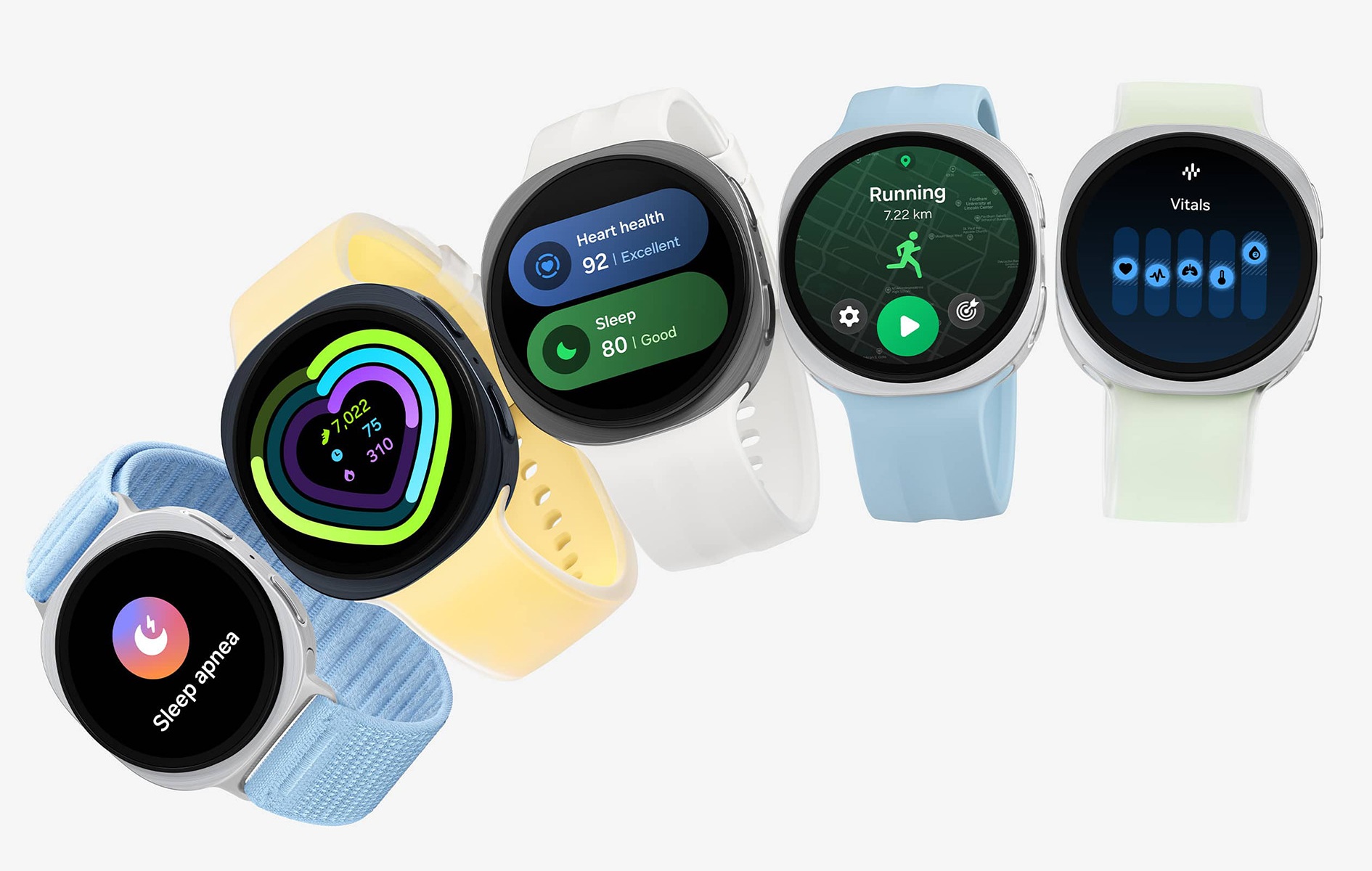
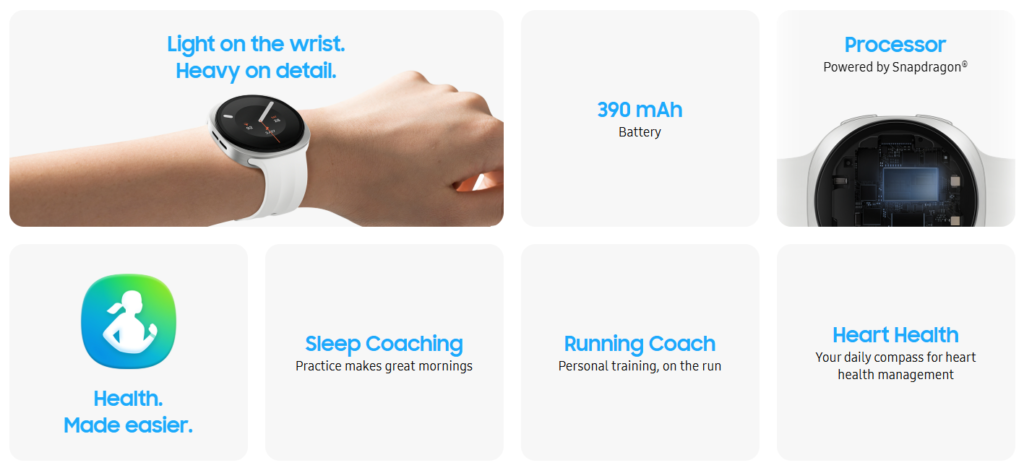
The first impression is that this is an evolution rather than a visual revolution. The design is polished, light, and easy to wear. The display is one of the strongest parts, especially outdoors. The software also feels more health-centered, with Energy Score, Sleep Coaching, Vitals, Heart Health Score, and Running Coach. The target audience is broad. Galaxy Watch 9 suits Galaxy phone owners, Android users, runners, casual athletes, and people who want detailed sleep and wellness tracking. It is less compelling for iPhone owners, because Samsung does not support iPhone pairing. It is also not the right choice for someone seeking extreme adventure durability, where the Ultra2 remains the stronger option. In practice.
Smartwatch at a Glance
Design & Build Quality
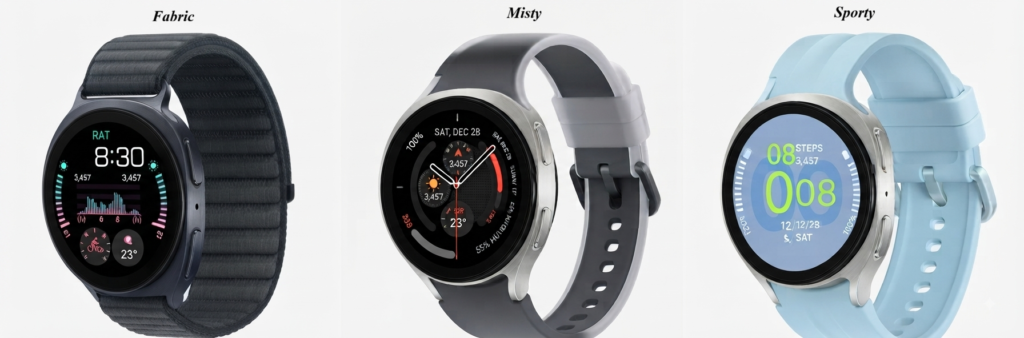
Overall Design of Samsung Galaxy Watch 9
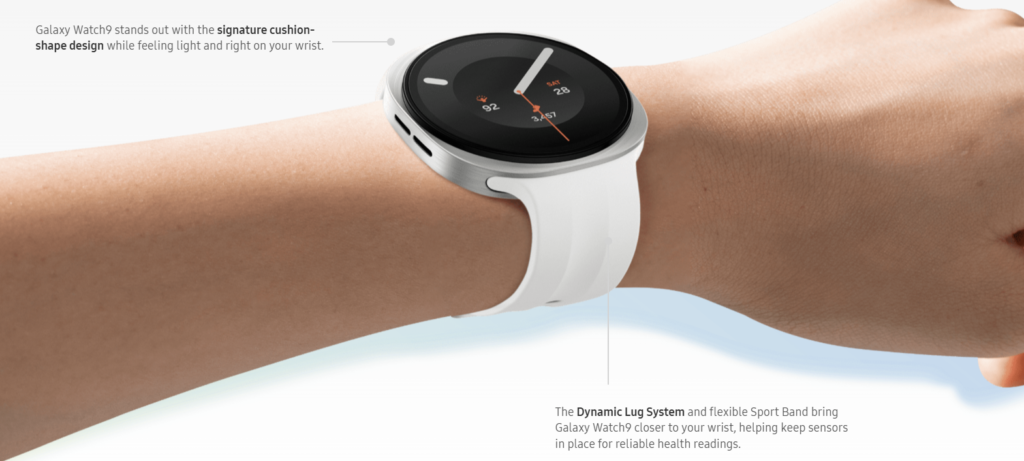
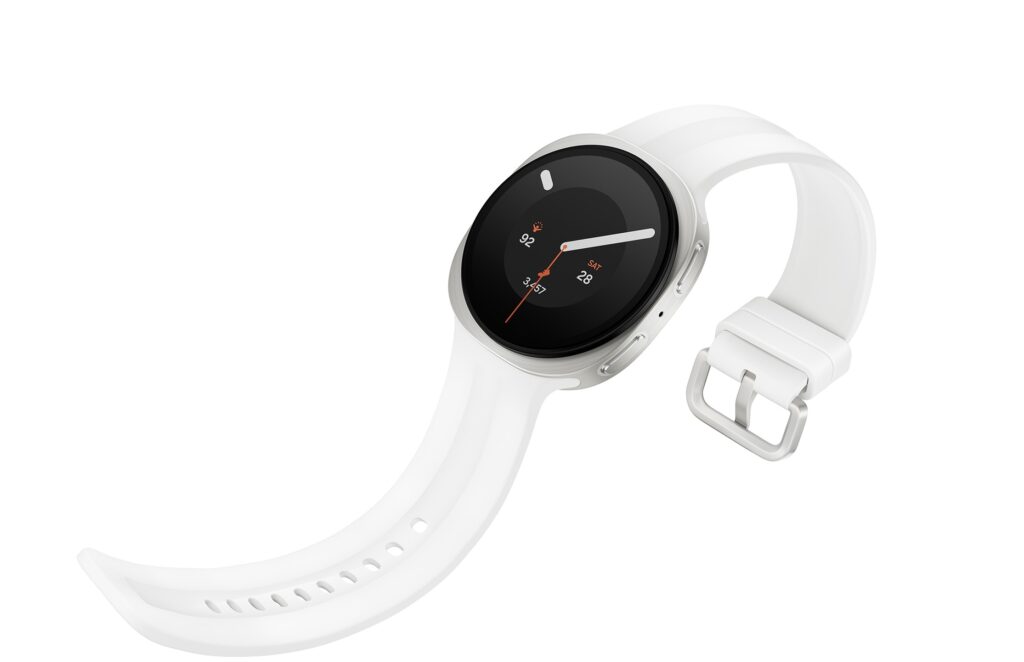
The design takes a careful approach. Samsung does not abandon the recognizable circular Galaxy Watch shape. Instead, it refines the proportions and improves how the watch sits against the wrist. The body remains slim at 8.6mm, which helps it disappear under sleeves. The 40mm model weighs about 31.5g, while the 44mm version is about 34g.
Case
The case is aluminum, so the watch is lighter than a premium titanium adventure model. The finish looks clean and contemporary. Graphite gives the watch a more understated character. Cream or Silver provides a softer appearance. The updated Dynamic Lug System helps the band sit closer to the case.
Samsung Galaxy Watch 9 Display
The display is a major strength. The 40mm model has a 1.34-inch Super AMOLED panel, while the 44mm model increases that to 1.47 inches. Both offer 327 pixels per inch, full-color Always on Display support, and brightness up to 3,000 nits. Sapphire crystal glass also gives the screen a stronger defense against scratches than ordinary glass.
Samsung Galaxy Watch 9 Strap or Band
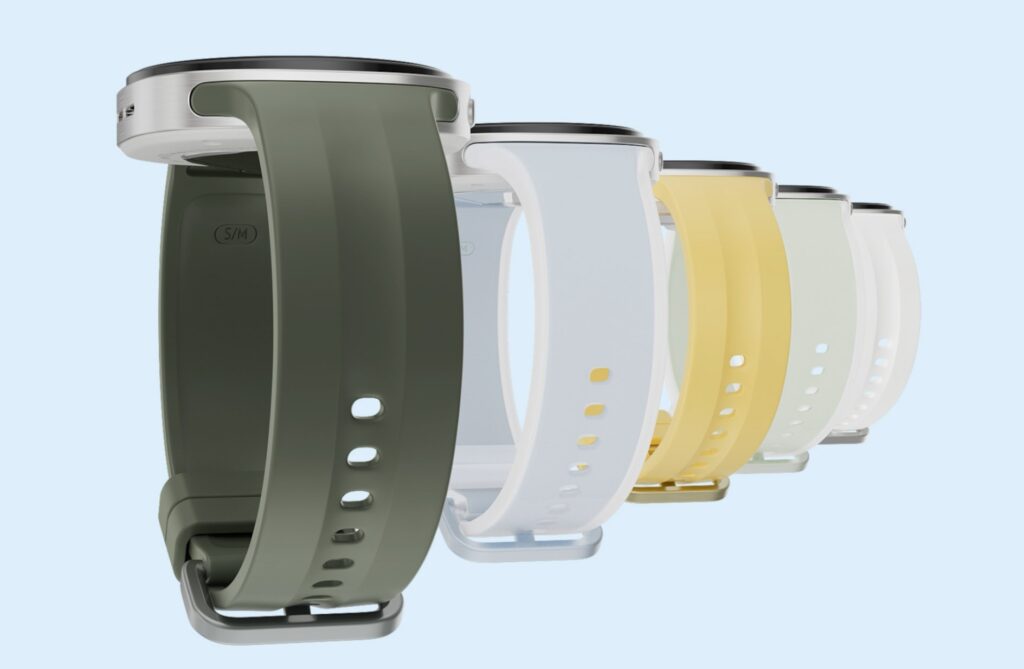
The strap deserves attention too. Samsung’s Sport Band uses an Air Pocket design intended to improve comfort and airflow. The band is soft and flexible enough for daily wear and exercise. Other compatible bands allow more styling freedom.
Hardware & Specifications
Processor & Performance of Samsung Galaxy Watch 9
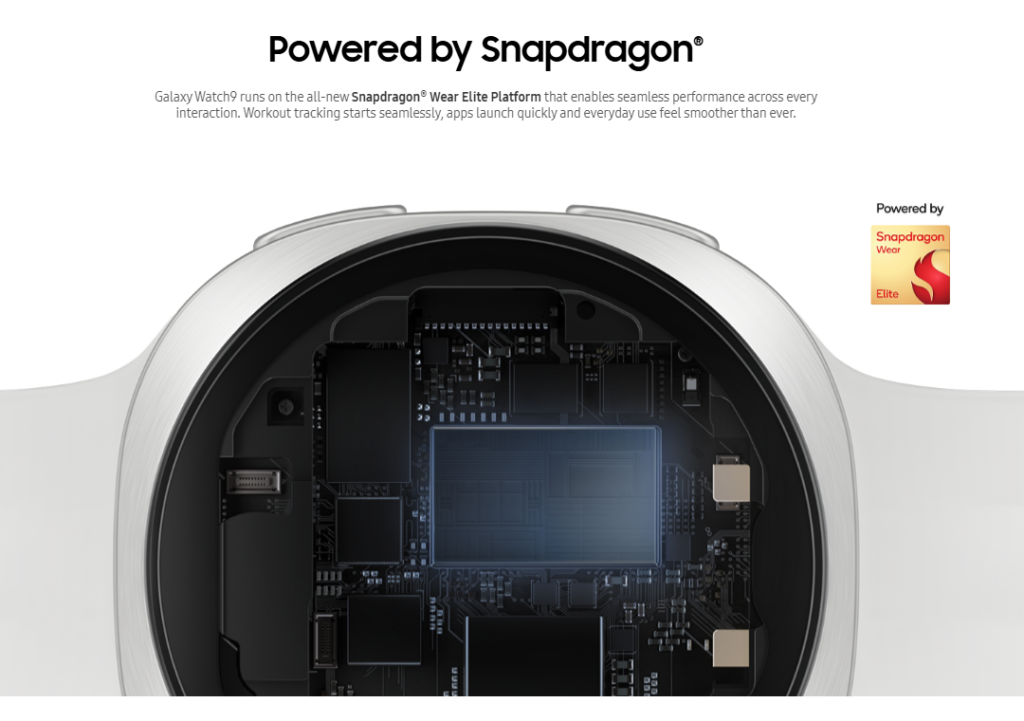
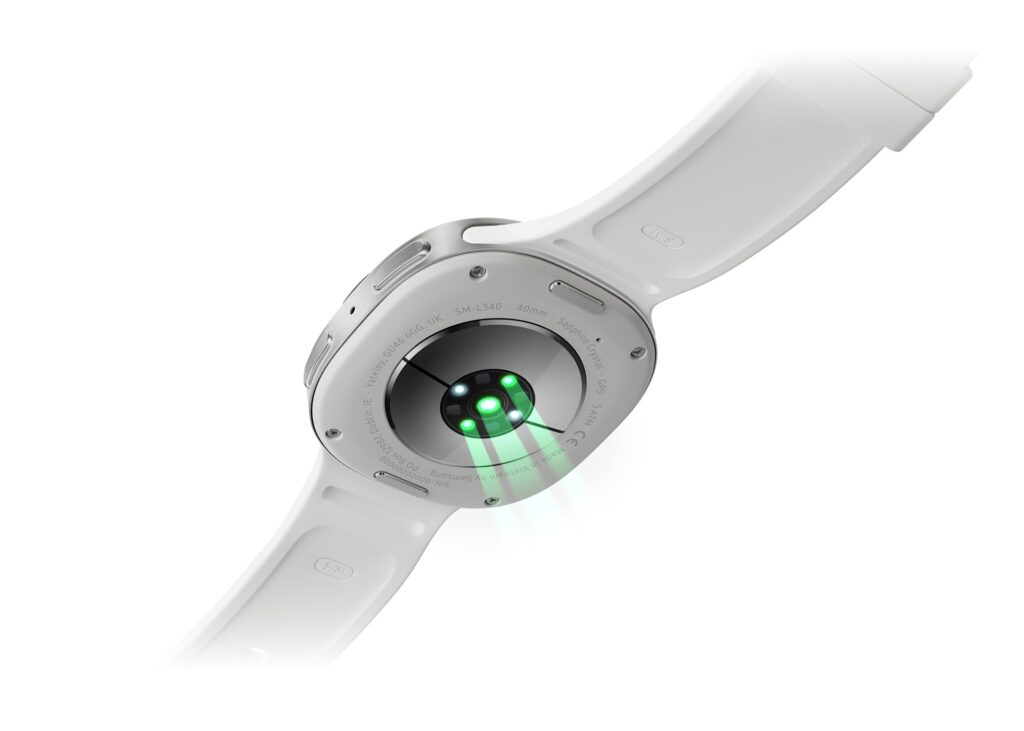
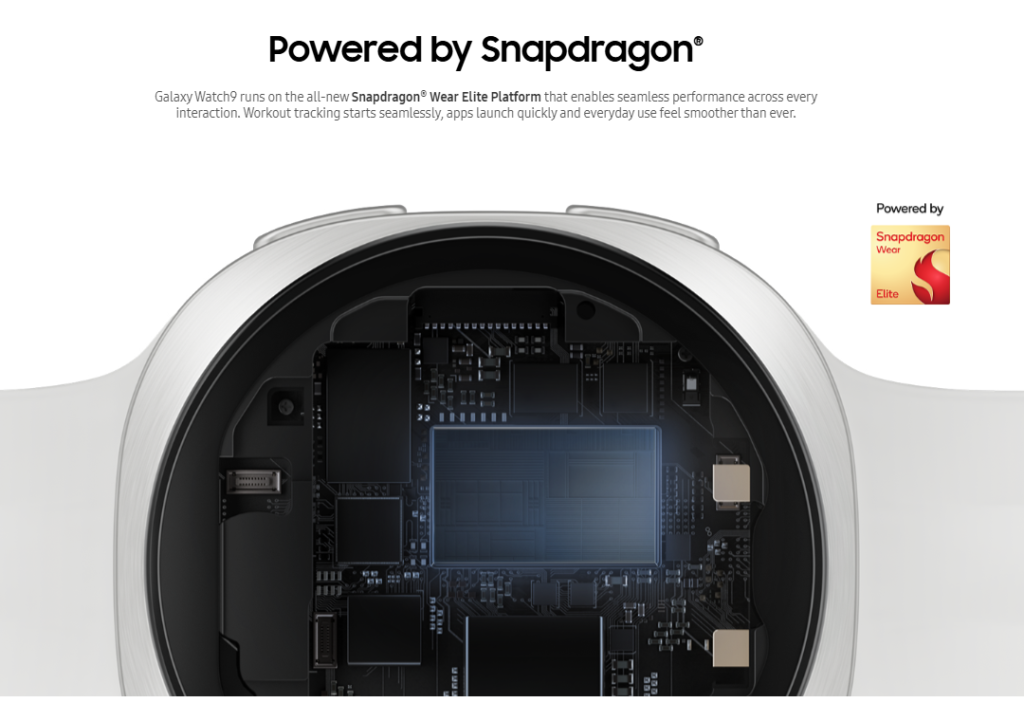
Hardware is where this generation makes one of its clearest moves. The Samsung Galaxy Watch 9 uses Qualcomm’s Snapdragon Wear Elite platform. Samsung describes it as the first Galaxy Watch to use this platform. The chip is built around a 3nm process and uses five CPU cores. The goal is not simply higher benchmark numbers. The more useful benefit is faster interaction while keeping health monitoring efficient.
Storage
Memory is 2GB RAM, with 32GB of internal storage. That storage is enough for apps, watch faces, music, and offline content, although usable space is lower after the operating system and preinstalled software. For most smartwatch users, it should be comfortable.
Samsung Galaxy Watch 9 Sensors
The sensor package is comprehensive. It includes Samsung’s Bio-Active Sensor system, optical heart-rate sensing, electrical heart sensing, bioelectrical impedance analysis, infrared temperature sensing, an accelerometer, gyro, barometer, geomagnetic sensor, and light sensor. These components support exercise tracking, sleep analysis, body-composition measurements, ECG-related functions, temperature trends, and broader wellness features.
Connectivity
Connectivity is equally modern. Bluetooth 6.0 handles phone and accessory connections. Dual-band Wi-Fi supports 2.4GHz and 5GHz networks. NFC enables compatible contactless functions. LTE models add cellular connectivity, allowing calls and data when the phone is away, subject to carrier support.
GPS is built in for outdoor activities. Samsung also supports location services through the watch software and mapping applications. The hardware package therefore covers everyday smartwatch duties and more demanding fitness use.
In practical terms, this is a strong specification set. The most important upgrade is not one isolated sensor. It is the combination of a newer processor, generous storage, broad connectivity, and a mature sensor platform. That combination gives the watch enough hardware headroom for health features and future Wear OS updates. That matters.
Software & User Interface
Samsung Galaxy Watch 9 Operating System
The software experience is built around Wear OS 7 with Samsung’s One UI 9 Watch. That combination gives the watch access to Google’s smartwatch ecosystem while retaining Samsung’s familiar interface. The result is more flexible than a closed smartwatch platform. Users can install applications, choose watch faces, use Google services, and still benefit from Samsung Health.
User Experience
Navigation follows the familiar Galaxy Watch approach. Tiles provide quick information, notifications appear clearly, and apps can be reached without much friction. The circular interface makes workout data and health summaries easy to scan. Samsung also puts more emphasis on contextual information rather than simply listing raw measurements.
Watch Faces
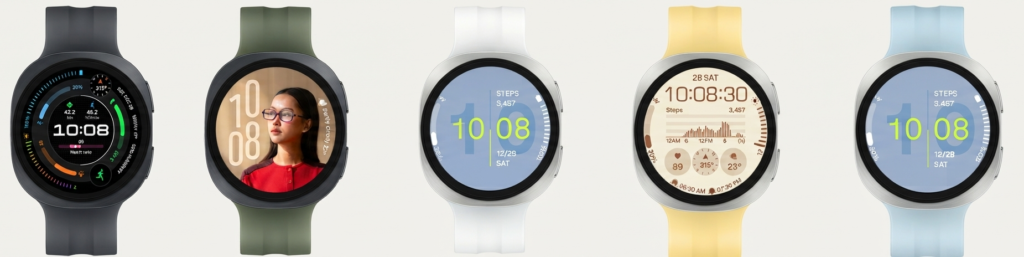
Watch faces remain a major customization area. Users can choose traditional analog designs, digital layouts, health-focused screens, and styles that surface activity information. The large AMOLED panel helps these faces look crisp. Always on Display support is useful when the watch needs to behave like a conventional timepiece.
Apps & App Store
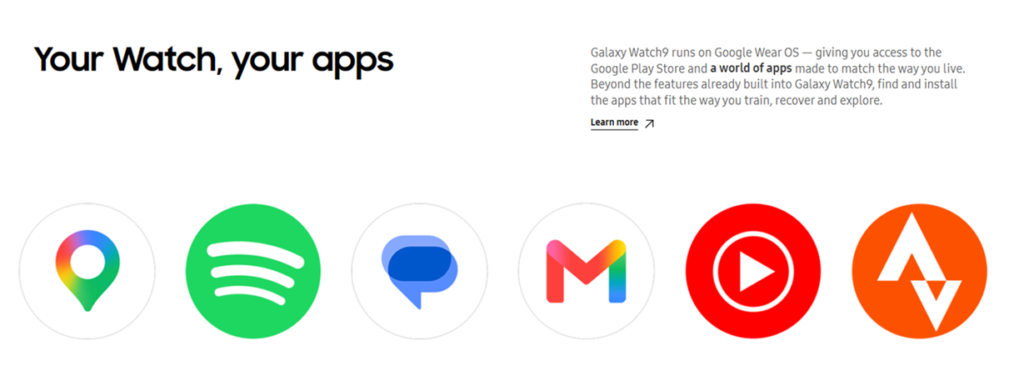
The app ecosystem is broader than Samsung’s own catalog. Google Maps, Gmail, Strava, Spotify, Google Messages, and YouTube Music are among the supported applications shown by Samsung. That matters because a smartwatch becomes much more useful when users can select the services they already use.
Software Updates
Updates are another advantage of a modern Wear OS device. Samsung can deliver operating-system improvements, security patches, and feature updates through its software channels. Availability and timing can vary by market, carrier, and device configuration.
The biggest strength is integration. Samsung’s interface does not feel like stock Wear OS, but the underlying platform provides more choice. The experience is therefore well suited to Android users who want both Google services and Samsung Health.
Smartphone Compatibility & Ecosystem
Smartphone compatibility is one of the most important buying decisions. The watch is designed for Android phones. Samsung’s health features work especially well when the watch is paired with a recent Galaxy smartphone, because Samsung can combine watch data with its broader Galaxy ecosystem. Some features also require compatible Samsung devices, regional availability, or specific software versions.
Android Compatibility
Android compatibility is therefore broad, but not every function is identical across every phone. Users should check their phone model, Android version, Samsung Health version, and local service availability before purchasing. Samsung states that some wellness functions require Android 13 or later and Samsung Health 6.30 or later.
IPhone Compatibility
IPhone compatibility is the major limitation. Unlike some Wear OS products from other brands, this watch is not intended to pair with an iPhone. That makes the buying decision simple for Apple users. If the phone is an iPhone, a different smartwatch platform is usually a better fit.
Ecosystem Integration
Ecosystem integration is one of the watch’s strongest reasons to stay within Galaxy. Notifications, calls, health data, settings, and certain controls can work together across compatible Galaxy devices. Samsung Health acts as the central dashboard. It organizes activity, mindfulness, nutrition, sleep, and vitals in one place.
Companion App
The companion-app experience is therefore important. Samsung Health handles health information and many wellness insights. Galaxy Wearable manages watch settings, apps, faces, connections, and accessories. Together they provide a reasonably unified control system.
For a Galaxy phone owner, the watch feels like a natural extension of the phone. For a non-Samsung Android owner, it remains useful, but some advanced capabilities may be more restricted. That distinction is worth remembering when comparing watches by price alone. The ecosystem can be as important as the hardware.
Health & Wellness Features
Samsung Galaxy Watch 9 Heart-Rate Monitoring
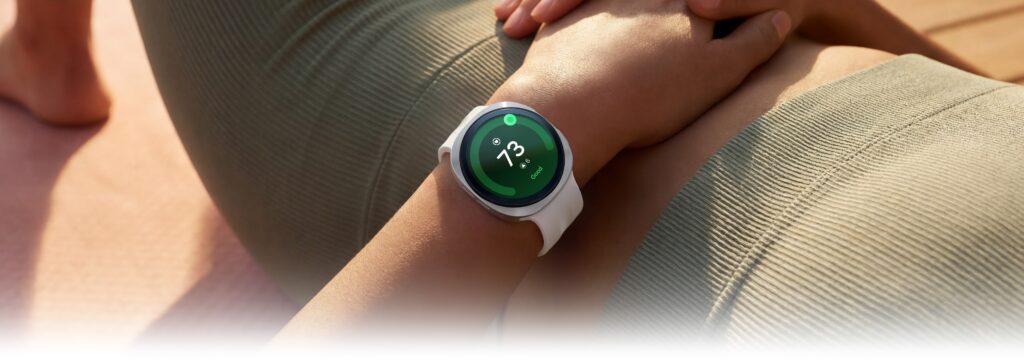
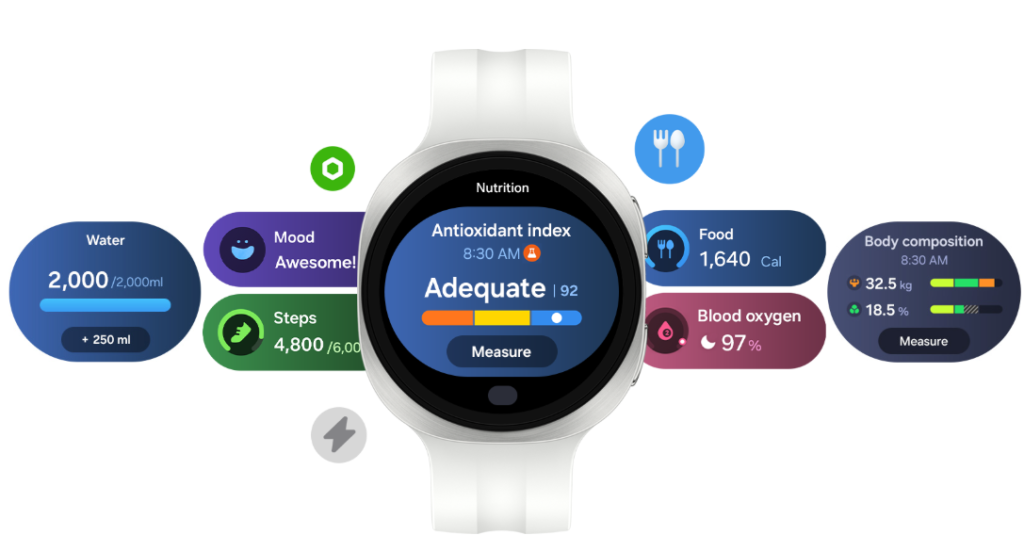
Health tracking is the central story. The watch combines optical, electrical, temperature, motion, and body-composition sensors to create a broad wellness picture. It can monitor heart rate continuously, provide ECG-related measurements where supported, estimate blood pressure after calibration with a cuff, and track blood oxygen during sleep.
Blood Oxygen / SpO₂
SpO2 tracking is particularly relevant to sleep. Samsung uses overnight blood-oxygen information as part of its sleep-apnea risk feature. The feature is intended to identify signs associated with moderate to severe obstructive sleep apnea. It is a wellness tool, not a diagnosis, and users with health concerns should consult a clinician.
ECG
ECG functionality uses the electrical heart sensor. Availability depends on country, regulatory approval, and compatible Samsung Health Monitor software. The same regional limits apply to blood-pressure features. Samsung requires calibration with a separate blood-pressure cuff before estimates can be generated.
Samsung Galaxy Watch 9 Temperature & Sleep Tracking
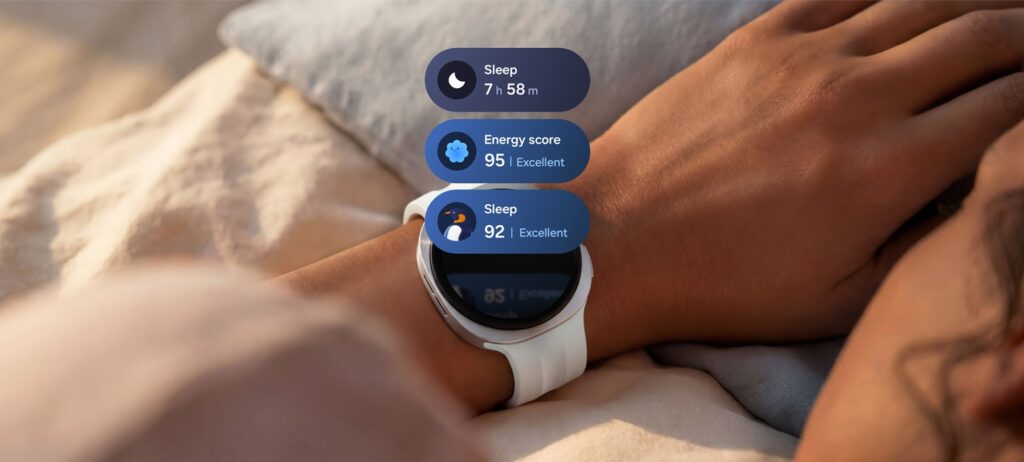
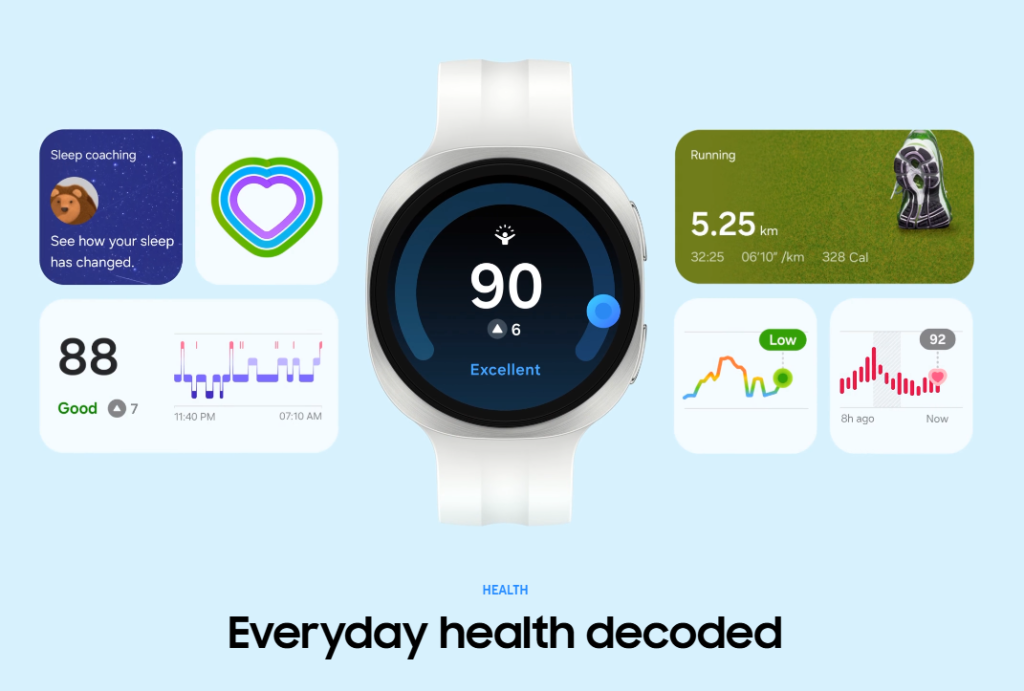
Temperature tracking adds another layer. The infrared temperature sensor can support skin-temperature trends and certain wellness features. Sleep tracking then combines duration, stages, movement, heart-related information, and other signals to create a broader view of nightly recovery.
Stress & Wellness
Stress and wellness tools are presented in a less clinical way. Energy Score turns recent sleep and activity information into a daily readiness-style number. Vitals tracks several overnight signals and can highlight unusual changes compared with a personal baseline.
Women’s Health Features
Women’s health features can use cycle information and temperature trends to support period tracking and related insights, subject to availability and applicable permissions.
The key point is that this watch is not simply counting steps. It tries to connect sleep, activity, cardiovascular signals, and recovery. That makes the health experience more useful for people who want trends over time rather than isolated measurements.
Fitness & Sports Tracking
Samsung Galaxy Watch 9 Workout Modes
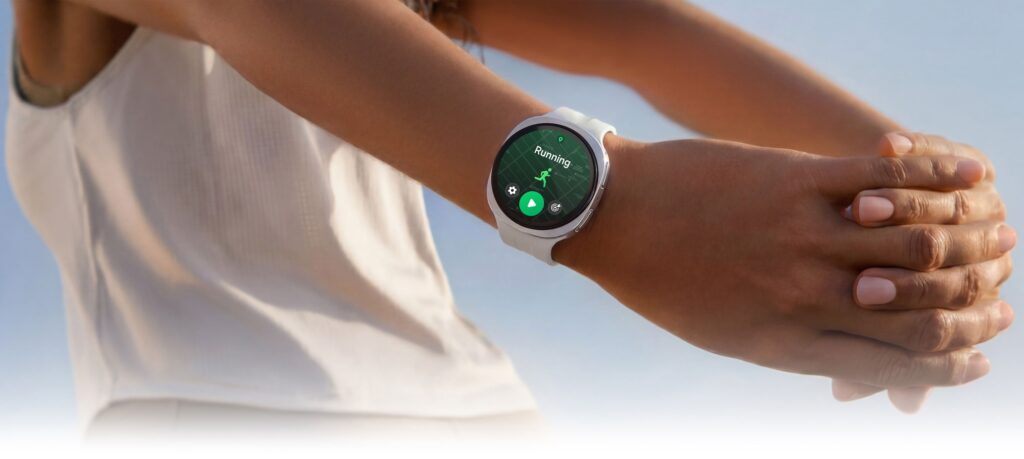
Fitness tracking covers a wide range of everyday exercise. The watch can detect and record workouts, monitor heart rate, estimate calories, track distance, and present performance information during training. Samsung Galaxy Watch 9 also adds a Running Coach designed to use personal data to guide running sessions.
Running
Running is one of the more developed experiences. The watch can use GPS, pace information, heart rate, and other signals to help runners understand their sessions. Training guidance is intended to balance effort and recovery rather than simply encourage harder workouts. That approach is useful for people who train regularly but do not want a complicated coaching system.
Cycling
Cycling benefits from GPS, speed, distance, heart-rate information, and route recording. The large display should be easy to read briefly during a ride, although cyclists who need advanced power-meter analytics may still prefer a dedicated cycling computer.
Swimming
Swimming is supported through the watch’s water resistance and workout tracking. The design is suitable for pool sessions and general water exposure within Samsung’s stated limits. Serious open-water athletes should still consider a specialist sports watch.
Other sports can be recorded through Samsung Health’s broad workout library. Strength sessions, walking, hiking, indoor exercise, and many common activities fit naturally into the ecosystem.
Fitness accuracy is more complicated. Wrist heart-rate tracking can be strong during steady activity but may become less consistent during rapid intensity changes, strength training, or poor strap contact. GPS accuracy can also change with buildings, trees, weather, and satellite conditions.
The real strength is consistency. A watch that is comfortable enough to wear all day can collect more useful trends than a device used only for workouts. Samsung combines workout data with sleep, recovery, and wellness information, making the fitness experience feel connected rather than isolated.
GPS & Navigation
Samsung Galaxy Watch 9 GPS Performance & Navigation
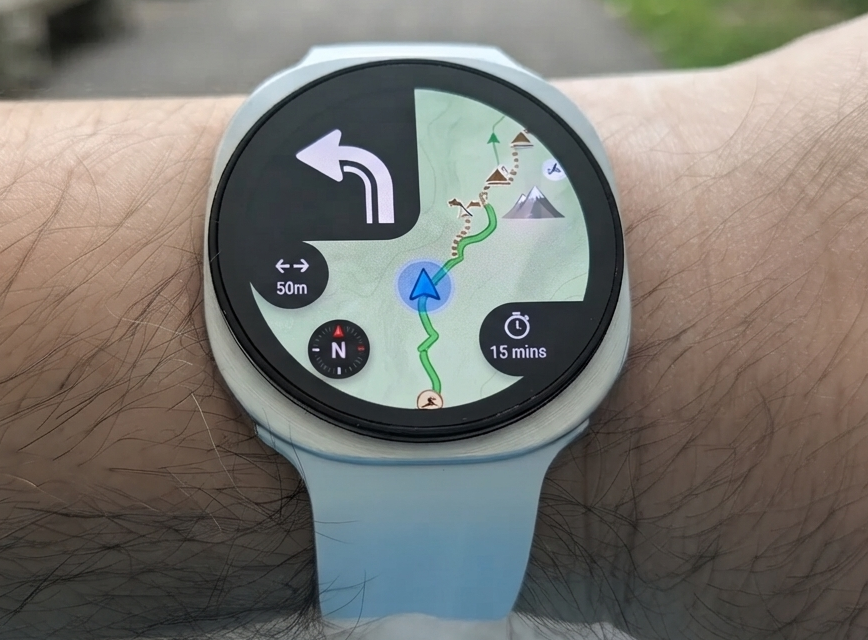
GPS performance matters because location data affects running distance, pace, cycling routes, and outdoor workout maps. The watch includes built-in GPS and supports navigation through compatible apps. Samsung Galaxy Watch 9 also pairs location tracking with the broader Wear OS application ecosystem, so users can choose services that fit their habits.
In a practical running scenario, the watch should be capable of recording distance, pace, route, and workout duration without requiring the phone to remain in the runner’s hand. That is useful for people who want a lighter setup. LTE models add another advantage because connected services can continue when the phone is not nearby, although cellular coverage remains dependent on the carrier.
Real-world GPS Performance
Real-world GPS performance should be interpreted carefully. A watch can perform differently in an open park, a dense city, a forest, or between tall buildings. Satellite acquisition can also take longer when conditions are poor. Therefore, a single route should not be treated as a universal accuracy verdict.
For everyday fitness, the hardware is well positioned. The watch has the connectivity, sensors, and software needed for route recording and navigation. Google Maps is also part of the supported application ecosystem, giving users access to familiar mapping tools. The display helps here too. A 3,000-nit Super AMOLED screen is useful when checking directions or workout information in daylight. The compact body keeps navigation wearable without becoming bulky.
The biggest consideration is the type of athlete. Casual runners, walkers, hikers, and cyclists should find the GPS feature set comprehensive. Ultra-distance athletes or people who depend on highly specialized navigation may want a dedicated outdoor computer with longer battery endurance. Overall, GPS is an important part of the package rather than an isolated headline feature. Its value comes from the way location data works with workouts, maps, notifications, and the rest of the smartwatch experience.
Smart Features
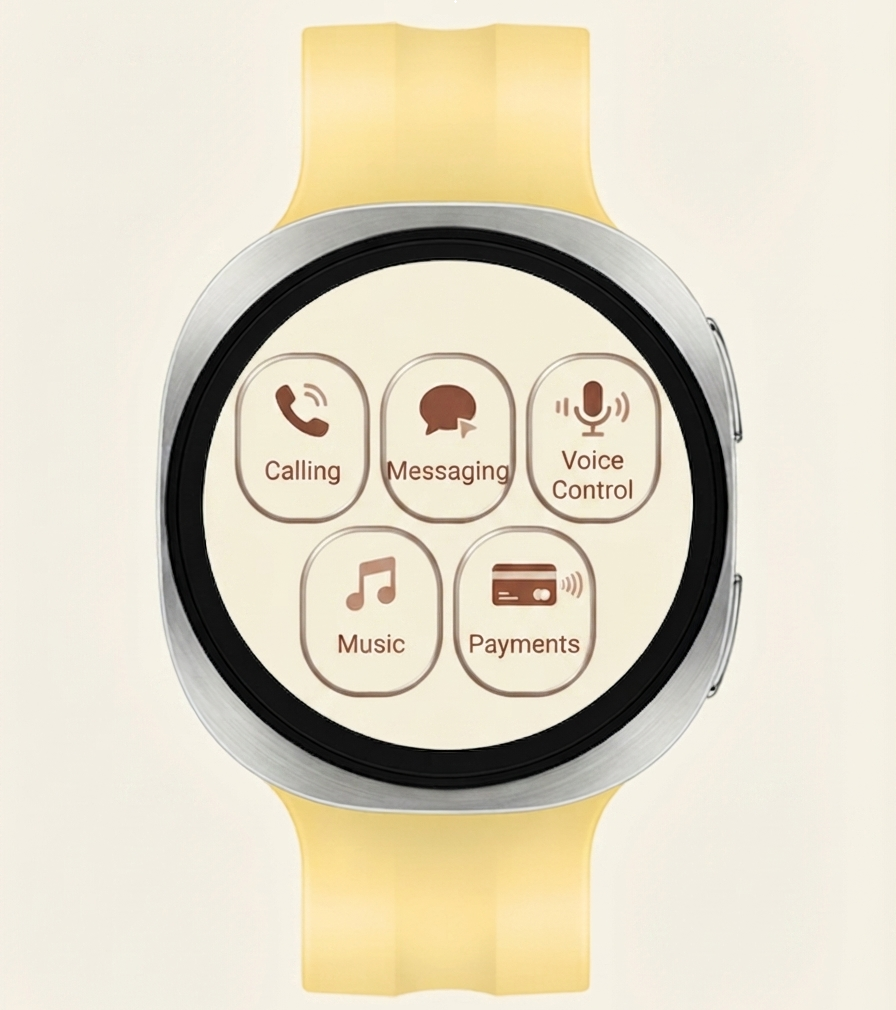
Smart features turn the watch from a health tracker into a small communications device. Notifications from compatible Android apps can appear on the wrist, allowing users to read messages and respond without reaching for the phone. The exact response options depend on the application and phone connection.
Samsung Galaxy Watch 9 Calling
Calling is supported, with LTE versions offering more independence from the smartphone. Bluetooth models can handle calls when connected to a compatible phone. The usefulness of LTE depends heavily on carrier support and whether the user wants another cellular plan.
Samsung Galaxy Watch 9 Messaging
Messaging is handled through supported applications, including Google Messages. Email services such as Gmail can also be accessed through the Wear OS ecosystem. The small screen is not ideal for long conversations, but quick replies are convenient.
Samsung Galaxy Watch 9 Voice Control
Voice control is another major feature. The watch supports Google’s Gemini AI experience and other compatible voice functions, giving users a way to interact without typing. Voice commands are particularly useful for timers, questions, navigation, and basic smart-home or app actions.
Music
Music support is strong because Wear OS offers apps such as Spotify and YouTube Music. Compatible services can provide streaming or offline playback depending on the app and subscription. This is useful for workouts where carrying a phone is inconvenient.
Samsung Galaxy Watch 9 Payments
Payments are enabled through NFC and compatible payment services. Availability varies by market, bank, and service provider. Users should therefore verify local support before buying specifically for contactless payments.
Other smart features include app installation, watch-face customization, navigation, alarms, timers, weather information, and controls for compatible devices. Galaxy ecosystem integration can add additional convenience. The overall smart experience is strongest when the watch is paired with an Android phone. It offers enough independence for many daily tasks while still working as a companion device.
Battery Life & Charging
Samsung Galaxy Watch 9 Battery Life
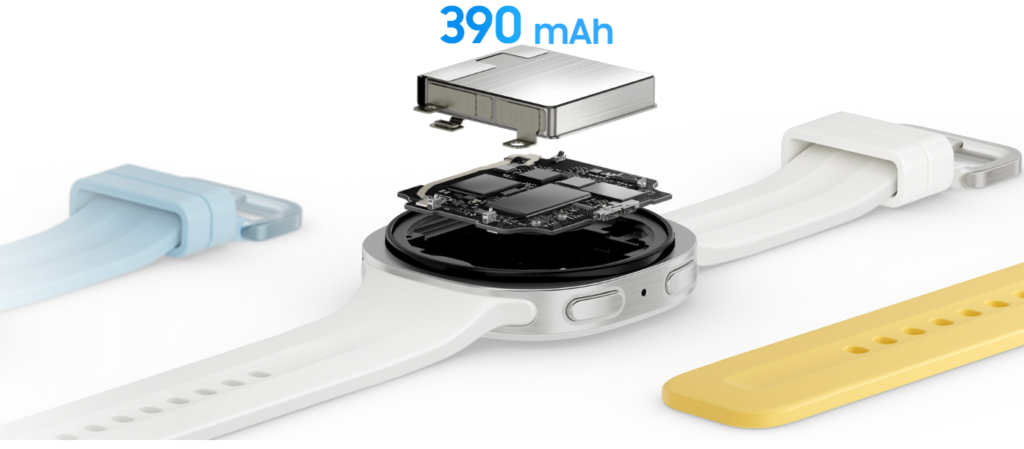
Battery life is one of the most important practical improvements. The 40mm version has a 390mAh battery, while the 44mm version uses 445mAh. Samsung says the smaller model gains 20 percent capacity over the previous 40mm generation. The larger model also increases capacity, although its gain is more modest.
Capacity
Capacity is only one part of battery performance. Display brightness, Always On Display use, GPS activity, LTE, calls, music streaming, sleep tracking, and notifications can all change endurance. A user who records workouts, sleeps with the watch, and keeps the screen active will get a different result from someone who uses it mainly for notifications.
Real-World Battery Life
Samsung does not make a single real-world number suitable for every user. That is the honest way to approach smartwatch battery life. The larger 44mm model should have the better endurance on paper because of its larger cell. The 40mm model is more attractive for smaller wrists but may need more frequent charging under heavy use.
Samsung Galaxy Watch 9 Charging
Charging is wireless. The included charging equipment is designed for the watch’s charging system, and users should use compatible Samsung-approved accessories for predictable results. Charging habits also matter. A short top-up during a shower or morning routine can reduce the need for long charging sessions.
Battery Test
A meaningful battery test would include several usage profiles. One test should use normal notifications and sleep tracking. Another should include daily GPS workouts. A third should activate Always on Display and heavier connectivity. A fourth should combine LTE, calls, and streaming.
For most users, the larger model is the safer battery choice. The smaller model remains attractive because its increased capacity addresses one of the common complaints about compact smartwatches. Overall, the generation moves battery endurance in the right direction without becoming an adventure-watch replacement.
Durability & Protection
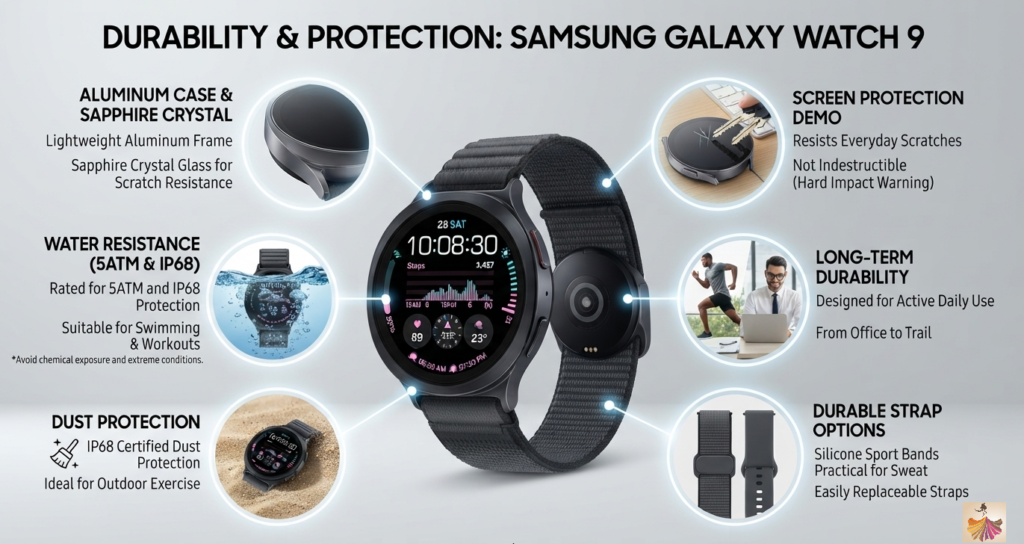
Durability is designed around every day active use rather than extreme expedition duty. The aluminum case keeps weight down, while sapphire crystal glass protects the display against scratches better than softer cover materials. That is a valuable combination for a watch worn continuously.
Water Resistance Ability of Samsung Galaxy Watch 9
Water resistance makes the watch suitable for common activities such as swimming and workouts where sweat or rain is unavoidable. Brand rates the Samsung Galaxy Watch 9 for 5ATM water resistance and IP68-level protection. Users should still follow Samsung’s guidance for water exposure and avoid treating water resistance as permanent. Seals can weaken with age, impact, chemicals, or improper handling.
Dust & Environmental Protection
Dust protection adds confidence for outdoor exercise. The watch is built to tolerate ordinary environmental exposure, but users should still clean it after heavy workouts or contact with salt water. Proper care is especially important around the sensors and charging contacts.
Screen Protection
Screen protection is one of the most reassuring design choices. Sapphire crystal resists everyday scratches from keys, desks, and normal contact better than many standard smartwatch screens. It is not indestructible, however. A hard impact can still damage a sapphire display or the surrounding case.
Long-Term Durability
Long-term durability will depend on the user. Someone who wears the watch for office work, running, walking, and sleep should find the design appropriate. Someone who regularly climbs, works around heavy machinery, or exposes the watch to severe impacts may prefer the tougher Ultra2.
The strap also affects durability. Silicone-style sport bands are practical for sweat and exercise, while alternative bands can change the watch’s appearance. Replacing a worn strap is generally easier than replacing the watch itself. Overall, the build strikes a sensible balance. It is lighter and less bulky than an adventure-focused model, yet it has meaningful protection for daily life. The watch should be treated as durable consumer electronics, not as indestructible equipment.
Audio, Microphone & Haptics
Audio performance
Audio performance is an important but often overlooked part of a smartwatch. The built-in speaker supports calls, alerts, timers, navigation prompts, and other sounds. It is not intended to replace a dedicated Bluetooth speaker, but it can be useful for short interactions.
For calls, clarity depends on both the speaker and microphone. A smartwatch microphone has to operate close to the wrist and can be affected by wind, movement, and surrounding noise. In a quiet room, it should be suitable for quick conversations. Outdoors, Bluetooth earbuds remain the better choice for longer calls.
Voice Interaction
Voice interaction makes microphone quality more important. Users may speak commands to Gemini or other compatible services. The system needs to capture speech while the wrist is moving, so placement and environmental noise can influence recognition.
Music playback is more practical through Bluetooth headphones or earbuds. The watch can act as a source for compatible music applications, which is useful for workouts when the phone is left behind. The built-in speaker remains more appropriate for alerts and voice functions.
Haptics are another strength of a wearable. A clear vibration can communicate notifications, alarms, workout milestones, timers, and incoming calls without requiring sound. This is especially useful in offices, meetings, classrooms, and quiet public spaces.
The quality of haptic feedback is also important for navigation. Distinct vibrations can help users notice an alert without constantly looking at the screen. Combined with the bright AMOLED display, this creates a discreet interaction style.
Overall, the audio hardware is functional rather than audiophile-oriented. The speaker is useful for short tasks, the microphone supports calls and voice commands, and the haptics provide a reliable notification channel. For most smartwatch users, that is exactly what these components need to accomplish. People seeking serious audio playback should continue to rely on dedicated headphones or speakers.
Privacy & Security
PIN/password protection
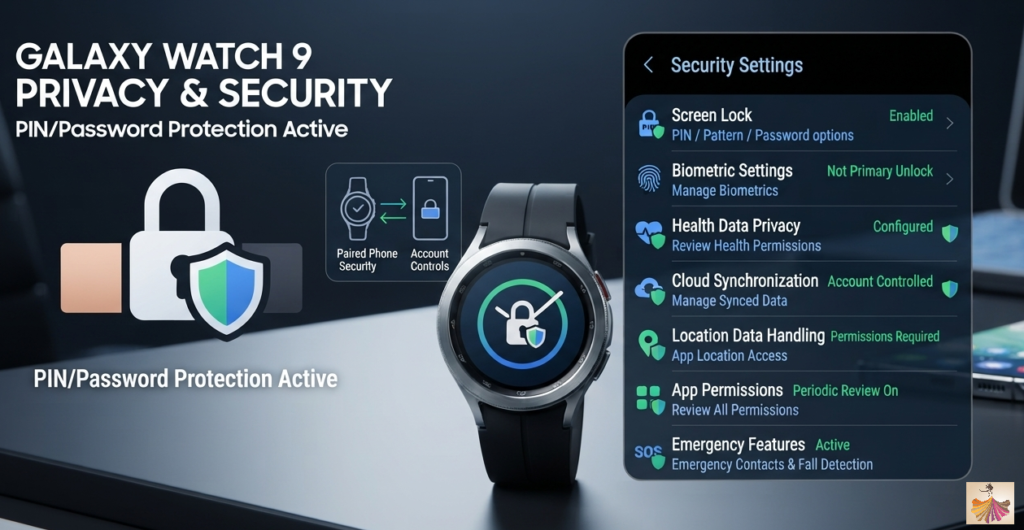
Privacy and security deserve attention because a smartwatch can hold health, location, communication, and account information. The device uses Samsung and Google security systems within the Wear OS ecosystem. Users can also configure a screen lock or PIN to help protect information if the watch is removed from the wrist.
Biometric security
Biometric security is not the main unlock method here. The practical protection comes from the device lock, paired-phone security, account controls, and app permissions. Users should enable a strong phone lock as well because the phone often provides access to the companion services that contain the broader data history.
Health-data privacy
Health-data privacy is especially important. Samsung Health can store information about sleep, heart rate, exercise, body composition, and other wellness measurements. Users should review privacy settings and permissions before granting access to third-party applications.
Cloud Synchronization
Cloud synchronization allows data to move between compatible Samsung services and devices. This is convenient, but it also means users should understand which information is synchronized and which account controls it. Data-storage and retention practices can vary by service and region.
Location Data Handling
Location data deserves similar care. GPS information can reveal routes, routines, and frequently visited places. Users should give location permission only to applications that genuinely need it. Wear OS and Android provide permission controls for this purpose.
App Permissions
App permissions should be reviewed periodically. A weather application may need location access, while a simple calculator should not. Restricting unnecessary permissions reduces exposure.
Emergency Features
Emergency features can add another layer of safety. Compatible Galaxy Watch functions may support emergency calls, fall-related features, or location sharing depending on region and configuration.
Performance Comparison with Previous Generations
Compared with the previous generation, the biggest changes are internal rather than cosmetic. The basic round design remains familiar, but the new model uses a refined cushion-style case profile, improved band fit, sapphire crystal, and the Dynamic Lug System. These changes make the watch feel like a polished continuation rather than a completely new product.
Display
The display improves with higher brightness and the same sharp AMOLED technology across the two sizes. Outdoor readability should therefore be stronger, especially when checking workout information or maps.
Processor
The processor is a more meaningful upgrade. The Snapdragon Wear Elite platform is the first of its kind in a Galaxy Watch, and Samsung positions it as a major performance and efficiency improvement. Faster response should be noticeable when opening apps, switching screens, and processing health information.
Battery Capacity
Battery capacity also moves forward. The 40mm model reaches 390mAh, which Samsung says is 20 percent more than the previous 40mm model. The 44mm model rises to 445mAh. These changes are important because battery life has a direct effect on sleep tracking and everyday convenience.
Sensor
The sensor package is not simply about adding one dramatic new sensor. Samsung instead builds a broader health platform around existing capabilities. Sleep Coaching, Vitals, Heart Health Score, Energy Score, Fitness Index, and Running Coach make the data more actionable.
Software is arguably the largest experience change. Wear OS 7 and One UI 9 Watch combine Google’s app ecosystem with Samsung Health and Galaxy AI features.
Is the upgrade worthwhile? For an older Galaxy Watch, the answer is more clearly yes. The new processor, battery, brighter display, and expanded health experience provide several practical reasons to upgrade. For a recent Watch8 owner, the decision is less urgent. The improvements are meaningful, but they are evolutionary rather than transformative.
Price & Value for Money
Price and value depend on market, size, connectivity, promotions, and trade-in offers. For a clear US reference, Samsung’s current store listings for Samsung Galaxy Watch 9 show 40mm Bluetooth at $379.99, 44mm Bluetooth at $409.99, 40mm LTE at $429.99, and 44mm LTE at $459.99. Those figures can change with promotions, so buyers should check the official store before ordering.
The launch and current pricing structure makes the 40mm Bluetooth model the entry point. It is the compact choice and suits smaller wrists. The 44mm Bluetooth version costs $30 more in the current US listing and gives buyers a larger display plus a larger battery. For users who prioritize endurance, that extra cost can be reasonable.
LTE adds another $50 over the corresponding Bluetooth model in the listed configurations. The cellular premium only makes sense if independent calls and data matter. A carrier plan can create an additional recurring cost, and support varies by country and network.
Accessories can increase the final budget. Replacement bands, premium bands, extra charging accessories, and protection products are optional. Samsung offers several band designs, while compatible third-party options can cost less. The watch itself includes a band and charging cable, but the box does not include a travel adapter according to Samsung’s regional listing.
The value case is strongest for Android users who will actually use health, sleep, fitness, GPS, apps, and smart features. Buyers who only want notifications may find cheaper watches sufficient.
There is also an upgrade-value question. Owners of an older Galaxy Watch can gain a newer processor, larger batteries, brighter display, and expanded wellness tools. Recent Watch8 owners have fewer reasons to upgrade immediately.
Galaxy Watch 9 vs. Galaxy Watch 8 vs. Galaxy Watch 7
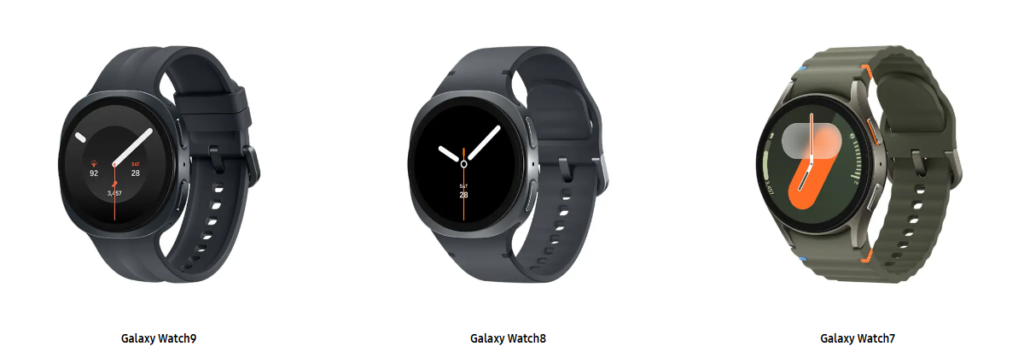
Table I
| Specification | Galaxy Watch7 | Galaxy Watch8 | Galaxy Watch9 |
| Launch date | July 10, 2024 | July 9, 2025 / sales July 25 | July 22, 2026 / sales Aug. 7 |
| Available sizes | 40mm, 44mm | 40mm, 44mm | 40mm, 44mm |
| Case material | Aluminum | Armor Aluminum | Aluminum |
| 40mm colors | Cream, Green | Graphite, Silver | Cream, Graphite |
| 44mm colors | Green, Silver | Graphite, Silver | Silver, Graphite |
| 40mm dimensions | 40.4 × 40.4 × 9.7mm | 42.7 × 40.4 × 8.6mm | 42.7 × 40.4 × 8.6mm |
| 44mm dimensions | 44.4 × 44.4 × 9.7mm | 46.0 × 43.7 × 8.6mm | 46.0 × 43.7 × 8.6mm |
| 40mm weight | 28.8g | 30g | 31.5g |
| 44mm weight | 33.8g | 34g | 34g |
| Display type | Super AMOLED | Super AMOLED | Super AMOLED |
| 40mm display | 1.3-inch, 432 × 432 | 1.34-inch, 438 × 438 | 1.34-inch, 438 × 438 |
| 44mm display | 1.5-inch, 480 × 480 | 1.47-inch, 480 × 480 | 1.47-inch, 480 × 480 |
| Pixel density | 327 ppi | 327 ppi | 327 ppi |
| Display protection | Sapphire crystal | Sapphire crystal | Sapphire crystal |
| Maximum brightness | Up to 2,000 nits | Up to 3,000 nits | Up to 3,000 nits |
| Always-On Display | Yes | Yes | Yes |
| Processor | Exynos W1000 | Exynos W1000 | Qualcomm Snapdragon Wear Elite / SDW6100 |
| CPU | 5-core, 3nm | 5-core, 3nm | 5-core |
| RAM | 2GB | 2GB | 2GB |
| Storage | 32GB | 32GB | 32GB |
| Operating system at launch | Wear OS 5 | Wear OS 6 | Wear OS 7 |
| Samsung UI | One UI 6 Watch | One UI 8 Watch | One UI 9 Watch |
| Bluetooth | Bluetooth 5.3 | Bluetooth 5.3 | Bluetooth 6.0 |
| Wi-Fi | 2.4GHz + 5GHz | 2.4GHz + 5GHz | 2.4GHz + 5GHz |
| NFC | Yes | Yes | Yes |
| GPS | Dual-frequency L1+L5 | Dual-frequency L1+L5 | GPS, GLONASS, Beidou, Galileo, QZSS |
| LTE option | Yes | Yes | Yes |
| 40mm battery | 300mAh | 325mAh | 390mAh |
| 44mm battery | 425mAh | 435mAh | 445mAh |
Table II
| AOD-off rated use | Up to 40 hours* | Up to 40 hours* | Up to 40 hours* |
| AOD-on rated use | Up to 30 hours* | Up to 30 hours* | Up to 30 hours* |
| Charging | Wireless charging | Fast wireless charging | Fast wireless charging |
| Water resistance | 5ATM | 5ATM | 5ATM |
| Dust protection | IP68 | IP68 | IP68 |
| MIL-STD-810H | Yes | Yes | Yes |
| Heart-rate monitoring | Yes | Yes | Yes |
| ECG | Yes, supported markets | Yes, supported markets | Yes, supported markets |
| Blood pressure | Yes, supported markets | Yes, supported markets | Yes, supported markets |
| Blood oxygen / SpO₂ | Yes | Yes | Yes |
| BIA body composition | Yes | Yes | Yes |
| Temperature sensor | Yes | Yes | Yes |
| Sleep tracking | Yes | Yes | Yes |
| Sleep apnea detection | Yes | Yes | Yes |
| Sleep Coaching | Yes | Yes | Yes |
| Energy Score | Yes | Yes | Yes |
| Vitals | — | Yes | Yes |
| Running Coach | — | Yes | Yes |
| Fitness Index | — | — | Yes |
| Heart Health Score | — | — | Yes |
| Antioxidant Index | — | Yes | Yes |
| Cycle tracking | Yes | Yes | Yes |
| Automatic workout detection | Yes | Yes | Yes |
| Fall detection | Yes | Yes | Yes |
| Voice assistant | Google Assistant/Gemini depending on software | Gemini | Gemini |
| Music apps | Wear OS apps | Wear OS apps | Wear OS apps |
| Google Maps | Yes | Yes | Yes |
| Google Play Store | Yes | Yes | Yes |
| Samsung Health | Yes | Yes | Yes |
| iPhone compatibility | No | No | No |
| Android compatibility | Android 11+* | Android 11+* | Android-compatible phones; requirements vary |
| 40mm Bluetooth launch MSRP | $299.99 | $349.99 | $379.99 |
| 44mm Bluetooth launch MSRP | $329.99 | $379.99 | $409.99 |
| 40mm LTE launch MSRP | $349.99 | $399.99 | $429.99 |
| 44mm LTE launch MSRP | $379.99 | $429.99 | $459.99 |
| Current Samsung US MSRP examples | $249.99 / $279.99 BT | $349.99 / $379.99 BT | From $379.99 |
Pros & Cons
Pros of Samsung Galaxy Watch 9
The first major advantage is the display. The Super AMOLED panel is sharp, colorful, and exceptionally bright, with up to 3,000 nits. That makes every day viewing and outdoor workouts easier.
The second advantage is the processor. Snapdragon Wear Elite gives this generation a newer performance foundation. The watch should feel more responsive and better prepared for demanding health and software features.
Battery capacity is another positive. The 40mm model reaches 390mAh, while the 44mm model uses 445mAh. The larger cells do not guarantee a fixed number of hours, but they improve the hardware baseline.
Health tracking is arguably the reason to buy. Sleep Coaching, Energy Score, Vitals, Heart Health Score, Running Coach, ECG-related features, blood-pressure estimates, temperature sensing, and sleep-apnea risk detection create a broad wellness platform. Availability varies by market and device.
The watch also benefits from Wear OS. Access to Google services and third-party apps makes it more flexible than a closed platform. LTE provides additional independence for users who need calls and data away from their phones.
Cons Samsung Galaxy Watch 9
There are clear drawbacks of Samsung Galaxy Watch 9. IPhone users are effectively excluded because the watch is designed for Android. Some health features require Samsung phones, Samsung Health, specific software, regulatory approval, or compatible services. Battery life remains dependent on usage, so heavy GPS or LTE users should not expect the same endurance as a simple fitness tracker.
The aluminum case is light, but extreme outdoor users may prefer the tougher Ultra2. The standard model also lacks the enormous battery of that rugged sibling.
Overall, the strengths outweigh the limitations for the right buyer. The watch is strongest as an everyday Android health and fitness companion, not as a replacement for a professional sports computer or an iPhone smartwatch.
Who Should Buy This Smartwatch?
The best buyer is an Android user who wants one wearable for health, fitness, communication, and everyday convenience. Galaxy phone owners are especially well matched because Samsung can connect the watch with Samsung Health and other Galaxy services. People who track sleep will also appreciate the broader overnight analysis and personalized guidance.
Runners are another strong audience. Running Coach, GPS, heart-rate tracking, workout recording, and recovery-oriented insights create a useful training package. Casual cyclists, swimmers, walkers, gym users, and people building healthier routines can also benefit from the wide activity library.
The watch is equally relevant to people who want a traditional-looking smartwatch. The circular case is more discreet than a large adventure watch. The 40mm version suits smaller wrists, while the 44mm model gives users more screen area and battery capacity.
It is less ideal for iPhone owners. The lack of iPhone compatibility makes the purchase difficult to justify. Apple users will usually have a smoother experience with a watch designed for iOS.
It may also be unnecessary for people who already own a recent Galaxy Watch and are satisfied with its performance. The new processor and battery are meaningful, but the overall design is evolutionary. Owners of a newer model should compare the health features they actually need before upgrading.
Finally, buyers who dislike frequent charging should consider the 44mm version rather than the smaller case. LTE users should also verify carrier support before paying the cellular premium.
Conclusion
Samsung Galaxy Watch 9 is a refinement of Samsung’s mainstream smartwatch formula. It does not attempt to become an enormous adventure computer. Instead, it focuses on comfort, health insight, software flexibility, and faster everyday interaction.
The new Snapdragon Wear Elite platform is a strong foundation. It gives the watch a modern processor and helps Samsung deliver smoother health and software experiences. The 40mm and 44mm battery increases are also welcome, particularly for users who track sleep every night.
The display remains one of the convincing reasons to choose this model. The Super AMOLED panel is sharp and bright, while sapphire crystal adds useful scratch resistance. The lighter aluminum construction keeps the watch comfortable enough for continuous wear.
Health is the central theme. Sleep Coaching, Energy Score, Vitals, Heart Health Score, Fitness Index, Running Coach, ECG-related functions, temperature tracking, and blood-oxygen monitoring give users many ways to understand their routines. These features should be treated as wellness tools rather than medical diagnoses, and availability differs by country.
The software package is equally important. Wear OS 7 and One UI 9 Watch combine Samsung’s polished interface with Google’s broader smartwatch ecosystem. Apps, maps, music, messaging, calls, notifications, NFC, and voice features make the watch useful beyond fitness.
The main limitations are clear. IPhone users should look elsewhere. Some advanced health functions depend on compatible Galaxy phones and regional approval. Serious outdoor athletes may also prefer the more rugged Ultra2.
For most Android buyers, however, the balance is compelling. It is comfortable, powerful, health-focused, and versatile. The upgrade makes the most sense for owners of older Galaxy Watches or buyers entering Samsung’s ecosystem for the first time. The newest model is not a radical reinvention, but it is a well-rounded smartwatch built around practical improvements.