Jackets in Action: Puffer jackets for hiking and Skiing Approved?
Yes, you can wear puffer jackets for hiking or skiing. However, there are several factors to consider. Puffer coats are adaptable, although they aren’t suitable for all conditions. Here’s everything you should know about wearing puffer coats on the slopes or trails.
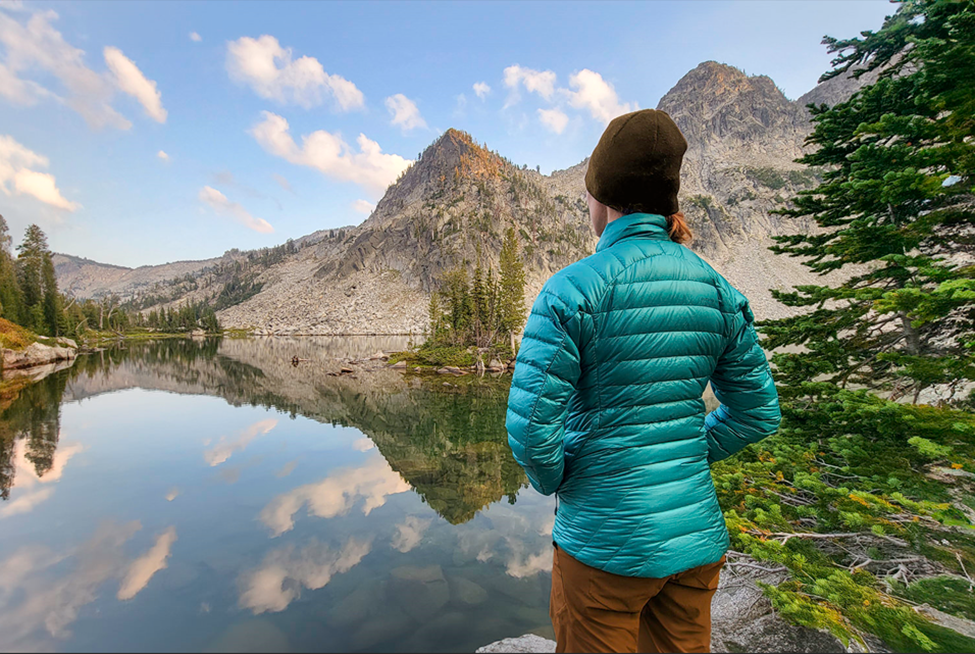
Why Choose Puffer Jackets for Hiking or Skiing?
Puffer jackets offer adequate insulation and warmth. They are created with down or polyester filling. This filling maintains heat and keeps you cozy in cold conditions. Furthermore, puffer jackets are lightweight and packable, which makes them easy to transport. These qualities make puffer jackets ideal for being outside.
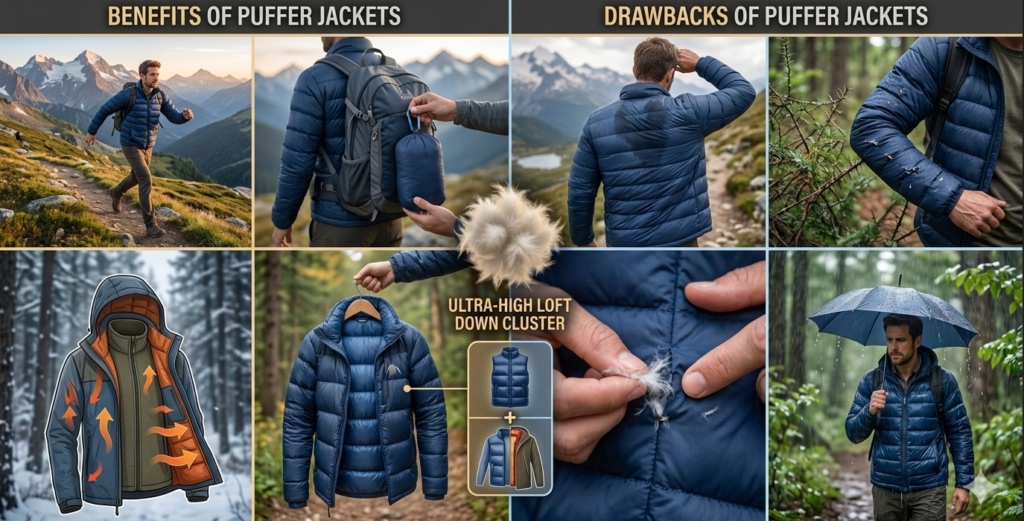
Benefits of Puffer Jackets for Hiking
- Lightweight and Easy to Carry
Puffer jackets are light, which makes them great for hiking. You won’t feel weighed down while walking on long trails. Most puffer jackets use lightweight insulation materials. These materials reduce the total weight of the jacket. Hikers can move comfortably during long outdoor trips. Light jackets also reduce fatigue during extended hikes. They fit easily inside backpacks when not needed. This convenience makes them ideal for day hikes. - Warmth Without Bulk
Puffer jackets provide warmth without extra weight. They are ideal for chilly hikes, especially in the morning or evening. Insulated chambers trap warm air close to the body. This helps maintain body temperature in cool environments. Modern designs reduce unnecessary bulk and thickness. Hikers stay warm without restricting their movement. Efficient insulation also improves comfort during rest breaks. This makes puffer jackets practical for mountain conditions. - Good Mid-Layer Option
Puffer jackets for hiking can be used as a mid-layer. You can add a shell on top if it’s windy or wet. Layering helps hikers adjust clothing during temperature changes. A puffer jacket adds insulation between base and shell layers. This system traps body heat more effectively. Hikers can remove layers when temperatures increase. Flexible layering improves comfort during long treks. It also protects hikers in unpredictable mountain weather. - Compact and Packable
Puffer jacket for hiking might serve as a mid-layer. If it’s windy or damp, place a shell over top. Many puffer jackets are highly compressible. They fold into small pockets or storage bags. This allows hikers to save valuable backpack space. Packable jackets are easy to carry during travel. Quick packing helps when weather suddenly changes. Hikers can quickly add warmth during cold conditions.
Drawbacks of Wearing Puffer Jackets for Hiking
- Not Very Breathable
Puffer jackets are designed to trap heat. When hiking, you may start sweating, and puffer jackets don’t release heat well. This can cause discomfort during intense activity. Limited breathability may trap moisture inside the jacket. Sweat buildup can reduce overall comfort during hiking. Wet inner layers may feel cold after resting. Some hikers remove the jacket during steep climbs. Proper layering helps manage temperature during movement. - Limited Water Resistance
Most puffer jackets are not waterproof. While some are water-resistant, they won’t keep you dry in heavy rain. If you’re hiking in rainy weather, a waterproof shell is essential. Down insulation performs poorly when soaked with water. Wet insulation loses much of its warming ability. Synthetic insulation performs better in damp conditions. However, prolonged rain still reduces overall warmth. Hikers should carry rain protection during wet seasons. - Can Be Fragile in Rough Terrain
Puffer jackets for hiking can get caught on branches or rocks. The exterior cloth is not often tough enough for rough landscape. Thin fabrics are used to reduce jacket weight. These fabrics can tear during rough outdoor use. Sharp rocks and thorns may damage the material. Careful movement helps prevent accidental tears. Durable outer shells may improve jacket lifespan.
Are Puffer Jackets Suitable for Skiing?
Puffer jackets can be useful for skiing, particularly in dry, cold conditions. They provide warmth and are easy to slide into. However, there are certain constraints on the slopes.
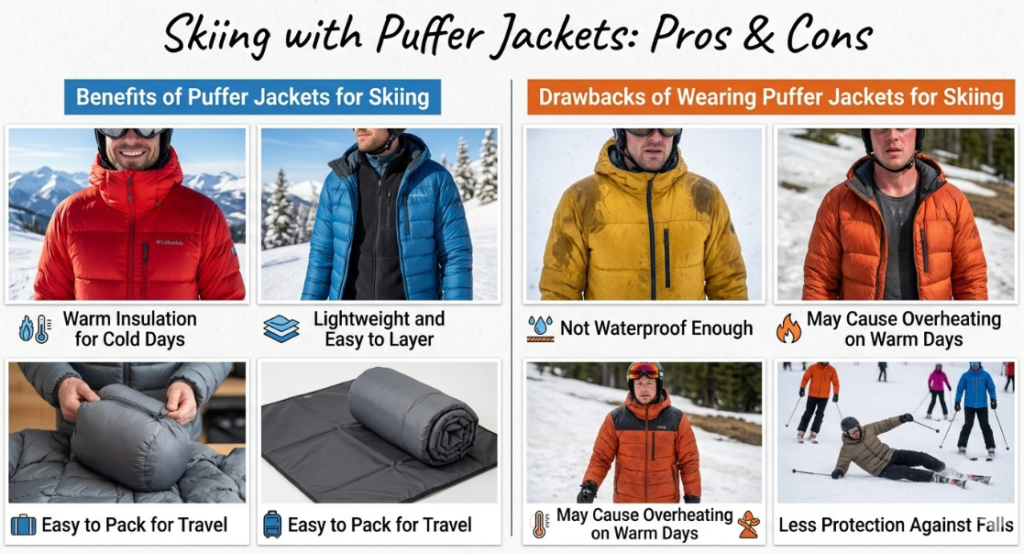
Advantages of Wearing Puffer Jackets for Skiing
- Warm Insulation for Cold Days
Puffer jackets are ideal for keeping warm. A puffer jacket can keep you warm and comfy while skiing on a frigid day. Insulated chambers trap body heat efficiently. This helps maintain warmth during freezing mountain temperatures. Cold winds are common on high ski slopes. A well-insulated jacket reduces heat loss. Down and synthetic fillings improve thermal performance. This warmth helps skiers stay comfortable longer outdoors. - Lightweight and Easy to Layer
Puffer jackets are light and easy to wear with other layers. They work well as a mid-layer under a ski shell for added warmth. Lightweight materials reduce pressure during movement. Skiers can move arms and shoulders easily. Layering systems improve temperature control during skiing. A base layer manages sweat and moisture. A puffer jacket provides additional insulation. A waterproof shell blocks snow and wind outside. - Easy to Pack for Travel
Puffer jackets are packable, which is great for ski trips. You can fold them easily into your luggage. Most jackets compress into small storage bags. This helps save space in travel luggage. Compact jackets are easy to carry on flights. Travelers often pack them for emergency warmth. They are useful during cold airport transfers. Quick packing also helps during changing weather conditions.
Drawbacks of Wearing Puffer Jackets for Skiing
- Not Waterproof Enough
Most puffer jackets won’t keep you dry in wet snow. Skiing in snowy or wet conditions? You’ll need a waterproof outer layer. Water can penetrate through lightweight fabrics. Wet insulation may lose its warming ability. Melting snow may soak into the jacket. A waterproof ski shell prevents moisture buildup. Proper layering keeps skiers dry and comfortable. - May Cause Overheating on Warm Days
Puffer jackets trap heat, which can cause you to overheat. On a sunny ski day, you might feel too warm. Skiing is a physically demanding activity. Body heat increases quickly during movement. Too much insulation may cause sweating. Excess moisture may reduce comfort on slopes. Some skiers remove layers during warmer conditions. - Less Protection Against Falls
Puffer jackets can tear if you fall. They are not intended for harsh environments; therefore, they may tear more quickly on slopes. Lightweight fabrics improve comfort but reduce durability. Sharp ski edges may damage the outer material. Repeated falls may weaken jacket stitching. Durable ski shells provide better fall protection. Protective outer layers improve long-term jacket durability.
How to Make a Puffer Jacket Work for Skiing or Hiking
To get the most out of your puffer jacket, use it strategically. Here are some tips:
- Layer Wisely
Use a puffer jacket as a mid-layer. Wear it under a waterproof or windproof shell if conditions are wet or windy. - Pack It Carefully
Avoid over-compressing your puffer jacket. This keeps the insulation in good shape. - Choose Weather-Resistant Options
Some puffer jackets are water resistant. Choose one with a DWR (durable water repellent) finish. This will help it repel mild rain and snow.
When to Skip the Puffer Jacket
Puffer jackets aren’t ideal in all situations. Here’s when you might need another option:
- For Very Wet Conditions
If it’s pouring or snowing, wear a waterproof jacket. Puffer jackets can become drenched, reducing warmth and insulation. - For Extremely Cold Weather
Puffer jackets alone may not be sufficient in extreme cold. You’ll need a strong outer shell or more layers. - For Rough Terrain
Avoid puffer jackets for hiking in rough areas. The fabric can easily snag and tear.
Can You Wear Puffer Jackets for Hiking or Skiing?
Yes, you can wear puffer jackets for hiking or skiing, but they work best as a mid-layer. They’re ideal for cold, dry days and mild weather. Just remember to add a shell if it’s windy, snowy, or rainy. A puffer jacket can be a versatile and convenient option for outdoor adventures when used with the right layering.
FAQ’s
Can I wear a puffer jacket alone for skiing or hiking?
You can wear a puffer jacket alone in mild weather. However, harsh conditions require additional layers. A waterproof shell improves protection against wind and snow. Layering provides better comfort during outdoor activities.
Is a puffer jacket warm enough for skiing or hiking?
Yes, puffer jackets provide excellent insulation in cold weather. They trap body heat and keep the torso warm. Warmth depends on insulation type and jacket thickness. Extra layers may be needed in extreme cold.
Are puffer jackets waterproof?
Most puffer jackets are not completely waterproof. Many jackets offer light water-resistant protection. Heavy rain or wet snow can soak the insulation. A waterproof shell is recommended for wet conditions.
Can I pack a puffer jacket easily for outdoor activities?
Yes, most puffer jackets are compact and packable. They compress easily into small bags or pockets. This saves space in backpacks during travel. Packable designs make them ideal for hiking trips.
What’s better for skiing or hiking: down or synthetic puffer jackets?
Down insulation provides excellent warmth with very little weight. Synthetic insulation performs better in wet conditions. Synthetic jackets also dry faster and cost less. The best choice depends on weather and activity level.