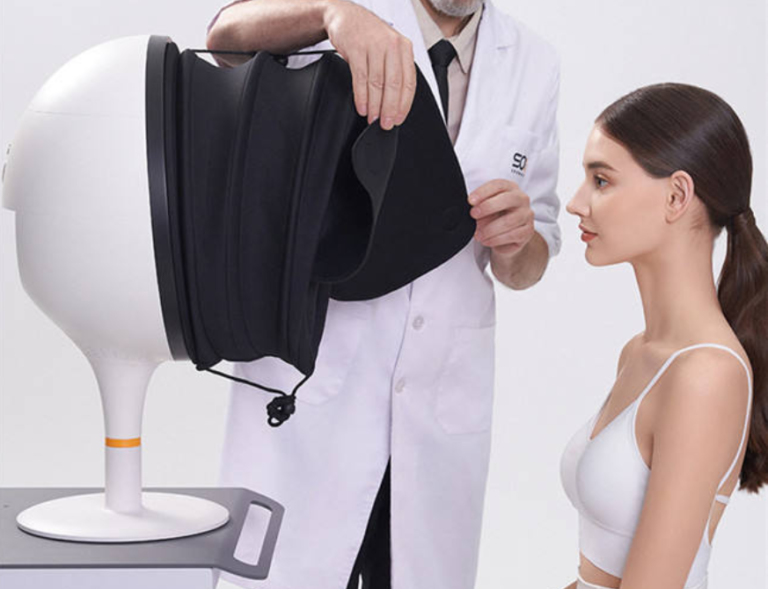
AI Skin Analyzer Mirror: A Complete Expert Guide for 2026
1. What Features Should I Look for in an AI Skin Analyzer Mirror?
AI skincare tools are growing fast in 2026. People now use smart mirrors to understand their skin better at home. Choosing the right device is important. The quality of results depends on its features and technology. This guide explains the key features you should always check before buying an AI Skin Analyzer Mirror.
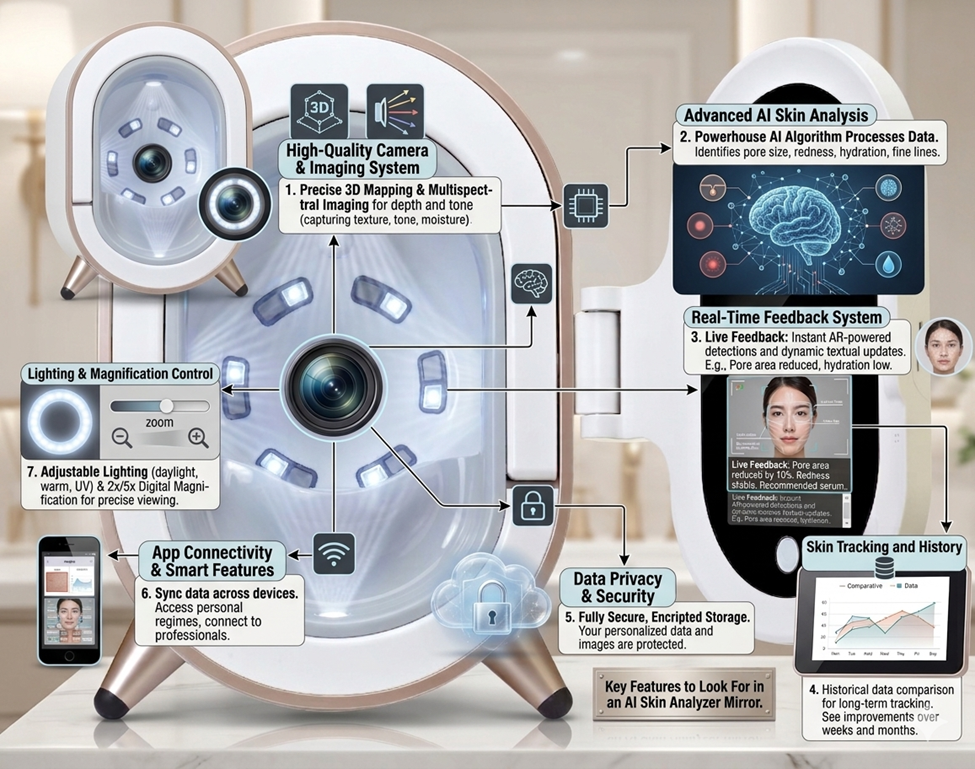
High-Quality Camera and Imaging System
The first feature is a strong camera. A good mirror should have high-resolution imaging. It helps capture clear skin details like pores, wrinkles, and spots. Modern devices also use multi-spectrum imaging. This includes UV light, polarized light, and visible light. These help analyze deeper skin layers and provide accurate results. Clear imaging is the base of good skin analysis.
Advanced Skin Analysis
A smart mirror must use strong AI software. The AI should detect skin issues like acne, dryness, pigmentation, and fine lines. Better systems compare your skin with large databases. They give more accurate and personalized results. Some advanced tools can even track changes over time and predict early skin issues.
Real-Time Feedback System
Real-time feedback is very important. The mirror should show results immediately after scanning. This helps users understand their skin condition on the spot. Many modern devices now offer instant analysis and suggestions. Fast feedback makes skincare easier and more effective.
Skin Tracking and History
A good AI mirror should save your past scans. This helps you track improvements or changes in your skin. Long-term tracking allows you to see how products are working. It also helps you adjust your skincare routine based on real data. This feature is useful for building a consistent skincare plan.
Data Privacy and Security
Privacy is very important. The device should clearly explain how it stores your data. Some mirrors store data locally. Others use cloud systems. Always choose a device with strong encryption and privacy protection. Your skin data is sensitive and should be protected.
App Connectivity and Smart Features
Many modern mirrors connect with mobile apps. This allows users to view reports, track progress, and get product suggestions. Some systems also sync with smart devices or skincare apps for a complete beauty routine. This makes the experience more interactive and useful.
Lighting and Magnification Control
Good lighting is necessary for accurate results. Adjustable LED lighting helps you see skin clearly in different conditions. Magnification features also help examine small details like pores and fine lines. These features improve analysis accuracy. Choosing the right mirror depends on features, not just price. A good device should have strong imaging, smart AI, real-time feedback, and secure data handling. In short, the best AI skin analyzer mirrors are those that combine accuracy, safety, and smart technology. Another important thing is usability. The mirror should be simple and easy to use for daily skincare routines.
2. Can AI Skin Analyzer Mirrors Recommend Skincare Products?
Smart beauty technology is changing fast. One of the biggest questions today is whether AI skin analyzer mirrors can recommend skincare products. The short answer is yes. Most modern systems already do this using artificial intelligence and skin data analysis.
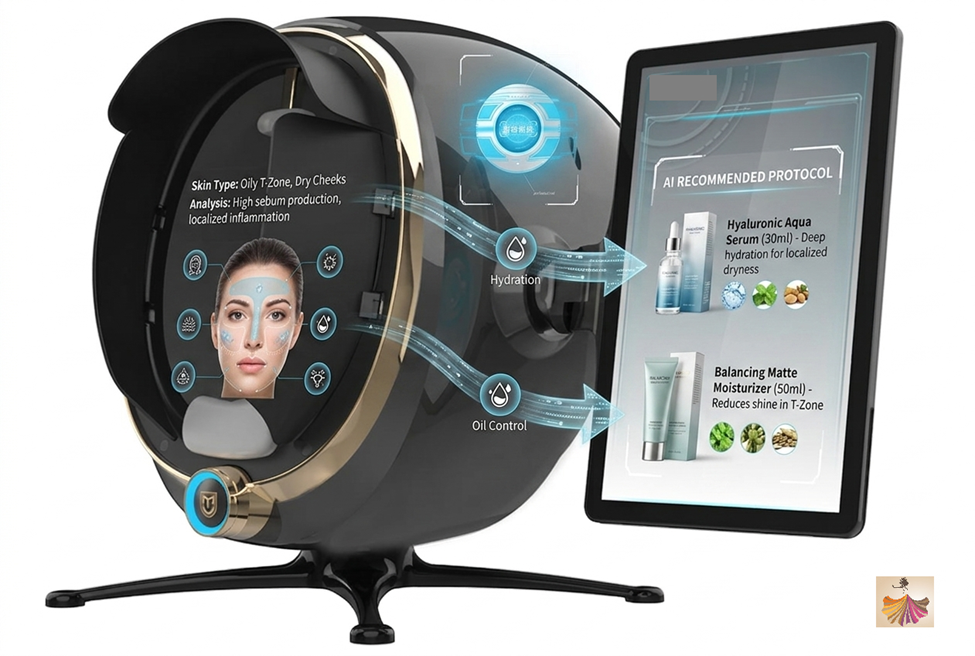
How Product Recommendation Works?
AI skin mirrors use cameras and sensors to scan your skin. They detect issues like acne, wrinkles, dryness, and pigmentation. After scanning, the system converts this data into a skin profile. Then AI compares your skin profile with large skincare databases. It matches your needs with suitable ingredients and products. For example, if your skin is dry, the system may suggest hydrating creams. If you have acne, it may recommend oil-control or salicylic acid products.
AI Uses Skin Data to Suggest Products
These systems do not guess randomly. They rely on data models trained on thousands or even millions of skin images. AI tools analyze patterns like texture, redness, and oil levels. Then they connect these patterns with skincare solutions that worked for similar cases. Some platforms even allow brands to link their product catalogs directly to AI systems for instant recommendations.
Personalized Skincare Routines
Modern AI systems go beyond simple product suggestions. They build full skincare routines.
This includes:
- Morning routine (cleanser, serum, sunscreen)
- Night routine (treatment, moisturizer, repair products)
The goal is to give users a complete skincare plan based on their skin condition and goals.
Some advanced systems also consider:
- Skin type
- Age
- Climate
- Sensitivity level
How Accurate Are These Recommendations?
AI recommendations are helpful, but not perfect. The system depends on image quality and lighting conditions. It works best for common skin issues like acne, dryness, and pigmentation. However, it may not always understand complex skin conditions. Experts say AI is good for guidance but not a replacement for dermatologists.
Role of Ingredients in AI Suggestions
Many AI systems now focus on ingredient science. Instead of just suggesting brands, they suggest active ingredients.
For example:
- Niacinamide for oil control
- Hyaluronic acid for hydration
- Retinol for anti-aging
This helps users understand why a product is recommended, not just what to buy.
Benefits of Product Recommendations
Using AI skin analyzer mirrors for skincare suggestions has many benefits:
- Saves time in choosing products
- Reduces confusion in skincare routines
- Provides personalized options
- Helps track skin progress over time
These systems make skincare easier for beginners and advanced users.
3. Are AI Skin Analyzer Mirrors Used by Dermatologists?
Yes, AI skin analyzer mirrors are now used in dermatology, but mainly as support tools. In 2026, they are not replacing dermatologists. Instead, they help doctors improve speed and accuracy in skin analysis.

Growing Use in Dermatology Clinics
Many dermatologists now use AI-based skin analysis systems in clinics. These tools help scan skin quickly and detect common issues like acne, pigmentation, and wrinkles. They are especially useful for cosmetic dermatology. Doctors use them to show patients visible skin changes over time. This improves treatment tracking and communication.
How Much Do Dermatologists Trust Them?
Trust in AI skin tools has increased in recent years. Studies show that AI can reach very high accuracy in image-based skin detection tasks. In some controlled tests, accuracy is close to expert dermatologists for specific conditions. However, doctors still do not rely on AI alone. They use it as a second opinion tool, not as a final decision-maker.
Benefits for Dermatologists
AI skin mirrors help doctors in many ways:
- Faster skin scanning
- Better patient reports
- Easy progress tracking
- Clear visual results for patients
These features save time in busy clinics and improve patient understanding.
Limitations and Concerns
Even in 2026, AI skin systems have limitations. They depend heavily on image quality and lighting. Poor input can lead to wrong results. AI also cannot fully replace physical examination. Dermatologists say touch, medical history, and clinical experience are still very important. Because of this, doctors treat AI as an assistant, not a replacement.
4. Do AI Skin Analyzer Mirrors Work for All Skin Types?
AI skincare technology is becoming very popular in 2026. Many people now ask an important question: do AI skin analyzer mirrors work for all skin types? The simple answer is mostly yes, but with some conditions and limitations.
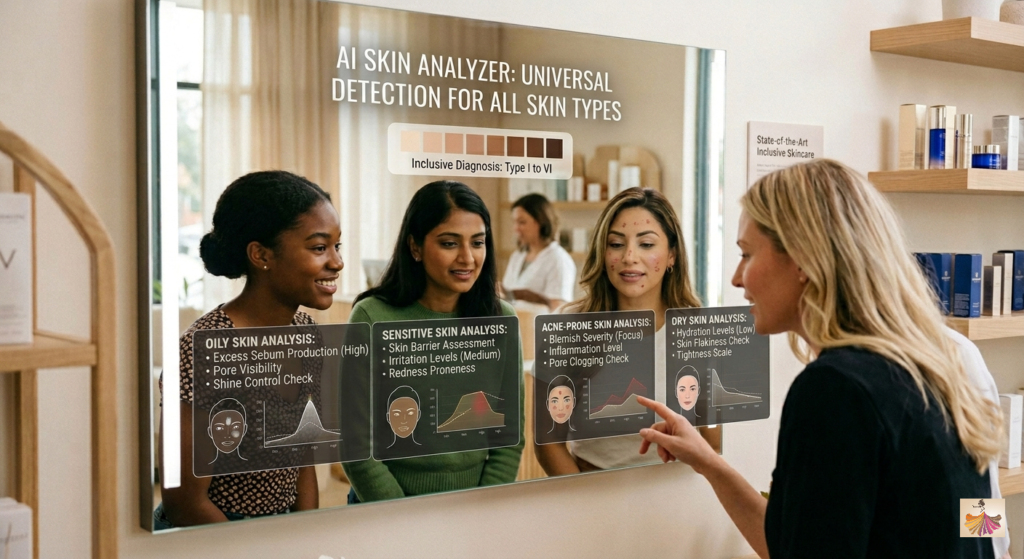
How AI Skin Analysis Understands Skin Types
AI skin mirrors use cameras and machine learning to study your skin. They analyze features like oil levels, pores, acne, wrinkles, and pigmentation. Some systems also measure hydration and texture in detail. These systems compare your skin with large datasets. This helps them identify different skin types such as oily, dry, combination, sensitive, and normal.
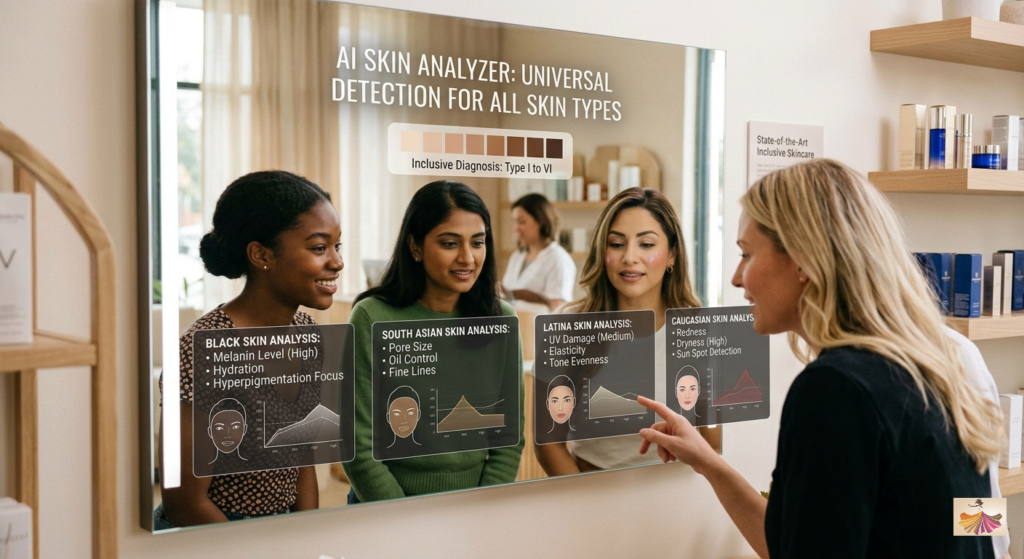
Are AI Skin Mirrors Inclusive for All Skin Tones?
Modern AI systems are designed to work across different skin tones. Many tools are now trained on diverse datasets that include multiple ethnicities and skin colors. This is important because older AI systems were less accurate for darker skin tones due to limited training data. Recent improvements are helping reduce this bias. However, research still shows that some AI models perform better on lighter skin compared to darker skin if datasets are not fully balanced. So, inclusivity is improving, but not perfect yet.
Do They Work for All Skin Conditions?
Yes, AI skin mirrors can detect common skin issues in most skin types. These include acne, dryness, oiliness, redness, and pigmentation. Studies show AI systems can reach high accuracy levels (around 89% to 95%) for detecting common skin conditions under good conditions. This means they are generally reliable for everyday skincare analysis.
Limitations to Keep in Mind
AI skin mirrors are advanced, but they are not perfect. They may struggle with:
- Rare skin diseases
- Very complex medical conditions
- Extreme skin tone variations in low-quality systems
Experts still recommend using them as guidance tools, not medical diagnosis tools.
5. How reliable are AI skin analysis results in 2026?
In 2026, AI skin analysis has become much more accurate and stable than earlier versions. Many modern AI Skin analyzers can detect skin issues like acne, wrinkles, pigmentation, and dryness with high precision. Research shows that advanced dermatology AI can reach around 90% to 95% accuracy in controlled conditions, especially for common skin diseases and image-based analysis. However, reliability is not perfect in real-world use. Results still depend on lighting, camera quality, and skin image clarity. Poor lighting can reduce accuracy and change how the skin appears. AI also performs better on common conditions than rare or complex skin disorders.
Another key factor is data bias. If training data is not diverse; accuracy can drop for certain skin tones or types. Studies show performance differences can still exist when datasets are not fully balanced. Even with these limits, AI is now very useful for screening and tracking skin changes over time. Dermatologists also use AI tools as supportive systems because they improve speed and consistency. Overall, AI skin analysis in 2026 is reliable for general skincare insights but not perfect for medical diagnosis.
6. Can AI skin mirrors replace dermatologists in 2026?
In 2026, AI skin analyzer mirrors cannot fully replace dermatologists. They are powerful tools, but they still work as assistants rather than medical professionals. Studies show AI can sometimes match dermatologist-level performance in image-based diagnosis under controlled conditions, especially for skin cancer detection. However, dermatology is not only about images. Doctors also use touch, patient history, symptoms, and clinical experience. AI systems cannot physically examine skin or understand full medical context. This limits their ability to make final decisions.
AI also has known weaknesses. It can misinterpret unusual skin conditions or struggle with complex cases. It may also give false positives, leading to unnecessary worry or extra tests. Experts in 2026 widely agree that AI is best used for triage, monitoring, and early detection support, not full diagnosis. In real clinics, dermatologists often use AI to improve efficiency, not to replace their judgment. In simple terms, AI skin mirrors are becoming smart assistants, but dermatologists remain essential for accurate diagnosis and treatment decisions.
7. What Are the Limitations of AI Skin Analyzer Mirrors?
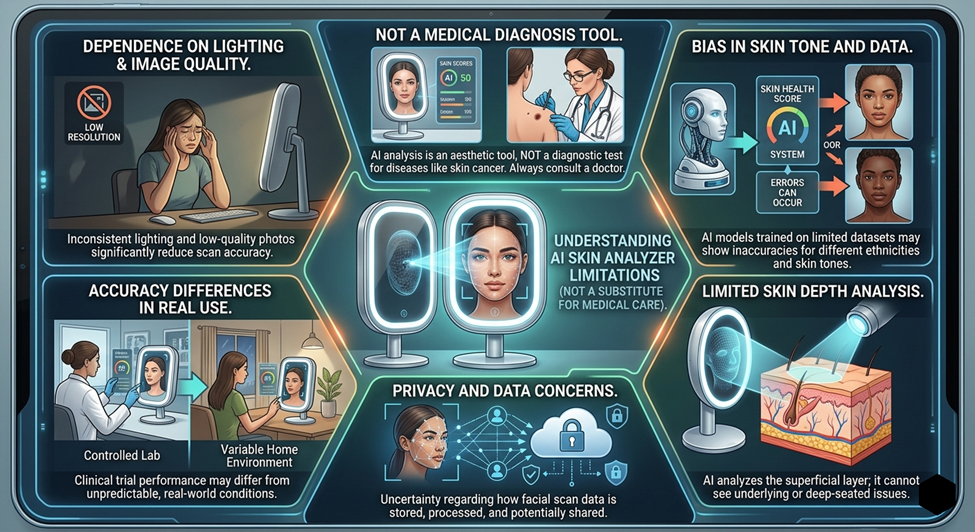
AI skin analyzer mirrors are becoming popular in 2026. They can scan skin and give instant results. They detect acne, wrinkles, and pigmentation. But they are not perfect. They still have several important limitations that users should understand.
Dependence on Lighting and Image Quality
One major limitation is lighting. These systems rely on camera images. If lighting is poor, results can change. Even small changes in brightness can affect accuracy. Shadows, reflections, and camera angles can also distort results. This makes analysis less reliable in real home environments.
Not a Medical Diagnosis Tool
These mirrors are not medical devices. They are designed for cosmetic skin analysis only. Mirror cannot diagnose diseases like skin cancer or infections. They also cannot replace dermatologists. Their results should be seen as guidance, not medical advice.
Bias in Skin Tone and Data
Another key issue is bias in training data. Many AI systems are trained on limited datasets. These data collections often include fewer darker skin tones. This can reduce accuracy for some users. Studies show performance differences across skin types due to unbalanced data. This means results may not be equally accurate for all people.
Limited Skin Depth Analysis of AI Skin Analyzer Mirror
AI mirrors only scan the surface of the skin. They cannot see deeper layers. They cannot measure internal skin health, hormones, or blood-related issues. This limits how deeply they can analyze skin conditions.
Privacy and Data Concerns
These devices often store facial data. Some use cloud storage for processing. This raises privacy concerns for users. There is always a risk of data misuse if security is weak. Many users worry about how their skin images are stored and used.
Accuracy Differences in Real Use
AI skin mirrors work best in controlled settings. In real life, accuracy can drop. Consumer devices may show error rates compared to dermatologist checks. Some studies show noticeable inaccuracy in everyday conditions. This means results are not always fully reliable.
Final Thoughts
AI skin analyzer mirrors have quickly become an important part of modern skincare. Across all the topics discussed, one clear point stands out. These devices are powerful, but they still have limits. They are designed to help users understand their skin better, not replace medical experts. In 2026, these mirrors can analyze skin conditions like acne, wrinkles, dryness, and pigmentation with good accuracy. They also provide real-time feedback, product suggestions, and progress tracking. Many users find them helpful for building daily skincare routines. They make skincare more personalized and easier to follow.
However, their performance depends on several factors. Lighting, camera quality, and data training all affect results. They also may not perform equally well for all skin tones and complex skin conditions. Because of this, results should always be taken as guidance, not final diagnosis. Another important point is privacy. Some devices store personal facial data or use cloud systems. This makes it important for users to check how their data is handled. Security and transparency are key concerns in smart beauty technology.
AI skin analyzer mirrors are also still developing. While they are improving quickly, they cannot fully replace dermatologists. Human expertise is still needed for accurate medical evaluation and treatment decisions. In conclusion, these smart mirrors are best seen as supportive skincare tools. They help users learn about their skin, track changes, and choose better products. But they should be used wisely and not relied on completely. As technology continues to grow, these devices will likely become more accurate, safer, and more advanced in the future.
More Blogs From Styleminers Skincare
________________________________________________________________________________________________________________