Does Your Kimono Cardigan Need a Belt? Here’s How to Tell
Kimono cardigan remain fashion favorites. They blend comfort with effortless elegance. Suit modern and classic wardrobes. They work across seasons and occasions. Kimono cardigans flatter many body shapes. However, styling choices matter greatly. One common question involves belts. Is a belt truly necessary? The answer depends on several factors. Let us explore them carefully.
Understanding the Structure of Kimono Cardigan
Kimono cardigan feature wide sleeves. They usually have open fronts and drape softly around the body. Most designs lack buttons or zippers. This creates a relaxed outfit. Modern versions vary significantly. Some include tailored seams. Others use loose, flowing fabrics. Length also affects styling options. Fabric weight influences overall structure. Lightweight fabrics feel airy. Heavier knits add natural definition. Structured versions hold shape independently. Flowing versions need styling adjustments.
The Purpose of Belting a Kimono Cardigan
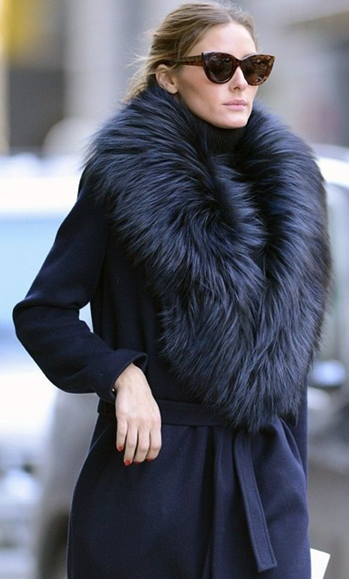
Belting changes the silhouette instantly. It creates waist definition clearly. Adds structure to soft fabrics and transforms relaxed styles into polished looks.
A belt emphasizes natural curves. It creates a balanced proportion and enhances hourglass shapes beautifully. It adds dimension to straight frames.
Belting also improves garment stability. Open fronts may shift while walking. A belt secures the fabric firmly. It keeps the cardigan aligned properly.
In 2026 fashion trends, structured layering dominates. Stylists recommend waist emphasis frequently. Belts remain widely used in runway styling. They create refined, intentional outfits.
When a Belt Enhances Your Look
Certain situations favor belting strongly. Formal occasions benefit from defined outfit. Professional settings require polished appearances. Belts add intentional styling elements.
A belted cardigan resembles a wrap jacket. This creates a tailored impression. It works well in office environments. It pairs nicely with trousers or dresses.
Belting also flatters layered outfits. Multiple layers can look bulky. A belt controls excess volume. It maintains visual balance effectively.
Long kimono cardigans benefit greatly. They can appear shapeless without structure. Belting prevents overwhelming proportions. It creates vertical lines elegantly.
When a Belt Is Not Necessary
Not every look needs structure. Relaxed styles remain popular globally. Oversized dressing dominate street fashion. Comfort-first dressing continues trending strongly.
Flowy kimono cardigans shine unbelted. They create effortless, airy movement and suit casual and creative settings. They reflect laid-back confidence. Light fabrics rarely require cinching. Chiffon and cotton drape naturally. They move beautifully without restriction. Belting may disrupt that flow.
Some designs include built-in tailoring. Thicker fabrics hold their shape. Structured seams provide subtle definition. These versions look polished without belts.
Belting for Formal Looks
Formal styling demands precision. Belting instantly increases sophistication. It shows thoughtful outfit planning and enhances sharp dressing clearly.
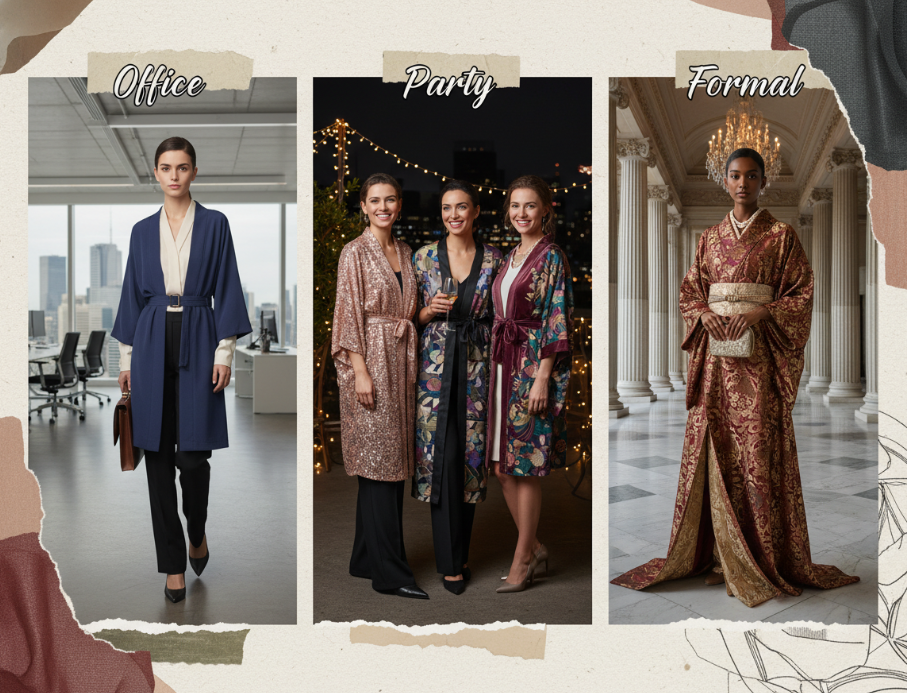
Choose slim leather belts carefully. Neutral tones ensure versatility. Black and brown remain classic choices. Beige works well with light fabrics.
For evening events, metallic belts shine. Gold adds warmth and elegance. Silver complements cooler tones beautifully. Minimal buckles maintain refined aesthetics.
Pair belted cardigans with heels. Add subtle jewelry for balance. Avoid overly bold accessories. Let the outfit remain the focus.
Belting for Casual Styling
Casual outfits allow greater freedom. Belts become optional elements here. Loose dressing feel modern and relaxed. They prioritize comfort over structure. If belting casually, choose soft materials. Fabric or rope belts work well. They maintain effortless appeal and avoid excessive rigidity.
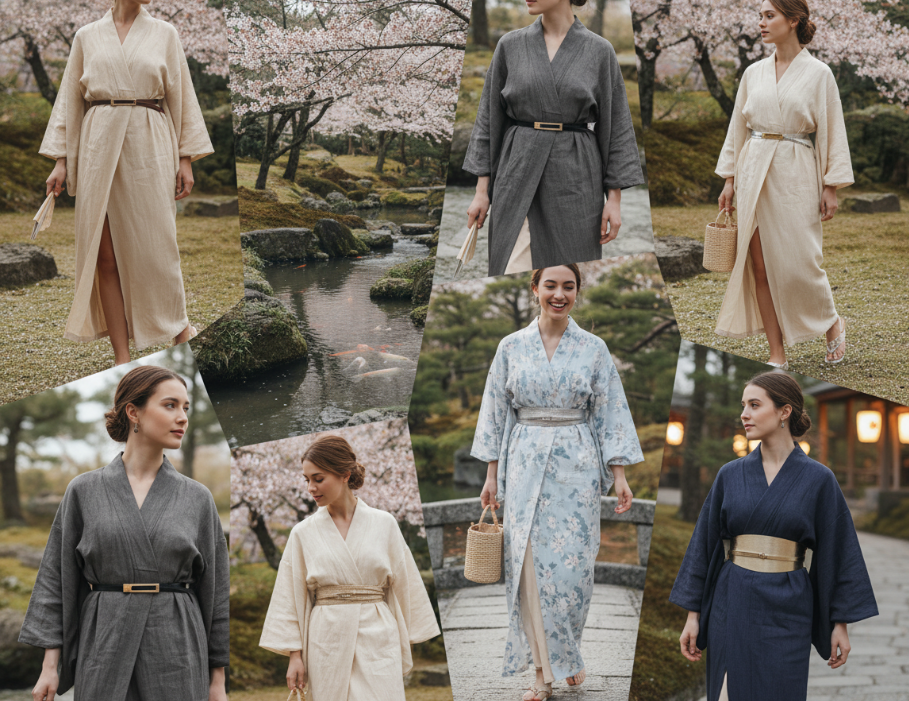
Wide belts create bold statements. They suit bohemian-inspired outfits. Pair beautifully with maxi dresses. They emphasize creativity and individuality.
For everyday errands, skip the belt. Layer over jeans or leggings. Allow the cardigan to flow naturally. Comfort should guide your decision.
Choosing the Right Belt Style
Different belts create different impressions.
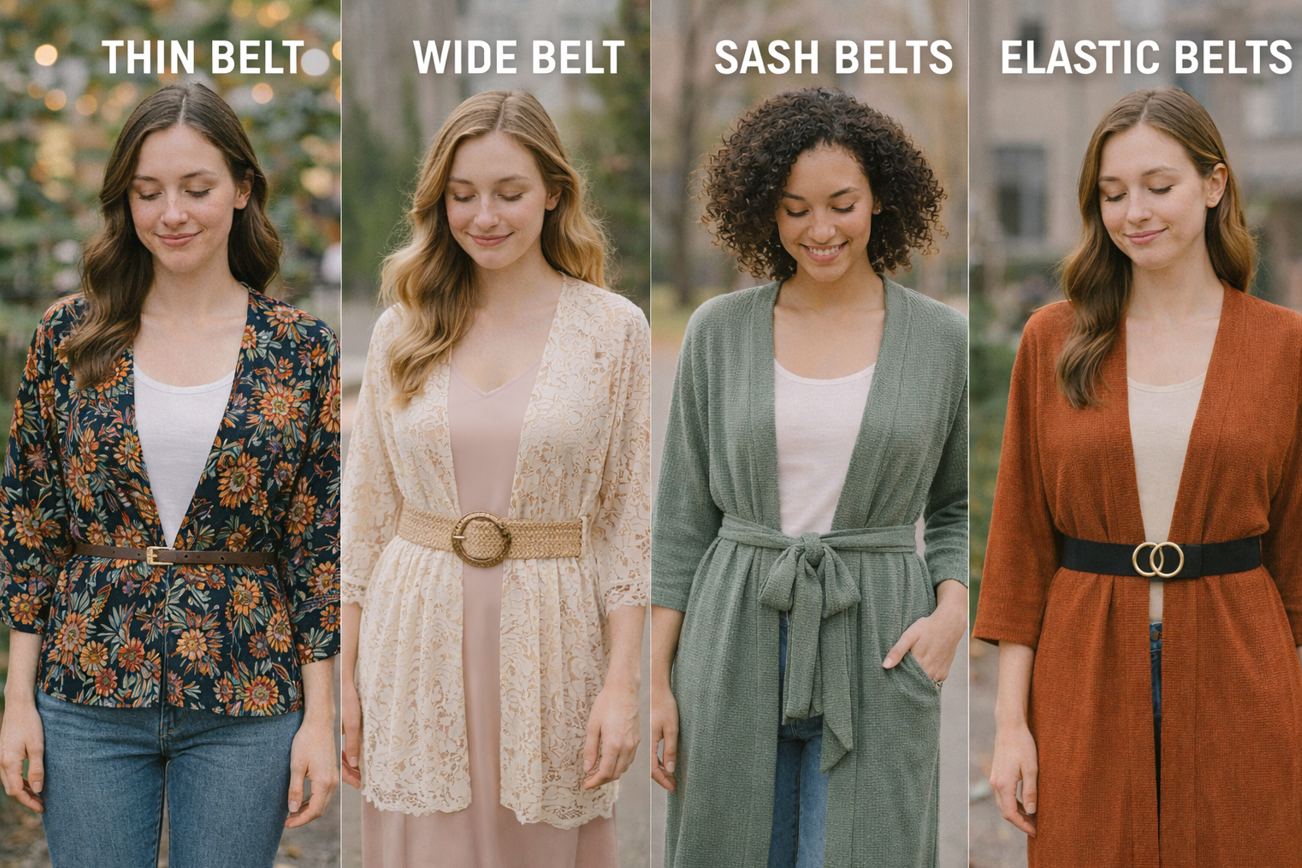
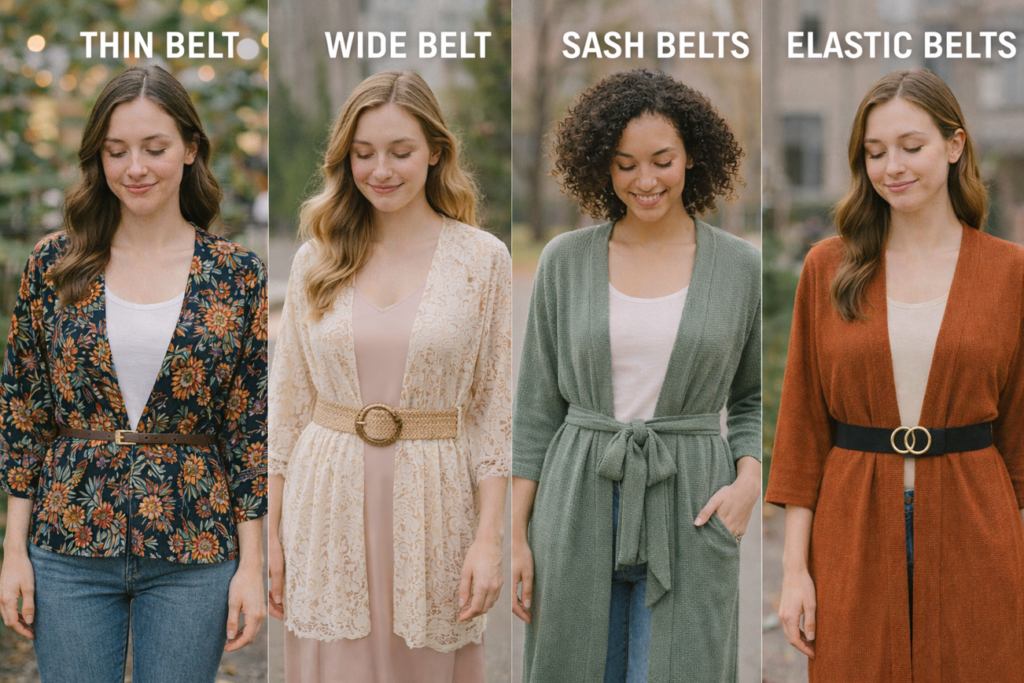
Thin belts look subtle and refined. They gently define the waist and suit professional environments best.
Wide belts create dramatic dressing. They highlight curves strongly. Work best with long cardigans. They create a cinched, confident look.
Sash belts feel soft and romantic. Many kimono cardigans include matching sashes. These maintain cohesive design harmony. They blend seamlessly with fabrics.
Elastic belts provide comfort and flexibility. They adapt to movement easily. They suit long workdays comfortably.
Matching Belt Colors Strategically
Color coordination enhances outfit cohesion. Neutral belts offer maximum versatility. Black pairs with nearly everything.
Brown complements earthy tones beautifully. Beige softens bold prints gently. White belts create fresh contrasts. Metallic belts elevate evening looks.
Matching accessories increases visual harmony. Coordinate belt with shoes or bags. This creates intentional styling continuity. Contrasting belts add personality. Bright colors create focal points. This technique works with neutral cardigans. It expresses creativity confidently.
Considering Body Shape and Proportion
Body proportions influence belt effectiveness. Petite frames need careful balancing. Wide belts may fit small figures. Thin belts maintain delicate proportions.
Tall people handle wide belts easily. Long outfit benefit from waist definition. Belts break excessive vertical lines.
Hourglass shapes benefit naturally from belts. They emphasize existing curves beautifully. Rectangle shapes gain added dimension. Belts create visual curvature effectively.
Apple shapes require softer styling. Avoid extremely tight belts. Position belts slightly above waist. This elongates the torso gently.
Layering with Other Accessories
Belts interact with other accessories. Balance remains essential always. Avoid overwhelming combinations. Simplicity ensures polished outcomes.
If wearing bold belts, reduce jewelry. Choose stud earrings or minimal necklaces. Keep visual focus on waist.
If skipping belts, layer differently. Long necklaces elongate the torso. Scarves add warmth stylishly. Crossbody bags maintain relaxed balance.
Hats can complement unbelted looks. Sunglasses add modern flair easily. Ensure proportions remain harmonious overall.
Current Fashion Trends and Practical Advice
Recent fashion cycles favor versatility. Consumers seek multifunctional garments increasingly. Kimono cardigans remain highly adaptable.
Street style shows mixed approaches. Some influencers belt oversized silhouettes. Others embrace fluid, open styling.
Comfort continues shaping global fashion. Remote work influences casual dressing. Yet structured looks remain event essentials.
Therefore, versatility remains key. Owning both styling options helps. Experiment based on occasion and mood.
Final Thoughts
Belting a kimono cardigan remains optional. It depends on desired silhouette, comfort preferences, occasion and season.
Belts add structure and sophistication. They emphasize waist definition clearly. They transform relaxed pieces instantly. Unbelted styles offer effortless elegance. They provide movement and comfort. They reflect modern relaxed fashion. There is no universal rule. Style should reflect personality. Confidence completes every outfit.
Kimono cardigans remain timeless essentials. They adapt to changing trends gracefully. Whether belted or flowing freely, they elevate every wardrobe beautifully.
FAQ’s
Do I need a belt for a kimono cardigan?
What are the benefits of belting a kimono cardigan?
Can I wear a belt for both formal and casual settings?
What type of belt works best with a kimono cardigan?
How can I style accessories with a belted kimono cardigan?