Ultimate Moonstone Gemstone Guide 2026 for Buyers and Collectors
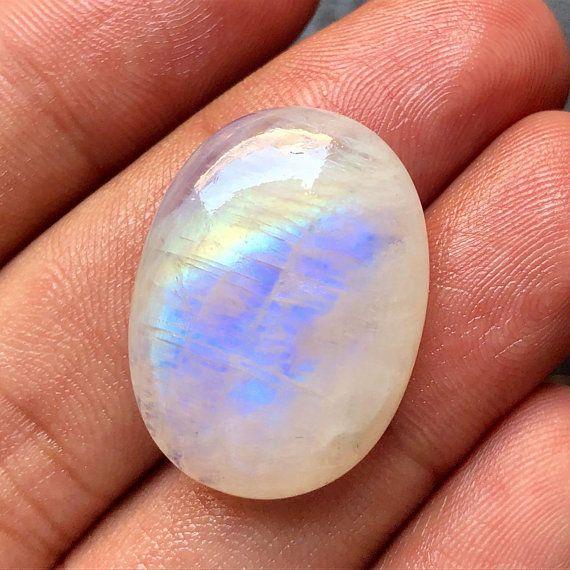
Moonstone is a famous feldspar gemstone. It displays a glowing optical phenomenon. Experts call this effect adularescence. The glow resembles floating moonlight. Collectors admire this mystical appearance greatly. Jewelry designers also value this gemstone highly. Moonstone belongs to ancient gemstone traditions. Romans connected Moonstone with lunar powers. Asian cultures linked Moonstone with spirituality. Modern jewelers still admire Moonstone deeply. The Moonstone gemstone appears soft and elegant. Its appearance changes under moving light. Fine specimens show blue floating sheen. Lower grades show weaker white sheen.
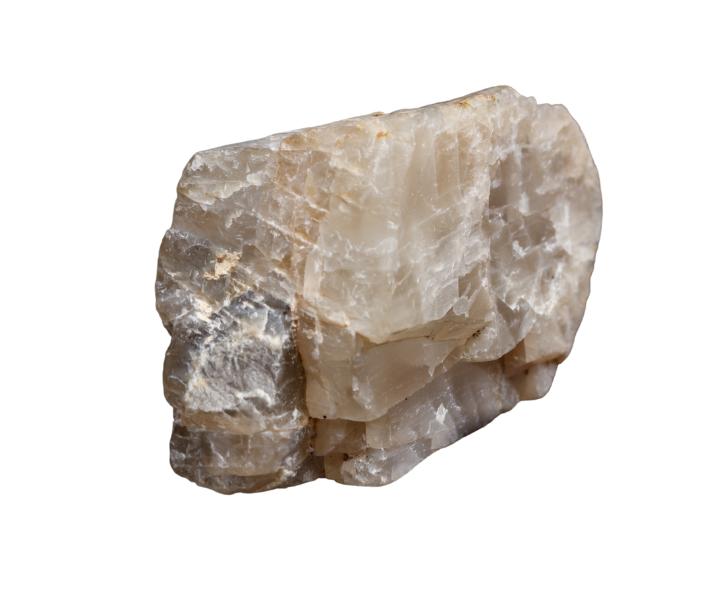
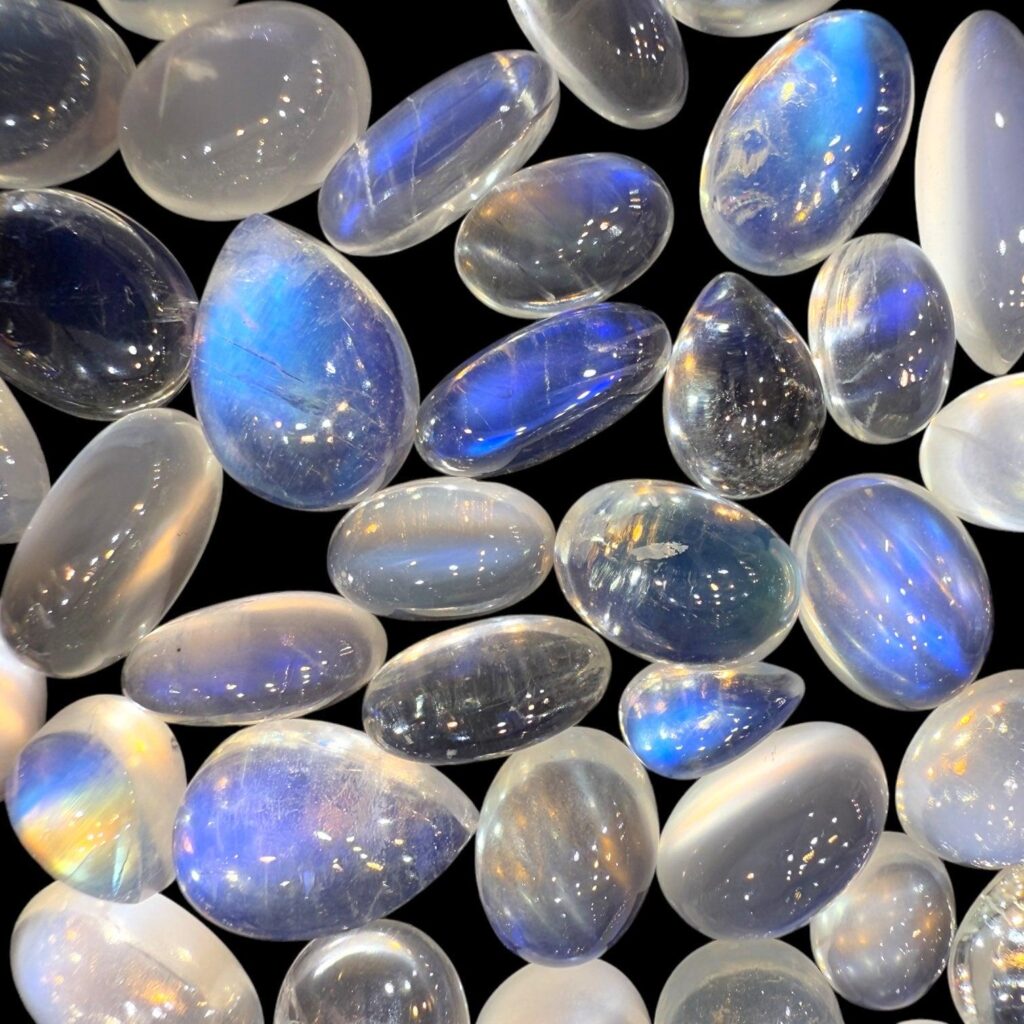
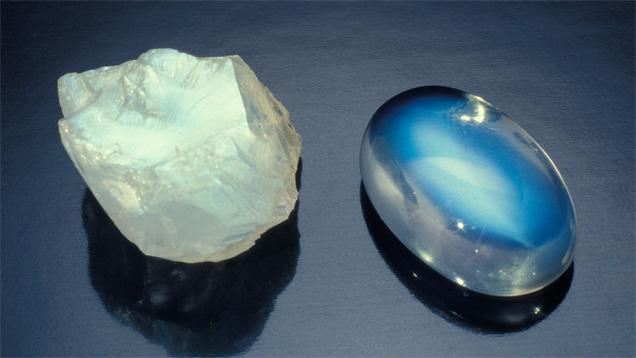
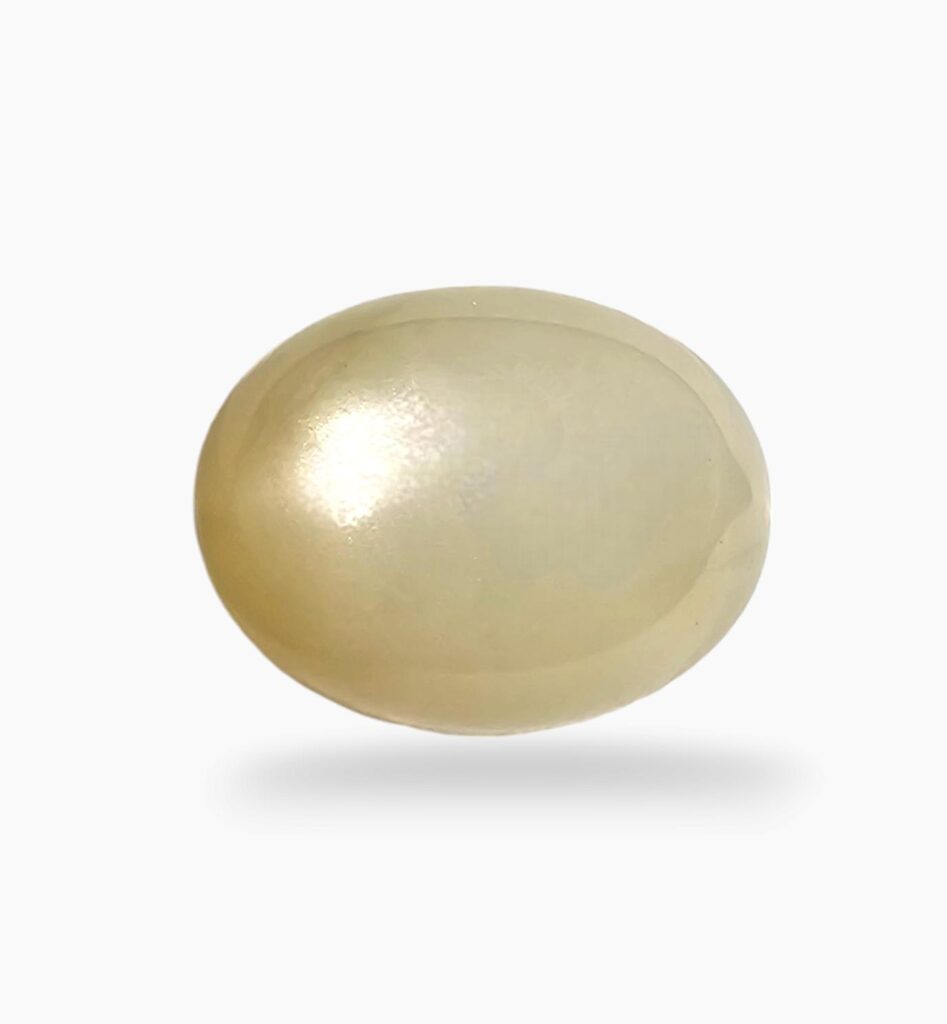
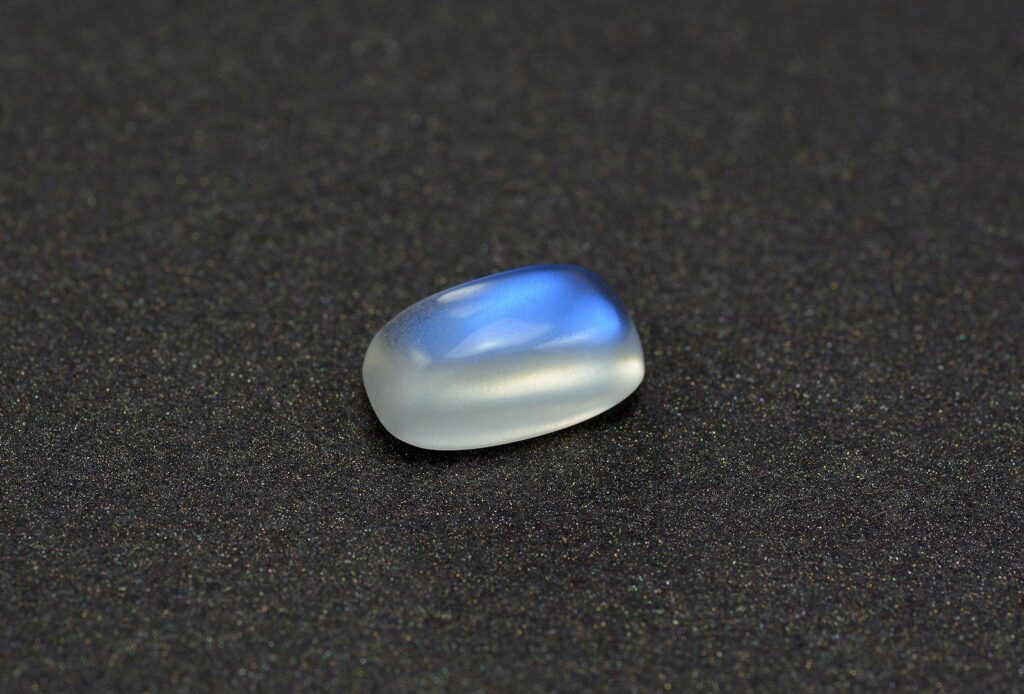
This stone occurs in many attractive colors. The gemstone also exists worldwide naturally. Sri Lanka produces exceptional Moonstone specimens. India also mines beautiful Moonstone varieties. Madagascar supplies commercial quality Moonstone globally. Myanmar yields premium blue Moonstone material. Moonstone remains popular within luxury jewelry. Collectors also seek rare transparent specimens. Gemologists study Moonstone for optical behavior. Its internal structure creates unusual reflections. Thin mineral layers scatter entering light. This scattering creates floating luminous effects. Moonstone remains one fascinating natural gemstone.
Type of Gemstone
Moonstone belongs to the feldspar group. Feldspar minerals dominate Earth’s crust widely. Moonstone usually forms from orthoclase feldspar. Some Moonstones contain albite mineral layers. These layered structures create adularescence effects. True Moonstone commonly contains potassium feldspar. Rainbow Moonstone differs mineralogically slightly. Rainbow Moonstone usually belongs to labradorite. Trade markets still classify both similarly. It belongs to silicate mineral classifications. Its chemical formula contains aluminum silicates.
Potassium and sodium also exist internally. The gemstone forms within igneous environments. Cooling magma creates feldspar crystal growth. Geological pressure shapes internal structures slowly. These structures influence optical characteristics strongly.
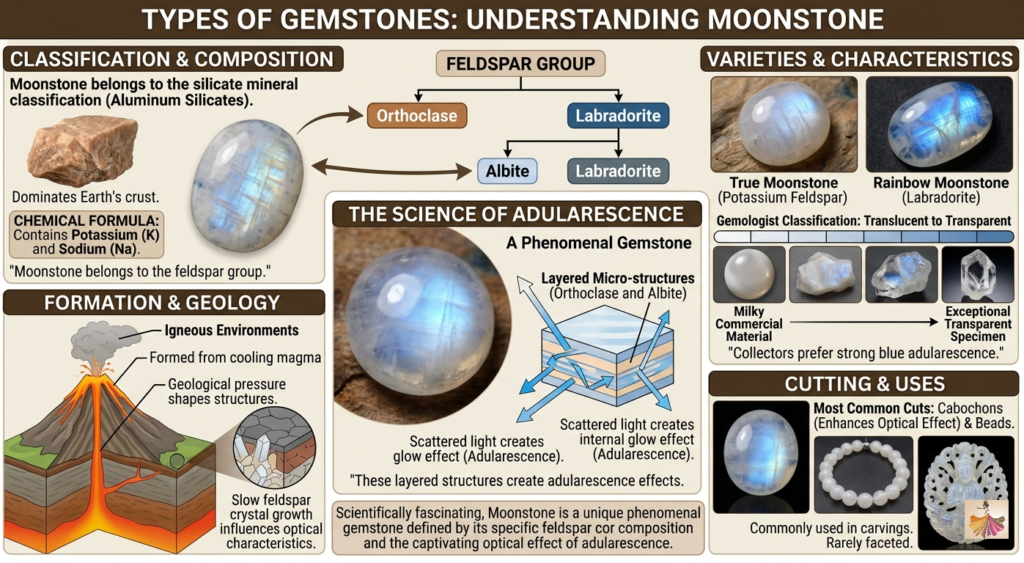
It belongs among phenomenal gemstones globally. Phenomenal gemstones display special visual effects. Examples include opal and cat’s-eye gems. It differs through soft floating sheen. Gemologists classify Moonstone as translucent feldspar. Some transparent specimens achieve exceptional values. Collectors prefer strong blue adularescence specimens. Commercial material often shows milky appearance. Moonstone also appears in carvings frequently. Beads and cabochons remain especially common. The gemstone rarely appears faceted professionally. Cabochons enhance optical effects much better. Moonstone remains scientifically fascinating for gemologists. Its structure differs from ordinary feldspar varieties.
Origin / Source
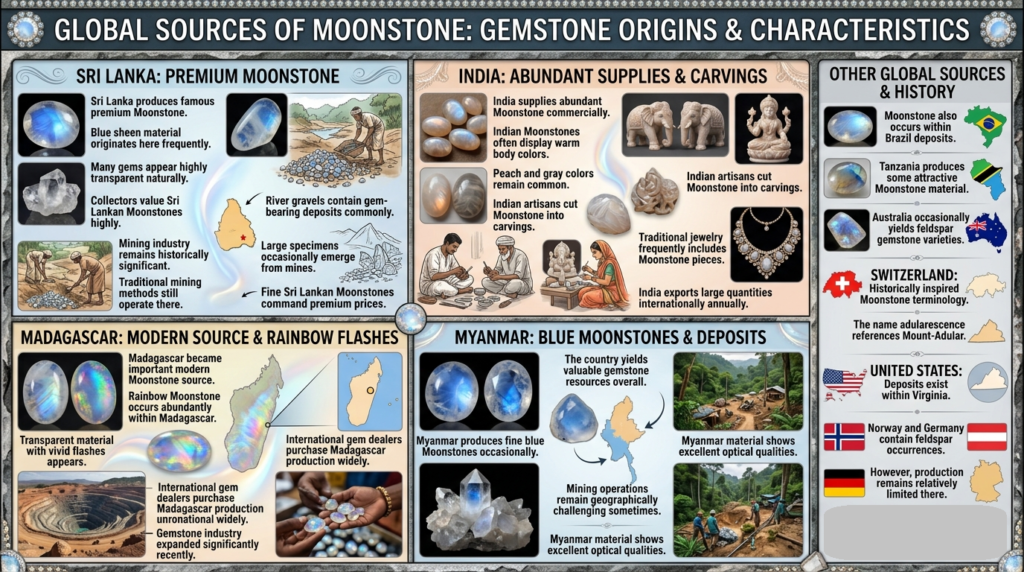
Sri Lanka
Sri Lanka produces famous premium Moonstone gemstones. Blue sheen material originates there frequently. Many gems appear highly transparent naturally. Collectors value Sri Lankan Moonstones highly. The mining industry remains historically significant. Traditional mining methods still operate there. River gravels contain gem-bearing deposits commonly. Large specimens occasionally emerge from mines. Fine Sri Lankan Moonstones command premium prices.
India
India supplies abundant Moonstone commercially. Indian Moon stones often display warm body colors. Peach and gray colors remain common. Indian artisans cut Moonstone into carvings. Traditional jewelry frequently includes Moonstone pieces. India exports large quantities internationally annually.
Madagascar
Madagascar became important modern Moonstone source. Rainbow Moonstone occurs abundantly within Madagascar. Transparent material with vivid flashes appears. International gem dealers purchase Madagascar production widely. The gemstone industry expanded significantly recently.
Myanmar
Myanmar produces fine blue Moonstones occasionally. The country yields valuable gemstone resources overall. Mining operations remain geographically challenging sometimes. Myanmar material shows excellent optical qualities.
Other Sources
Moonstone also occurs within Brazil deposits. Tanzania produces some attractive Moonstone material. Australia occasionally yields feldspar gemstone varieties. Switzerland historically inspired Moonstone terminology. The name adularescence references Mount-Adular. United States deposits exist within Virginia. Norway and Germany contain feldspar occurrences. However, production remains relatively limited there. Global demand continues increasing steadily worldwide.
Colors
Moonstone appears in multiple natural colors. Colorless Moonstone remains especially valuable. Blue sheen creates highest collector demand. White Moonstone appears most commonly worldwide. Gray Moonstone shows smoky elegant appearance. Peach Moonstone displays warm pastel tones. Green Moonstone occurs less frequently naturally. Brown Moonstone also appears occasionally commercially. Yellow Moonstone exists within certain deposits. Rainbow Moonstone shows multicolored light flashes. Blue adularescence remains highly prized internationally.
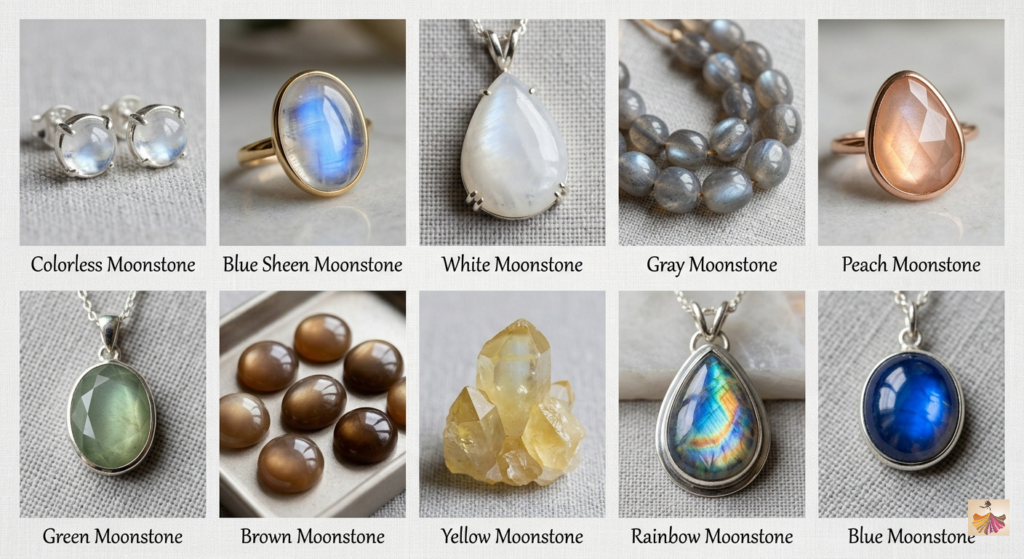
The finest gems appear nearly transparent. Their floating blue glow seems magical. Poorer grades show cloudy white sheen. Body color affects gemstone market value strongly. Clean transparent stones receive higher prices. Some specimens contain orange internal flashes. Rare stones show cat’s-eye effects additionally. Color distribution should appear visually balanced. Uneven coloration reduces commercial desirability somewhat. Artificial lighting changes Moonstone appearance noticeably. Sunlight often enhances adularescence dramatically. Collectors inspect gems under multiple lights. Color intensity influences jewelry appeal strongly. Designers match colors with precious metals. Peach Moonstone complements rose gold beautifully. Blue Moonstone pairs well with silver. Rainbow varieties suit artistic jewelry designs. Consumers appreciate Moonstone’s gentle visual personality.
Cut
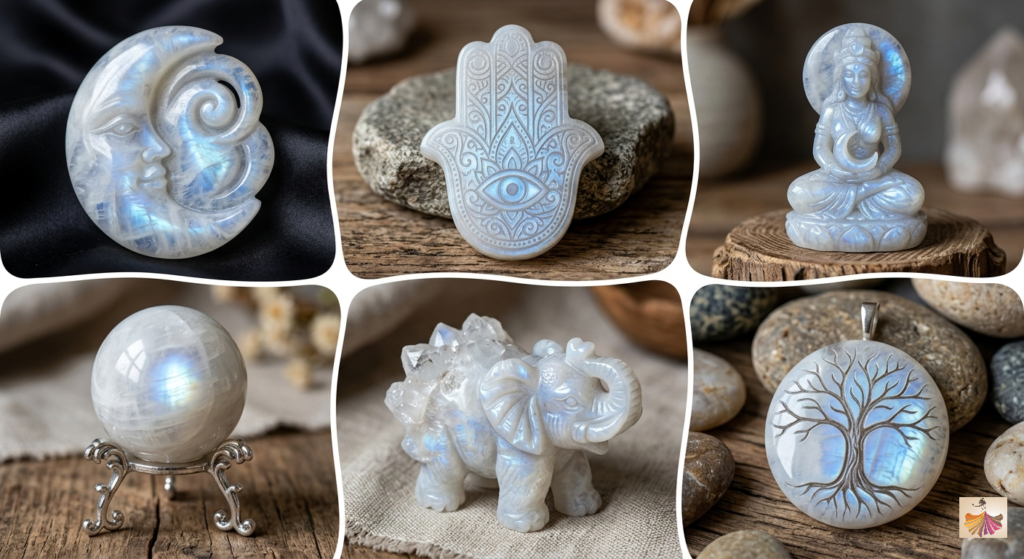
Cabochon remains Moonstone’s most common cut. This rounded shape enhances adularescence beautifully. Flat bottoms stabilize gemstone positioning effectively. Domed tops display floating sheen prominently. Oval cabochons remain especially popular commercially. Round cuts also appear frequently within jewelry. Teardrop shapes suit pendants elegantly. Designers create beads from lower grades. Carvings also utilize Moonstone extensively globally. Animal figures and floral carvings exist. Faceted Moonstones appear less commonly overall. Faceting reduces visible adularescence sometimes greatly. Transparent specimens occasionally receive faceted cuts. Skilled cutters orient layers very carefully.
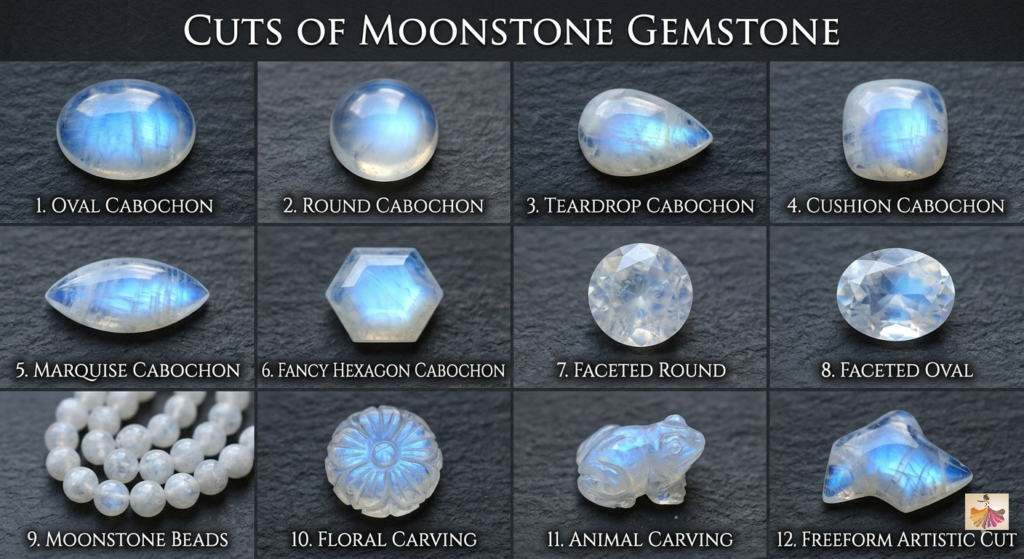
Incorrect orientation weakens optical effects dramatically. Proper cutting maximizes moving light appearance. Gemstone symmetry influences market desirability strongly. Smooth polish remains extremely important visually. Poor polishing diminishes gemstone luster significantly. Cabochons should show centered floating sheen. Off-center sheen lowers collector value considerably. Large cabochons highlight adularescence effectively beautifully. Artistic cutters experiment with unusual designs. Modern jewelry increasingly features creative Moonstone cuts.
Carat Weight
Moonstone gemstones occur in many different sizes. Small gems suit delicate jewelry designs. Large specimens appear within statement jewelry. Carat weight affects gemstone pricing considerably. Larger transparent stones remain relatively rare. High-quality large Moonstones command premium values. Commercial material appears abundantly in markets. Tiny beads often weigh under one carat. Cabochons commonly range between five carats. Collector stones exceed twenty carats occasionally. Museum-quality gems may exceed hundred carats. Large stones often contain visible inclusions.
Fine clarity becomes rarer with size. Weight alone never determines gemstone quality. Color and sheen remain equally important. Heavy cloudy stones may cost little. Smaller transparent stones may cost more. Gem dealers balance several grading factors. Jewelry designers choose weights aesthetically carefully. Larger Moonstones suit pendants particularly well. Ring stones usually remain moderately sized. Heavy stones require protective settings frequently. Consumers should evaluate appearance before size.
Transparency / Clarity Type
Moonstone ranges from transparent to opaque. Transparent specimens remain highly valuable internationally. Translucent stones dominate commercial jewelry markets. Opaque material appears within decorative carvings. Transparency affects light movement significantly internally. Better transparency strengthens adularescence dramatically. Cloudy stones produce softer weaker glow. Blue sheen appears strongest within transparent material. Translucent Moonstone still remains attractive visually. Many collectors enjoy milky appearances greatly.
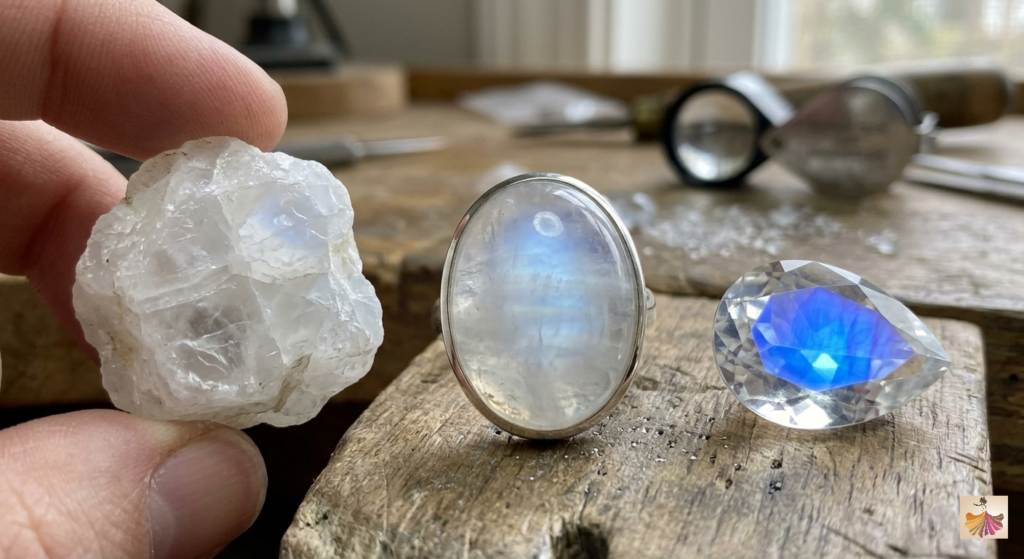
The gemstone often resembles glowing moonlight. Transparency depends upon internal crystal structure. Microscopic layers scatter incoming light strongly. Impurities may reduce visual transparency levels. Cracks and fractures also affect appearance. Gemologists inspect stones under magnification regularly. High transparency increases gemstone brilliance somewhat. Transparent Moonstone remains uncommon naturally overall. Most commercial gems appear semi-translucent instead. Quality grading considers transparency very carefully.
Treatments / Enhancements
Moonstone usually receives minimal treatments commercially. Most gems sell in natural condition. Heat treatment occurs occasionally within markets. Some treatments improve apparent body color slightly. Surface polishing enhances visual smoothness greatly. Dyeing rarely appears within quality material. Synthetic Moonstone remains relatively uncommon currently. Imitations sometimes utilize glass materials instead. Plastic imitations also exist within markets. Consumers should request laboratory verification always. Treatments influence gemstone value significantly sometimes. Untreated stones generally command stronger prices. Gem laboratories disclose known enhancements clearly. Professional dealers explain treatments honestly usually. Artificial coatings occasionally mimic blue sheen. These coatings wear away over time. Natural adularescence appears internally generated naturally. Buyers should inspect gems under lighting. Reputable certification increases purchasing confidence greatly.
Refractive Index (RI)
Moonstone possesses moderate refractive index values. Its RI ranges between 1.518 and 1.526. Gemologists measure RI using refractometers precisely. This property assists gemstone identification greatly. Different gemstones possess unique optical behaviors. Moonstone’s refractive index remains relatively stable. Orthoclase feldspar influences measured RI values. Light bends entering the gemstone internally. This bending contributes toward optical appearance. Lower RI reduces extreme brilliance somewhat. Diamonds possess much higher refractive indices. Moonstone instead emphasizes soft glowing beauty. Gemologists compare RI during authentication procedures. Accurate measurements separate Moonstone from imitations. Rainbow Moonstone sometimes displays slightly different values. Temperature and composition affect measurements minimally. Laboratory reports often include RI readings. Students study RI within gemology courses.
Specific Gravity (SG)
Moonstone possesses moderate specific gravity values. Its SG ranges between 2.55 and 2.60.
Specific gravity measures relative gemstone density. Water serves as measurement comparison standard. Moonstone feels lighter than many gemstones. Diamond possesses significantly greater density values. Gemologists use hydrostatic weighing techniques professionally. SG assists gemstone identification procedures greatly. Internal mineral composition influences density levels. Orthoclase feldspar determines Moonstone’s average density. Inclusions sometimes alter readings slightly internally. Precise measurements require laboratory equipment professionally. Specific gravity remains important gemological information. Collectors rarely measure SG independently personally. Laboratories include SG within gemstone reports occasionally.
Hardness (Mohs scale)
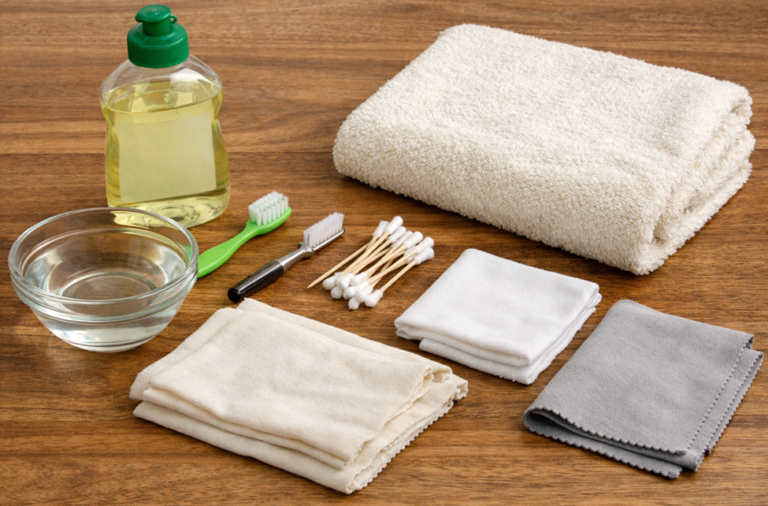
Moonstone measures 6 to 6.5 hardness. The Mohs scale evaluates scratch resistance. Diamond ranks highest with hardness ten. Moonstone remains softer than sapphire significantly. Quartz can scratch Moonstone surfaces easily. Consumers should wear Moonstone carefully daily. Rings require protective jewelry settings strongly. Earrings and pendants remain safer choices. Hard impacts may chip Moonstone edges. Perfect cleavage increases breakage risks additionally. Proper storage prevents surface scratching effectively. Soft cloth pouches protect gemstones well. Ultrasonic cleaners should remain completely avoided. Warm water cleaning works much better. Harsh chemicals may damage polished surfaces. Professional jewelers handle repairs carefully always. Despite moderate hardness, Moonstone remains wearable. Careful maintenance extends gemstone lifespan greatly.
Luster
Moonstone displays vitreous to pearly luster. This luster creates elegant visual softness. Polished surfaces reflect light smoothly beautifully. Pearly reflections resemble natural moonlight gently. High-quality polish improves luster dramatically. Rough surfaces appear dull and unattractive. Cabochons best display Moonstone luster qualities. The gemstone never appears extremely flashy. Instead, Moonstone appears calming and mystical. Collectors appreciate this subtle appearance greatly. Luster combines with adularescence harmoniously beautifully. Jewelry designers utilize this visual elegance. Fine specimens appear almost silky internally. Surface cleanliness affects luster visibility strongly. Regular gentle cleaning preserves appearance effectively.
Fire / Dispersion
Moonstone displays relatively low dispersion values. Its dispersion measures approximately 0.012 typically. Dispersion separates white light into colors. Diamonds exhibit much stronger fire effects. Moonstone instead emphasizes glowing adularescence primarily. Rainbow Moonstone sometimes shows colorful flashes. These flashes differ from classic gemstone fire. Internal structures scatter light softly internally. Moonstone therefore appears dreamy rather than sparkling. Collectors appreciate this unique optical personality. Gemologists classify Moonstone among phenomenal gemstones. Its beauty depends upon moving sheen mainly.
Brilliance
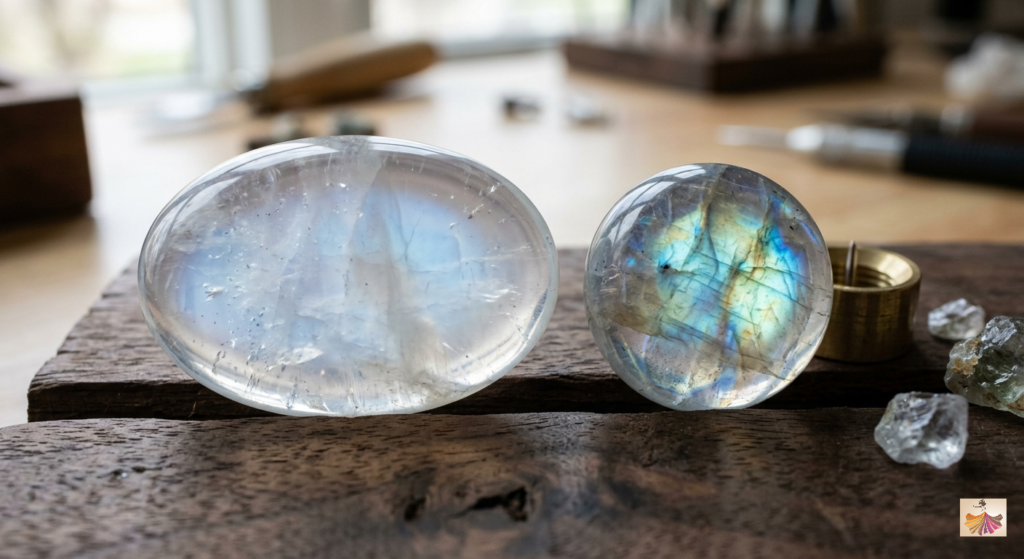
Moonstone possesses moderate overall brilliance naturally. Brilliance describes internal light return visually. Transparent specimens appear brighter under illumination. Cloudy stones reflect less light overall. Moonstone never matches diamond brilliance levels. Its attraction comes from adularescence instead. Fine polish still enhances brilliance considerably. Cutting orientation affects brightness significantly internally. Gem cutters maximize reflected glow carefully. Well-cut gems appear lively during movement. Poor cuts reduce visual attractiveness substantially. Collectors prefer balanced sheen and brightness. Lighting conditions influence brilliance dramatically sometimes. Natural daylight often enhances appearance strongly.
Pleochroism
Moonstone generally shows weak pleochroism characteristics. Many specimens display almost no pleochroism. Gemologists describe Moonstone as typically inactive. Pleochroism means different viewing colors appear. Certain feldspar structures influence optical behavior. Rainbow Moonstone occasionally shows slight variations. Most commercial gems appear visually consistent. Pleochroism remains less important than adularescence. Gem identification still includes pleochroism testing sometimes. Specialized instruments detect subtle optical differences.
Fluorescence
Moonstone sometimes displays weak fluorescence effects. Longwave ultraviolet light reveals bluish glow occasionally. Some stones fluoresce orange under testing. Fluorescence remains generally weak within Moonstone. Not every specimen reacts similarly naturally. Chemical composition influences fluorescent responses significantly. Gem laboratories examine fluorescence during analysis. Collectors rarely prioritize fluorescence strongly commercially. Adularescence remains much more important visually. Still, fluorescence assists gemstone identification occasionally.
Durability
Moonstone possesses moderate durability overall. Its hardness remains only moderately protective. Perfect cleavage increases structural vulnerability significantly. Sharp impacts may split gemstones suddenly. Protective settings reduce damage risks greatly. Jewelry wearers should avoid rough activities. Daily wear requires careful gemstone maintenance. Storage separately prevents scratching from diamonds. Strong chemicals should remain completely avoided. Steam cleaning also risks gemstone damage. Professional cleaning remains safest periodically always. Despite vulnerabilities, Moonstone jewelry lasts decades. Historical jewelry pieces survive successfully today. Responsible ownership preserves gemstone beauty indefinitely.
Certification / Report
Major gem laboratories certify Moonstone gemstone regularly. Certification verifies gemstone authenticity professionally. Reports describe color and transparency carefully. Gemologists identify treatments during examination procedures. Laboratories measure refractive index accurately scientifically. Specific gravity testing confirms mineral identity. Microscopic analysis reveals inclusions clearly internally. Certificates improve consumer purchasing confidence greatly. Insurance companies sometimes require certifications formally. Premium Moonstones benefit most from certification. Common commercial stones rarely receive reports. Famous laboratories include GIA internationally. Independent gemological institutes also issue reports. Certification helps prevent imitation gemstone purchases. Consumers should buy from trusted dealers.
Shape
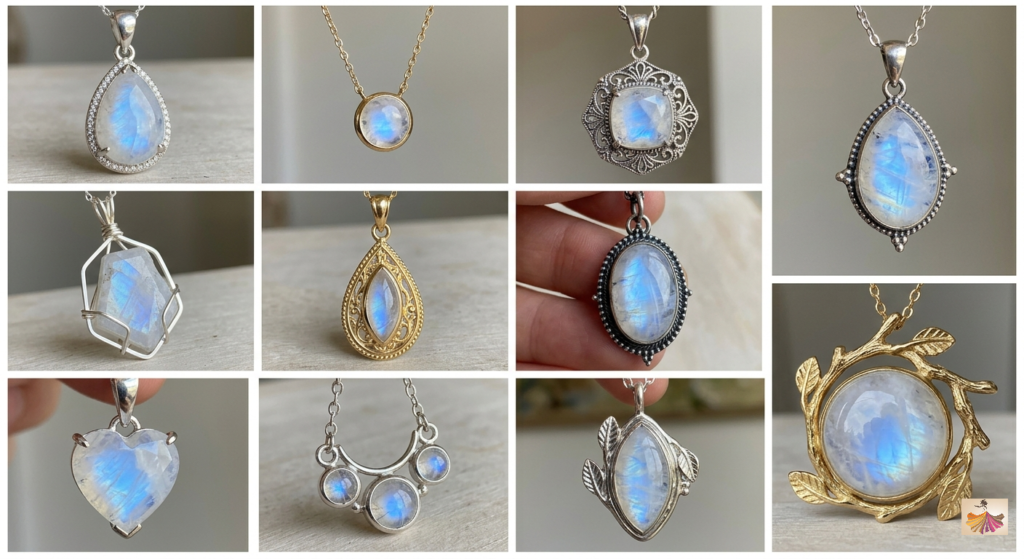
Moonstone gemstone appears in numerous gemstone shapes. Oval cabochons remain especially common globally. Round shapes suit rings and earrings. Pear shapes enhance pendant jewelry beautifully. Marquise cuts appear within designer collections.
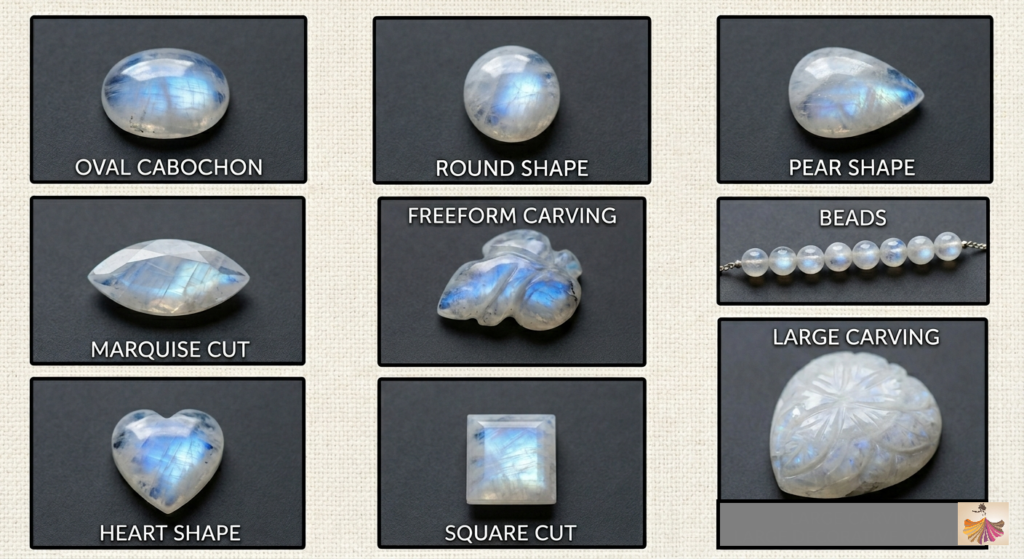
Freeform carvings showcase artistic creativity elegantly. Beads remain common for necklaces worldwide. Heart shapes target romantic jewelry markets. Square cuts appear less frequently commercially. Large carvings become decorative collector objects. Shape selection depends upon rough material. Cutters preserve maximum optical beauty carefully. Symmetry improves visual appeal significantly overall. Well-balanced shapes command stronger market values.
Price / Value
Moonstone gemstone pricing varies extremely widely. Quality determines value more than size. Blue transparent Moonstone commands premium prices. Strong adularescence increases value dramatically greatly. Cloudy low-grade stones remain inexpensive commercially. Sri Lankan material often costs significantly more. Large clean gems achieve collector demand internationally. Rainbow Moonstone prices increased during recent years. Market trends influence gemstone values continuously. Designer jewelry increases retail pricing additionally. Untreated gems usually command stronger prices.
Certification also supports higher selling prices. Poor polish lowers gemstone value considerably. Visible fractures reduce market desirability strongly. Rare cat’s-eye Moonstones achieve exceptional prices. Museum-quality gems remain very scarce worldwide. Affordable Moonstone jewelry remains widely available. Luxury collectors seek investment-grade specimens exclusively. Online markets expanded Moonstone accessibility globally. Buyers should compare quality carefully always.
Major Industries to Use
Jewelry Industry
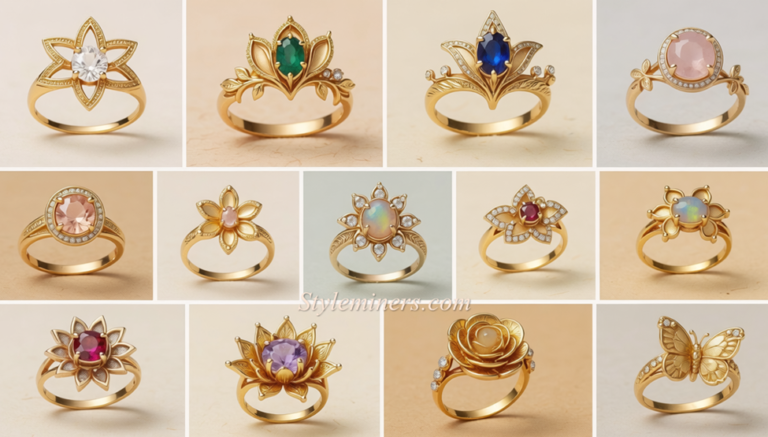
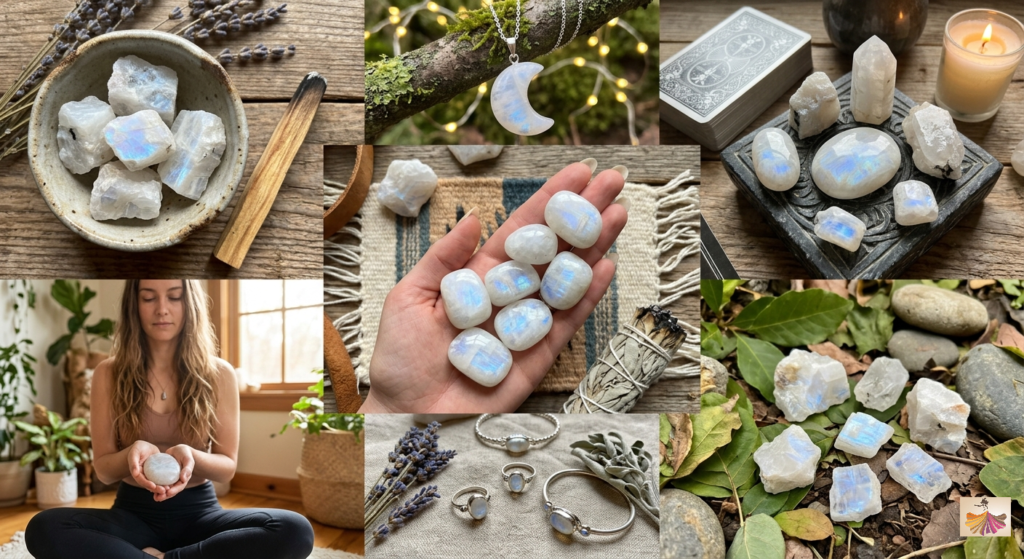
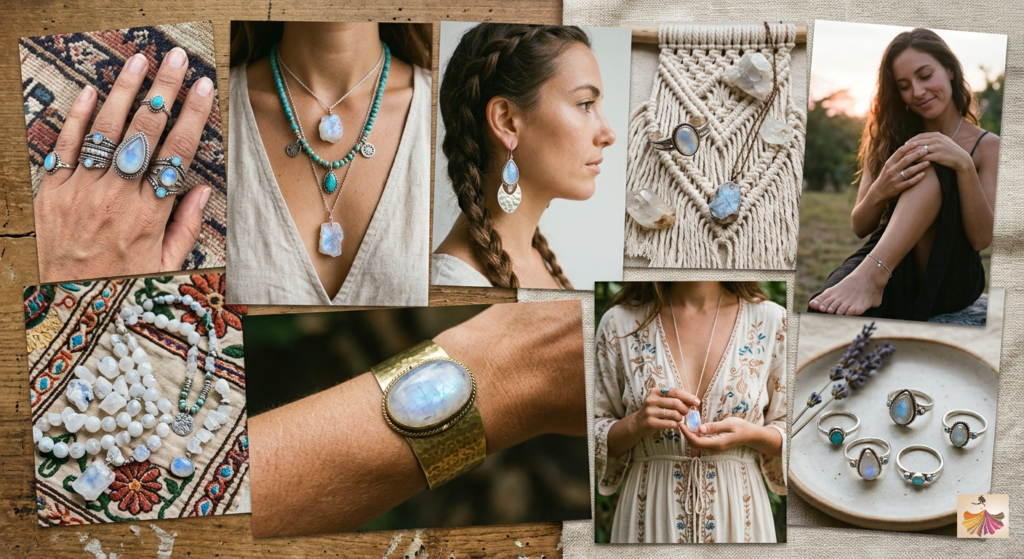
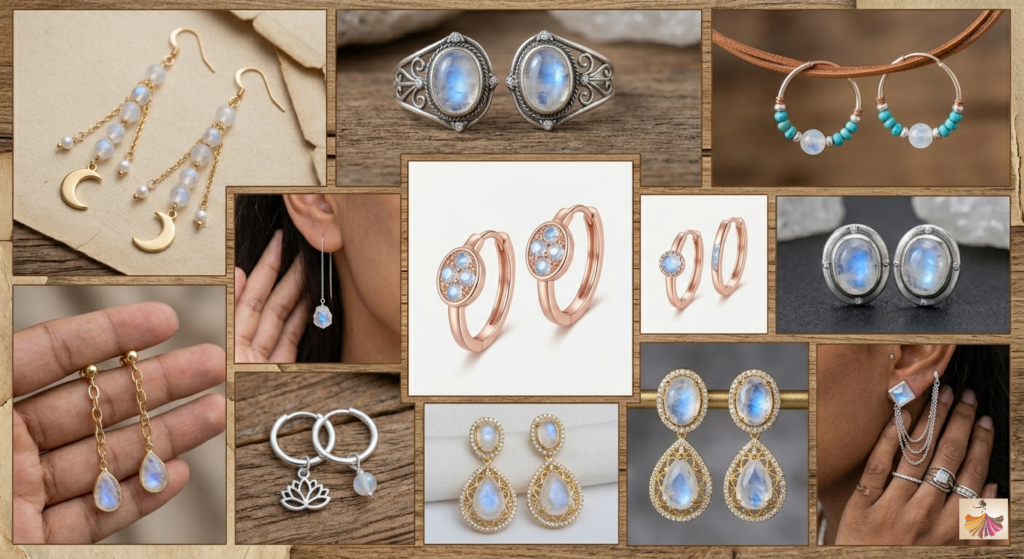
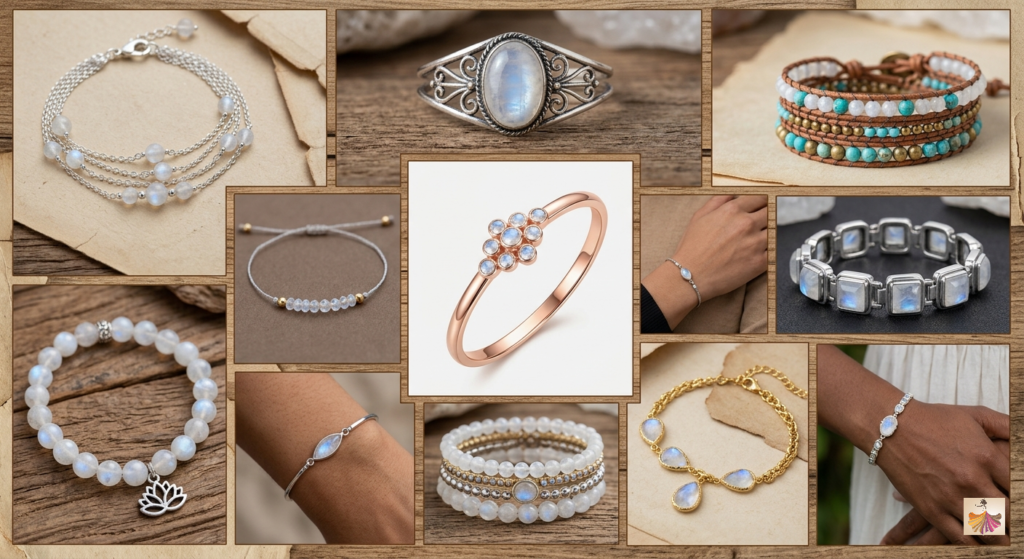
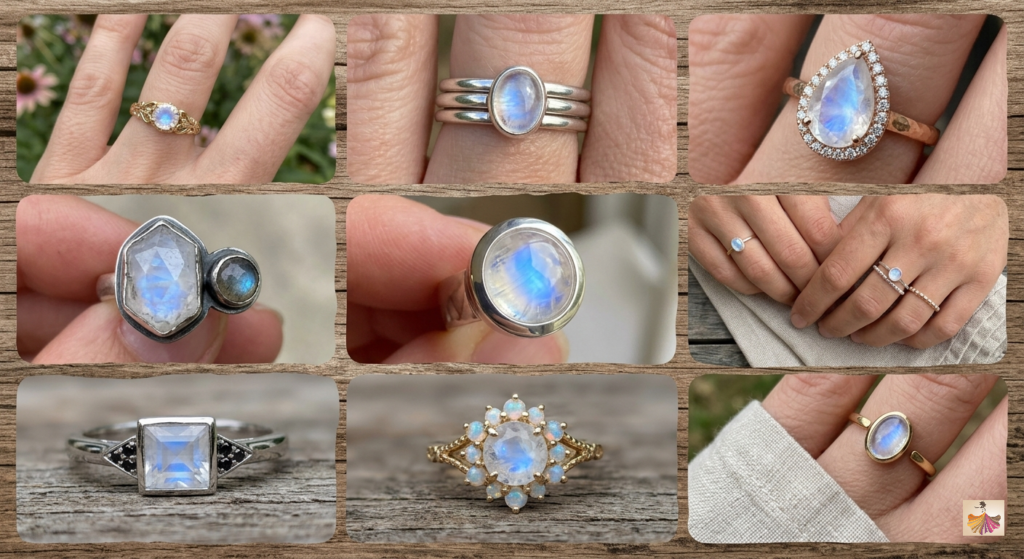
Jewelry remains Moonstone gemstone’s largest commercial industry. Designers create rings and pendants frequently. Bracelets and earrings also feature Moonstone. Luxury brands utilize premium specimens regularly. Handcrafted jewelry especially favors Moonstone aesthetics.
Fashion Industry
Fashion industries value Moonstone’s mystical appearance. Bohemian styles frequently incorporate Moonstone jewelry. Runway collections feature Moonstone accessories regularly. Artistic designers admire its glowing elegance.
Spiritual Industry
Spiritual communities associate Moonstone with intuition. Meditation practitioners use Moonstone crystals frequently. Metaphysical shops sell polished Moonstone widely. Many cultures connect Moonstone with feminine energy.
Decorative Industry
Decorative industries produce carvings and sculptures. Moonstone appears within luxury interior decorations occasionally. Collectors display carved gemstone art proudly.
Gemological Education
Gemology schools teach Moonstone identification techniques. Students study adularescence within laboratory classes. Moonstone remains important educational gemstone material.
Luxury Collectibles
Collectors purchase rare Moonstones for investment. Museums also preserve exceptional specimens historically. Auction houses occasionally sell valuable Moonstones.
Conclusion
Moonstone gemstones remains one extraordinary natural gemstone. Its floating glow captivates gemstone lovers universally. Adularescence creates unmatched visual softness beautifully. Collectors value transparent blue specimens highest. Sri Lanka produces especially fine material globally. Moonstone belongs to the feldspar mineral family. Its hardness requires careful jewelry maintenance regularly. Cabochon cutting enhances optical effects dramatically. The gemstone appears within fashion worldwide. Spiritual traditions also admire Moonstone symbolism. Gemologists study Moonstone for optical uniqueness. Certification protects consumers from imitations effectively. Moonstone combines beauty, history, and mystery elegantly. Its popularity continues growing internationally annually. Few gemstones appear equally gentle and magical.