
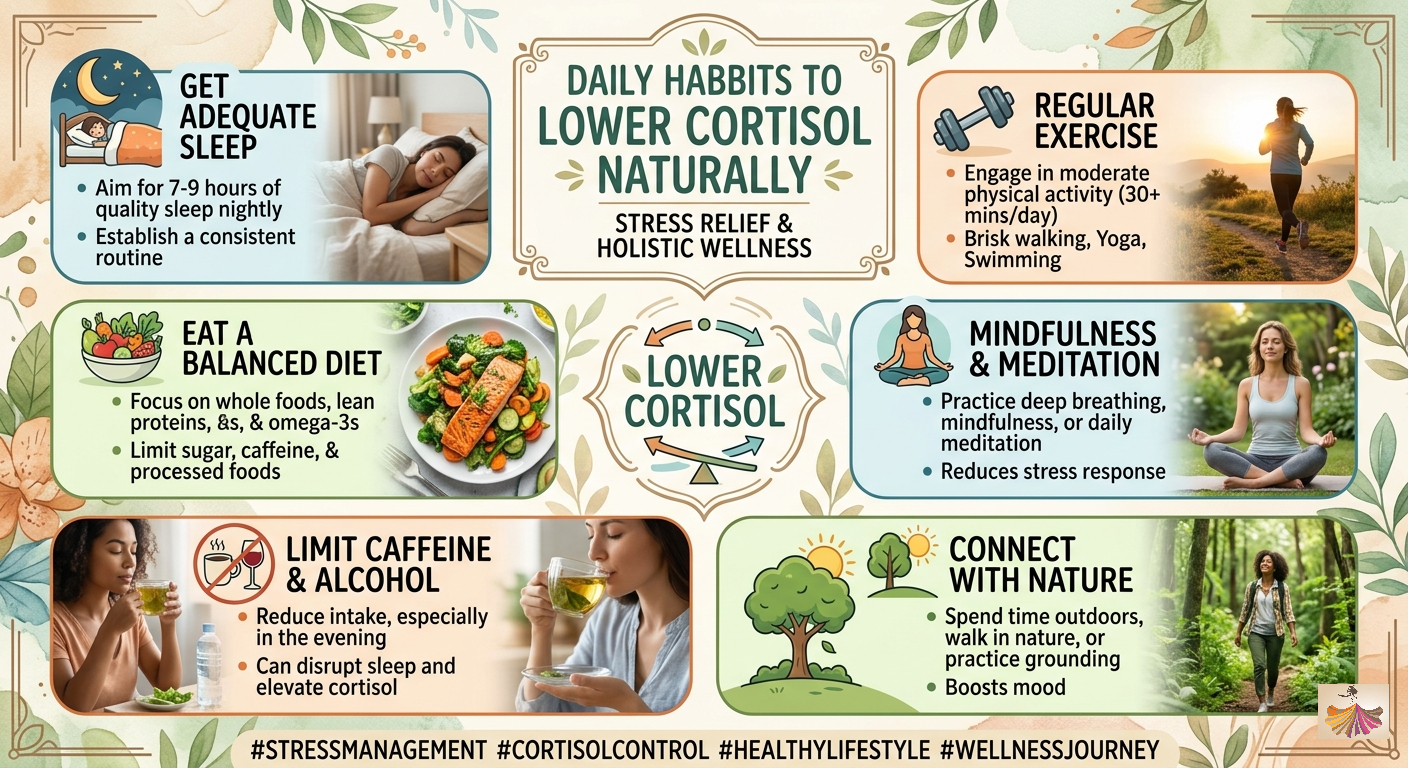
Lower Cortisol and Feel Better: 9 Daily Habits for 2026
Cortisol is often called the “stress hormone,” but that label only tells part of the story. It is essential for survival, helping regulate energy, blood pressure, inflammation, and the body’s sleep-wake cycle. The problem is not cortisol itself; it is chronic elevation of cortisol due to modern lifestyle patterns. In 2026, with constant digital stimulation, irregular sleep, processed diets, and high cognitive demands, many people experience sustained stress responses without realizing it. So, build a healthier routine to lower cortisol and reduce daily stress.
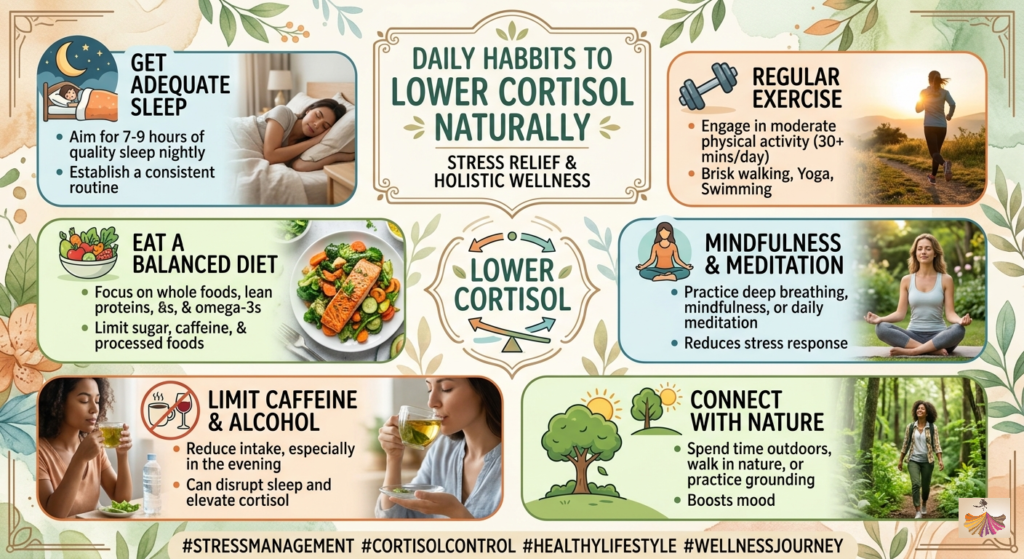
When cortisol remains elevated for long periods, it can contribute to fatigue, weight gain (especially abdominal fat), poor sleep, anxiety, weakened immunity, and difficulty concentrating. The encouraging part is that cortisol is highly responsive to daily habits. Small, consistent behavioral changes can significantly improve how the body regulates stress. Below are nine evidence-informed daily habits that can help lower cortisol naturally and sustainably in 2026.
1. Prioritize Morning Light Exposure
One of the most powerful regulators of cortisol is your circadian rhythm. Cortisol is naturally highest in the morning, helping you wake up and feel alert. However, modern indoor lifestyles often disrupt this pattern.

Getting 10–20 minutes of natural sunlight within an hour of waking helps anchor your internal clock. Morning light signals the brain to properly time cortisol release, leading to a healthier decline later in the day. Even on cloudy days, outdoor light is significantly more effective than indoor lighting. A short walk, tea on the balcony, or standing near a window can help to lower cortisol. Over time, this habit improves both stress regulation and sleep quality.
2. Reduce Digital Overload in the First Hour of the Day
Checking emails, social media, or news immediately after waking spikes psychological stress. This triggers unnecessary cortisol release before your body has fully stabilized from sleep.
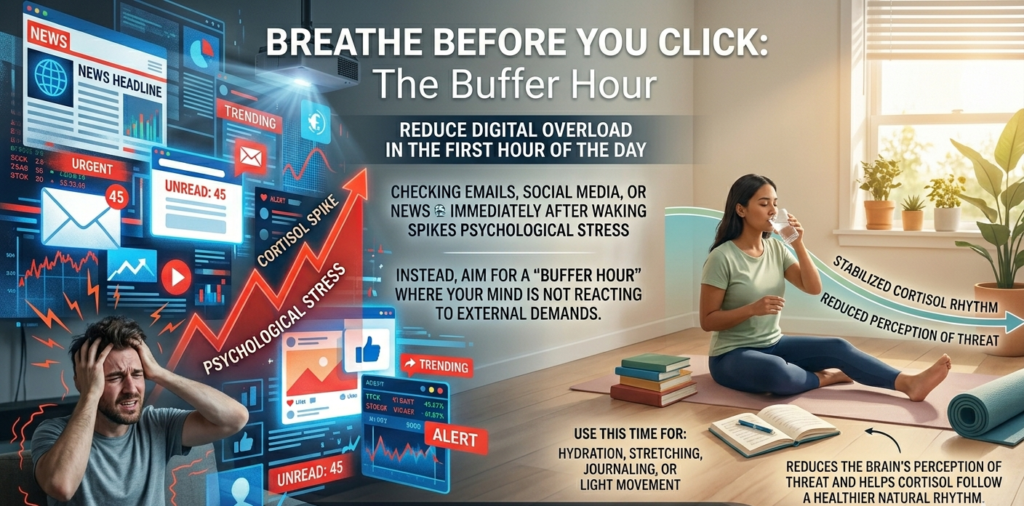
Instead, aim for a “buffer hour” where your mind is not reacting to external demands. Use this time for hydration, stretching, journaling, or light movement. This reduces the brain’s perception of threat and helps cortisol follow a healthier natural rhythm. In 2026, where digital engagement begins almost instantly for many people, this habit is especially important for stress control.
3. Stabilize Blood Sugar through Balanced Meals
Blood sugar fluctuations are a hidden driver of cortisol spikes. When blood glucose drops too low, the body releases cortisol to mobilize energy stores. This can create a cycle of stress, cravings, and fatigue.

Eating balanced meals that include protein, healthy fats, and fiber helps prevent these fluctuations. For example, a breakfast with eggs, oats, nuts, or yogurt is more stabilizing than refined carbohydrates alone. Avoiding long gaps between meals; especially in high-stress individuals; can also help keep cortisol levels steady throughout the day.
4. Practice Short Daily Breathing Exercises
Breathing is one of the fastest ways to influence the nervous system. Slow, controlled breathing activates the parasympathetic nervous system, which counteracts the stress response. A simple method is the 4-6 breathing pattern: inhale for 4 seconds and exhale for 6 seconds for 3–5 minutes. This extended exhale signals safety to the brain and reduces cortisol release.
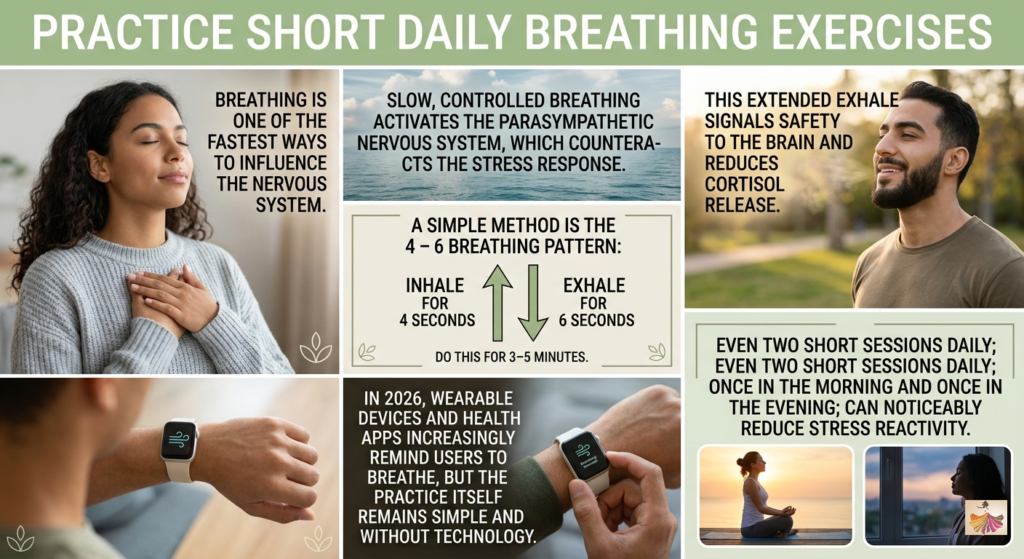
In 2026, wearable devices and health apps increasingly remind users to breathe, but the practice itself remains simple and effective without technology. Even two short sessions daily; once in the morning and once in the evening; can noticeably reduce stress reactivity.
5. Engage in Moderate Physical Activity (Not Excessive Exercise)
Exercise is beneficial for cortisol regulation, but intensity and recovery matter. Moderate movement such as walking, cycling, yoga, or strength training helps reduce baseline stress hormones over time.

However, excessive high-intensity training without rest can elevate cortisol chronically. This is especially common in individuals who use exercise as their primary stress outlet. A balanced routine includes 30–60 minutes of movement most days, with at least one or two rest or active recovery days per week. The goal is consistency, not exhaustion.
6. Improve Sleep Quality and Consistency
Sleep is one of the most important regulators of cortisol. Poor sleep leads to elevated cortisol the next day, while high cortisol makes it harder to sleep; creating a self-reinforcing cycle.

Key strategies include:
- Going to bed and waking up at consistent times
- Keeping the bedroom dark and cool
- Avoiding screens at least 30–60 minutes before bed
- Reducing caffeine intake after midday
Deep sleep allows cortisol levels to reset properly overnight. In 2026, despite advanced sleep-tracking devices, the fundamentals of sleep hygiene remain the most effective solution.
7. Strengthen Social Connection and Positive Interaction
Human connection is a powerful buffer against stress. Positive social interactions reduce cortisol and increase oxytocin, a hormone associated with safety and bonding.

Even brief daily interactions; talking with a friend, sharing a meal, or checking in with family; can lower perceived stress levels. Emotional support helps the brain interpret challenges as manageable rather than threatening. In contrast, isolation and negative social environments are associated with higher baseline cortisol. Prioritizing meaningful relationships, even in small daily doses, has a measurable impact on stress physiology.
8. Limit Caffeine Timing and Overuse
Caffeine can temporarily boost alertness, but it also stimulates cortisol-production. In moderate amounts, this is not harmful, but timing and quantity matter. Consuming caffeine immediately after waking may amplify the natural cortisol spike, leading to jitteriness and later crashes. A better approach is to delay caffeine intake by 60–90 minutes after waking.

Additionally, limiting caffeine after mid-afternoon helps prevent sleep disruption, which indirectly lowers cortisol the following day. Switching to herbal teas or decaf options in the evening supports a calmer hormonal profile.
9.Incorporate Daily Stress-Processing Rituals
Modern life often involves continuous stress exposure without resolution. Without intentional processing, stress accumulates and keeps cortisol elevated.

Daily stress-processing rituals help the brain “complete” stress cycles. These may include:
- Journaling thoughts and worries
- Walking without digital distractions
- Listening to calming music
- Mindfulness meditation
- Spending time in nature
The key is consistency. Even 10–15 minutes per day allows the nervous system to reset and prevents chronic stress buildup. In 2026, where mental overload is common, structured decompression is no longer optional—it is essential for hormonal balance.
Bringing It All Together
Lowering cortisol is not about eliminating stress entirely; that is neither possible nor healthy. Instead, it is about restoring balance so that stress responses activate when needed and shut off when the challenge is over.
These nine daily habits work best when combined:
- Morning sunlight and reduced digital stimulation set the day’s rhythm
- Balanced nutrition and caffeine timing stabilize physiological stress
- Movement, breathing, and sleep regulate the body’s recovery systems
- Social connection and intentional relaxation support emotional resilience
Over time, these practices retrain the body’s stress response system. The result is not just lower cortisol, but improved energy, clearer thinking, better sleep, and greater emotional stability. In a world that continues to accelerate in 2026, managing cortisol is less about extreme lifestyle changes and more about small, repeatable daily actions that signal safety to the body.
Frequently Asked
More Wellness Blogs from Styleminres
________________________________________________________________________________________________________________