Ultimate Zircon Gemstone Guide for Buyers, Collectors and Jewelers
Introduction
Zircon is an ancient natural gemstone. It formed billions of years ago. Many scientists study this remarkable mineral. Jewelers also admire its exceptional beauty. Collectors value its rarity and brilliance. Zircon belongs to the silicate mineral family. Its chemical formula is ZrSiO4. The gemstone contains zirconium and silica. Many people confuse zircon with cubic zirconia. Both stones are completely different materials. Zircon forms naturally inside Earth. Cubic zirconia forms inside laboratories. Zircon gemstone possesses natural crystal structures. Cubic zirconia is fully synthetic material. Natural zircon also shows strong optical performance.
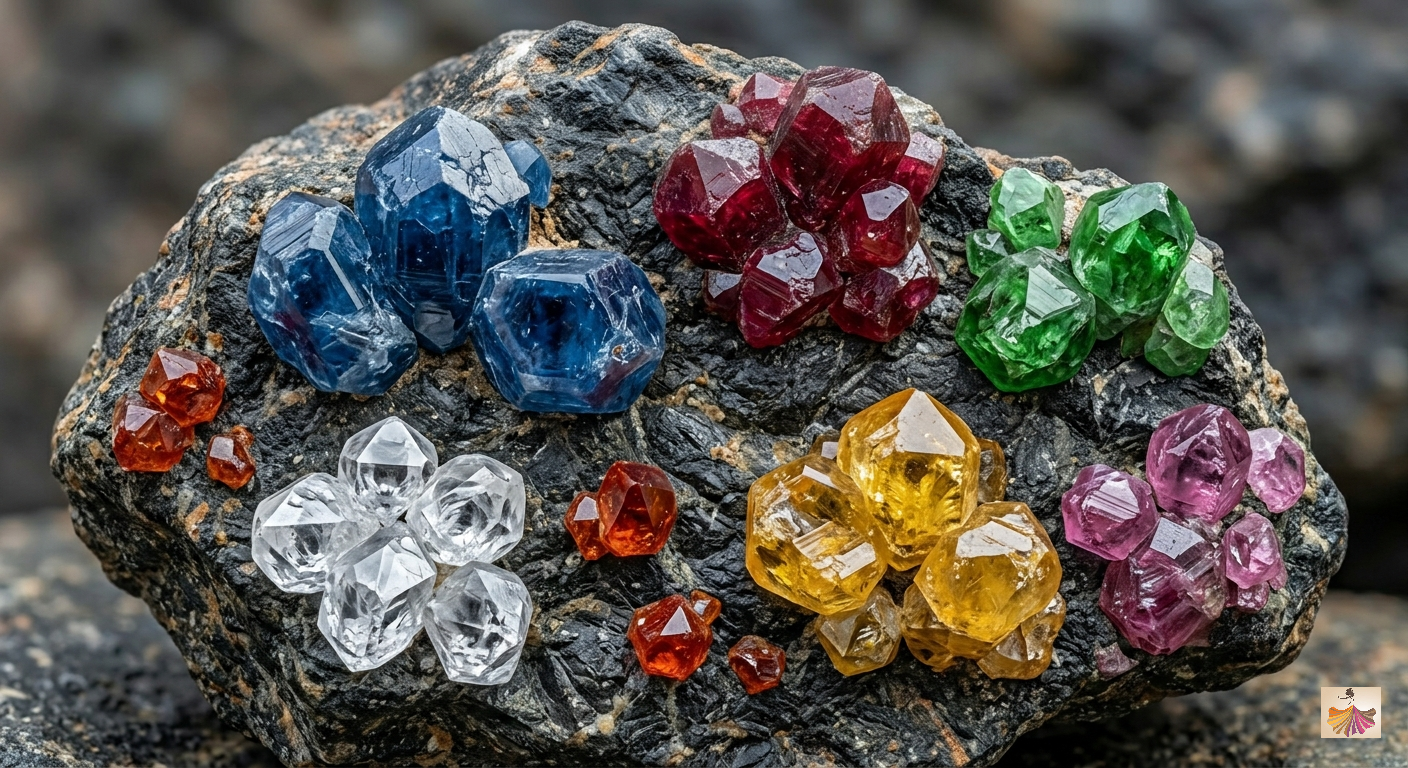
This feature increases its gemstone value. Zircon appears in many attractive colors. Blue zircon remains especially popular worldwide. Red zircon is also highly desirable. Green zircon attracts gemstone collectors. Colorless zircon resembles diamond strongly. Ancient traders often sold zircon as diamond substitutes. Modern gemology clearly distinguishes both materials. Zircon also interests geologists greatly. Some zircon crystals exceed 4.4 billion years old. These crystals represent Earth’s oldest known minerals. Scientists use zircon for geological dating research. The gemstone records important planetary history.
Unique Characteristic Different From all Other Gemstones
Zircon gemstone possesses several extraordinary characteristics. These features separate zircon from other gemstones. Its strongest feature involves double refraction. Light entering zircon splits into two rays. This process creates doubled facet reflections. Observers often notice doubled back facets. Few gemstones show this effect strongly. Zircon also displays exceptional fire. Fire means colorful light flashes. Diamond also shows strong fire. Zircon approaches diamond in dispersion performance. This quality creates rainbow flashes beautifully. Well-cut zircon stones appear extremely lively. Another unique characteristic involves geological age. Zircon contains uranium traces naturally.
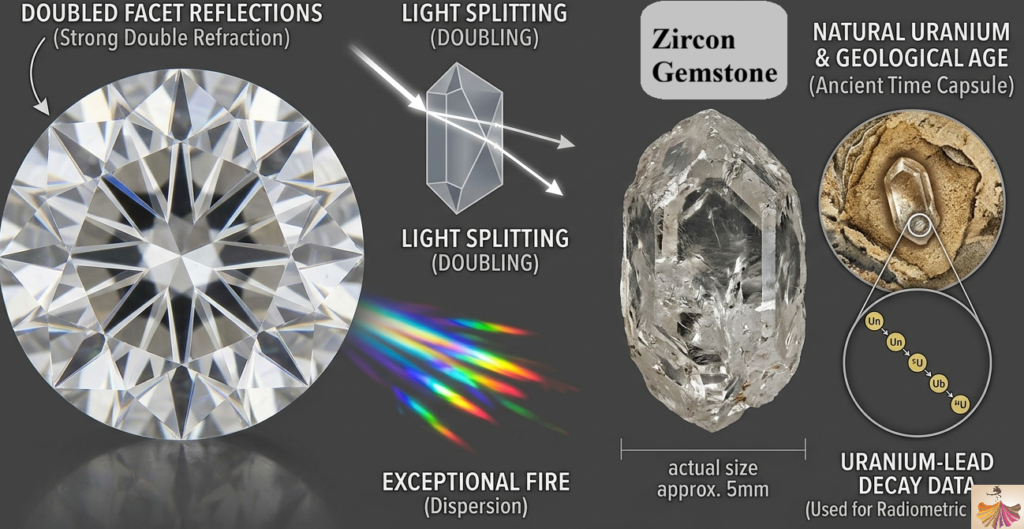
Scientists measure uranium decay inside zircon. This process reveals ancient geological ages. Some zircon crystals formed during Earth’s earliest history. Therefore zircon serves scientific research greatly. Metamictization also makes zircon unique. Internal radiation slowly damages crystal structures. This process changes physical properties gradually. Refractive index decreases over long periods. Specific gravity also changes significantly. Few gemstones experience this phenomenon naturally. Zircon also shows wide color diversity. Natural zircon appears colorless, blue, yellow, green, brown, red, and orange. Heat treatment creates additional attractive colors. Blue zircon especially dominates jewelry markets. Strong brilliance further distinguishes zircon. High refractive indices increase reflected light. The gemstone sparkles intensely under lighting. Collectors appreciate this optical beauty greatly.
Type of Gemstone
Zircon is a natural mineral gemstone. It belongs to the nesosilicate mineral group. The gemstone forms tetragonal crystal structures. Zircon remains an inorganic crystalline material. Natural geological processes create zircon deposits. Gemologists classify zircon as a precious colored gemstone. It is not considered synthetic material. Natural zircon develops within igneous rocks mainly. Metamorphic rocks also contain zircon crystals. Sedimentary deposits sometimes preserve zircon grains. Zircon differs completely from cubic zirconia. Cubic zirconia contains zirconium oxide. Zircon contains zirconium silicate instead. Their crystal systems differ strongly. Their hardness values also differ significantly. Gem-quality zircon forms transparent crystals usually.
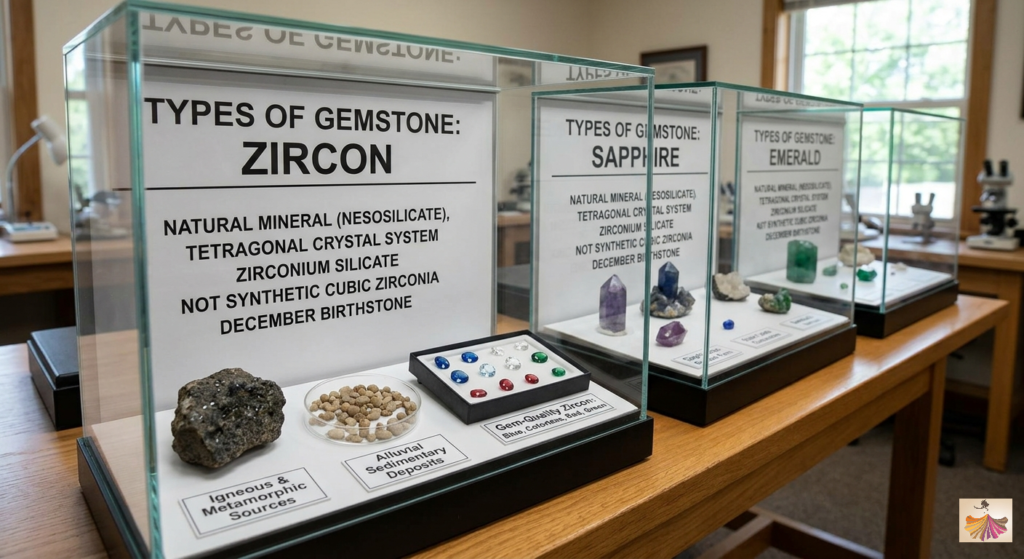
Industrial zircon exists separately. Industrial material supports ceramics manufacturing greatly. Gemstone-grade zircon requires superior clarity and color. Blue zircon dominates commercial jewelry markets. Colorless zircon historically substituted diamonds frequently. Red and green zircon remain rarer varieties. Collectors often seek unusual zircon colors. Zircon also qualifies as December birthstone material. This designation increases commercial demand globally. Jewelry manufacturers frequently use zircon in rings. Pendants and earrings also feature zircon gemstones.
Origin / Source
Zircon gemstone forms within Earth’s crust naturally. Magmatic activity creates many zircon crystals. Igneous rocks especially contain zircon grains. Granite rocks commonly host zircon deposits. Syenite rocks also produce zircon crystals. Metamorphic environments also generate zircon material. High temperature and pressure influence crystal growth. Sedimentary processes later transport zircon grains. River gravels frequently contain gemstone zircon. Beach sands also preserve heavy zircon minerals.
Sri Lanka remains a famous zircon source. Cambodian mines also produce fine zircon. Myanmar supplies attractive natural zircon gemstones. Thailand historically mined quality blue zircon. Australia produces large zircon quantities globally. Tanzania contributes gemstone zircon production significantly. Madagascar also yields attractive zircon crystals. Vietnam mines valuable blue zircon deposits. Nigeria produces commercial zircon material too. Australia contains ancient zircon crystals scientifically. The Jack Hills region became internationally famous.
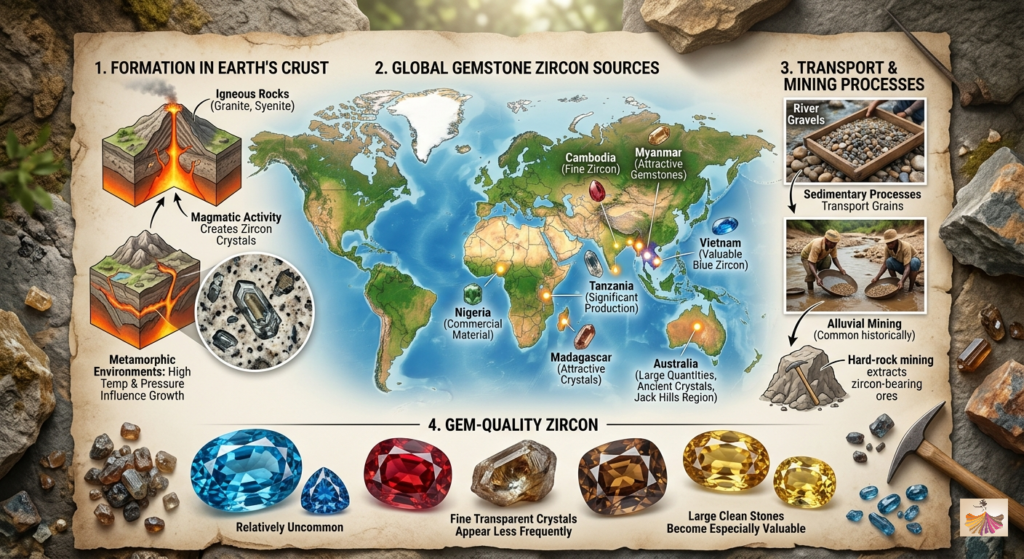
Scientists discovered extremely old zircon there. These crystals measured approximately 4.4 billion years old. Mining methods vary across regions. Alluvial mining remains common historically. Workers recover zircon from river sediments. Hard-rock mining also extracts zircon-bearing ores. Gem-quality zircon remains relatively uncommon. Fine transparent crystals appear less frequently. Large clean stones become especially valuable.
Color
Zircon displays remarkable color diversity. Blue zircon remains commercially dominant today. Jewelers frequently prefer vivid blue shades. Heat treatment usually produces blue zircon. Natural zircon also appears colorless. Colorless stones resemble diamonds strongly. These stones show intense brilliance and fire. Ancient jewelers valued colorless zircon greatly. Red zircon represents another valuable variety. Orange-red shades appear especially attractive. Brownish red zircon also occurs naturally. Yellow zircon remains commercially available widely. Green zircon interests gemstone collectors strongly. Pure green stones remain relatively rare. Golden zircon also appears beautiful. Honey-colored zircon attracts jewelry designers frequently. Brown zircon occurs very commonly worldwide.
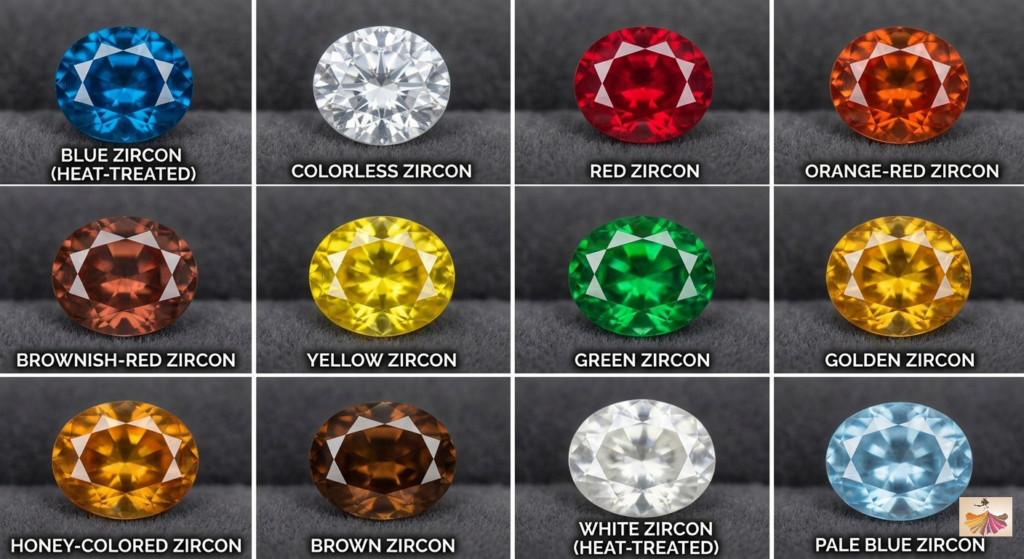
Many untreated zircon crystals show brown tones. Heat treatment often improves these colors. White zircon may develop after heating. Color intensity affects gemstone value greatly. Saturated vivid colors command higher prices. Blue, red, and green stones remain especially desirable. Pale stones usually cost less. Color distribution also influences appearance. Even color distribution increases gemstone attractiveness. Zoned color patterns sometimes appear naturally. Lighting conditions affect zircon appearance slightly. Strong brilliance enhances perceived color intensity. Proper cutting maximizes color presentation effectively.
Clarity
Clarity describes internal gemstone purity. Zircon gemstone often exhibits good transparency naturally. Many zircon stones appear eye-clean. Eye-clean means inclusions remain invisible normally. Some zircon stones contain visible inclusions. Crystals, fractures, and needles may occur. Parallel inclusions sometimes create cat’s-eye effects. Such stones require cabochon cutting usually. High clarity zircon attracts greater market demand. Transparent stones maximize brilliance strongly. Inclusions reduce optical performance somewhat.
Radiation damage sometimes affects clarity. Metamict zircon may appear cloudy internally. Structural damage decreases transparency significantly. High-grade zircon usually shows limited damage. Gemologists inspect zircon carefully during grading. Magnification reveals internal features clearly. Minor inclusions often remain acceptable commercially. Large flawless zircon stones remain uncommon. Therefore premium clarity stones achieve higher prices. Collectors prefer clean stones especially. Blue zircon frequently appears eye-clean commercially. Red and green zircon may contain inclusions more commonly. Natural untreated stones often show characteristic internal patterns. Clarity also affects durability slightly. Heavy fractures weaken gemstone structures. Careful jewelry setting protects fragile stones better.
Cut
Cut influences zircon beauty dramatically. Skilled cutting maximizes brilliance and fire. Zircon’s high refractive index supports excellent sparkle. Round cuts remain very popular. Oval cuts also enhance brilliance effectively. Cushion cuts suit zircon beautifully. Pear shapes attract jewelry designers frequently. Emerald cuts sometimes reduce brilliance. However they highlight clarity effectively. Brilliant-style faceting generally suits zircon best. Cutters must consider double refraction carefully. Incorrect orientation creates blurry facet reflections. Proper alignment improves visual sharpness greatly. Zircon possesses brittle characteristics occasionally.
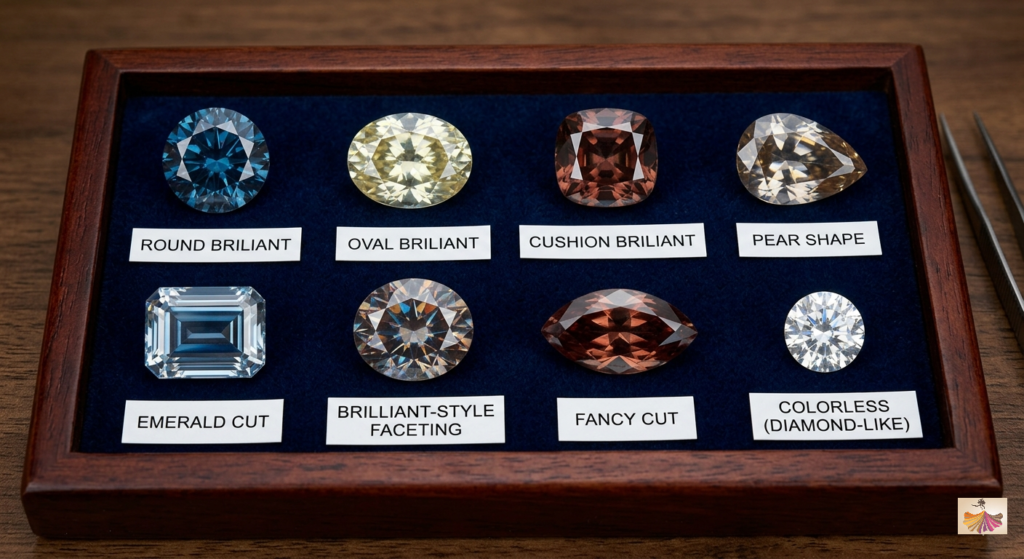
Therefore cutters work carefully during faceting. Sharp impacts may damage stones. Blue zircon often receives brilliant cuts. Colorless zircon frequently uses diamond-like faceting. Fancy cuts increase uniqueness sometimes. Cut quality strongly influences gemstone value. Symmetrical faceting increases brilliance greatly. Poor cuts reduce optical performance significantly. Modern technology improved zircon cutting precision. Computer-guided faceting increases consistency greatly. Fine cutting enhances market demand strongly.
Carat Weight
Carat measures gemstone weight precisely. One carat equals 0.2 grams. Zircon occurs across various sizes naturally. Small zircon stones appear commonly. Large fine-quality zircon remains rarer. Stones exceeding ten carats attract collectors greatly. Zircon possesses relatively high density. Therefore zircon feels heavier than many gemstones. Similar-sized stones may weigh differently. Large transparent zircon crystals remain valuable. Fine clarity becomes rarer in larger stones.
Strong color saturation also increases value. Blue zircon often appears commercially between one and five carats. Larger stones command premium prices strongly. Collectors seek oversized zircon gemstones occasionally. Museums display exceptionally large zircon specimens worldwide. Carat weight alone never determines value. Color, clarity, and cut remain equally important. Market demand also influences pricing significantly. Jewelry manufacturers often select medium-sized zircon. Such stones balance beauty and affordability effectively.
Transparency / Clarity Type
Zircon gemstone generally ranges from transparent to translucent. Transparent zircon remains most desirable commercially. Such stones transmit light efficiently. Transparent zircon displays maximum brilliance and fire. Light reflects strongly inside clean stones. This effect increases visual beauty greatly. Translucent zircon appears less valuable usually. Internal inclusions scatter incoming light. Cloudiness reduces optical performance significantly. Opaque zircon rarely enters gemstone jewelry markets.
Industrial applications may use lower-quality material instead. Clarity type depends upon crystal structure integrity. Radiation damage sometimes decreases transparency naturally. Heat treatment occasionally improves appearance. Eye-clean zircon dominates fine jewelry markets. Collectors especially seek transparent stones with vivid color. Blue zircon commonly appears transparent commercially. Brown zircon may appear translucent occasionally. Green zircon sometimes shows slight haziness. Transparency also affects gemstone durability visually. Highly fractured stones appear cloudy internally.
Treatments / Enhancements
Heat treatment represents zircon’s most common enhancement. Many blue zircon stones undergo heating. Brown zircon frequently changes color during treatment. Controlled heating creates attractive blue shades. White zircon may also result from heating. Treatment temperatures vary across materials. Heat treatment usually remains stable permanently. Normal jewelry wear rarely changes treated colors.
Some zircon stones receive irradiation treatments. This process modifies crystal color occasionally. Treated stones must satisfy safety standards. Untreated zircon stones attract collectors strongly. Natural colors often command higher market prices. Gemological laboratories identify treatments carefully. Certification reports disclose enhancement information clearly. Treatment transparency remains important commercially. Ethical gemstone trade requires honest disclosure. Heat-treated blue zircon dominates jewelry markets today. Untreated blue zircon occurs much less frequently. Proper care remains important after treatment. Excessive heat exposure may influence certain stones.
Refractive Index (RI)
Refractive index measures light bending ability. Zircon possesses very high refractive indices. This property increases brilliance significantly. High zircon usually measures 1.925 to 1.984. Medium zircon measures approximately 1.875 to 1.905. Low zircon measures around 1.810 to 1.815. These values exceed many colored gemstones. Therefore zircon sparkles intensely under lighting. Double refraction also affects optical performance. Zircon splits incoming light strongly. Facets sometimes appear doubled visually. Radiation damage influences refractive index values. Metamict zircon shows reduced measurements. Crystal structure degradation causes these changes. Gemologists use refractometers for measurement. Refractive index helps gemstone identification greatly. High refractive index supports diamond-like appearance. Colorless zircon especially resembles diamond visually. Cutting quality influences refractive performance further. Precise faceting maximizes reflected brilliance.
Specific Gravity (SG)
Specific gravity measures relative density. Zircon possesses comparatively high density. Typical values range between 3.90 and 4.73. Zircon therefore feels heavier than expected. Similar-sized gemstones often weigh less. High zircon generally shows greater density. Radiation damage lowers specific gravity gradually. Metamict stones therefore feel slightly lighter. Gemologists measure specific gravity carefully. This property assists gemstone identification strongly. Dense structure influences jewelry design somewhat. Large zircon stones carry noticeable weight. Specific gravity also affects gemstone durability indirectly. Compact crystal structures often resist wear better. Collectors appreciate zircon’s substantial feel physically. Heavy gemstones sometimes suggest authenticity. Laboratory testing confirms specific gravity values accurately. Combined properties identify zircon reliably.
Hardness (Mohs scale)
Zircon measures approximately 6 to 7.5 hardness. Hardness varies according to crystal condition. High zircon generally remains harder. Metamict zircon becomes softer gradually. Radiation damage weakens crystal structures internally. Zircon therefore requires careful handling sometimes. Rough impacts may chip gemstone edges. Abrasion may also damage surfaces. Despite moderate hardness, zircon remains wearable. Protective jewelry settings improve durability greatly. Rings require greater caution during wear. Pendants and earrings face fewer impacts usually. Hardness differs from toughness completely. Zircon resists scratching moderately well. However brittleness may still occur. Proper storage protects zircon effectively. Separate compartments prevent scratching from harder gems. Professional jewelers understand zircon handling requirements. Careful mounting reduces damage risks significantly.
Luster
Zircon gemstone displays strong adamantine luster. Adamantine means diamond-like surface shine. This property creates luxurious appearance. Polished zircon reflects light beautifully. Smooth surfaces enhance luster greatly. High-quality cutting improves visual performance further. Colorless zircon especially demonstrates exceptional luster. Blue zircon also appears very bright.
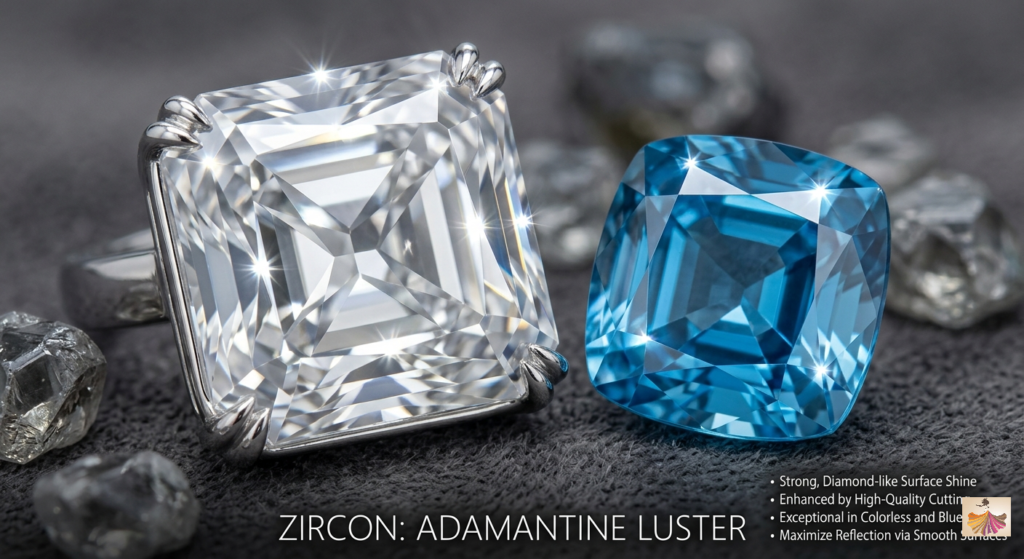
Luster depends upon surface condition strongly. Scratched surfaces reduce shine significantly. Proper polishing restores brilliance effectively. Transparent stones generally show stronger luster. Cloudy stones appear less reflective visually. Zircon’s luster increases jewelry attractiveness greatly. Consumers often notice sparkle immediately. Lighting environments affect luster perception slightly. Direct illumination maximizes reflective performance. Collectors admire zircon’s vivid surface appearance. Fine stones rival expensive gemstones visually.
Fire / Dispersion
Fire describes colorful spectral flashes. Zircon possesses outstanding dispersion performance. Dispersion separates white light into rainbow colors. Zircon dispersion approaches diamond levels closely. Therefore zircon displays vivid rainbow flashes. Well-cut stones maximize fire dramatically. Brilliant faceting improves light return strongly. Colorless zircon especially reveals strong dispersion. Blue zircon also exhibits impressive fire. Lighting conditions influence visibility greatly. Consumers often admire zircon’s colorful flashes immediately. This property increases commercial desirability significantly. High refractive index supports fire production strongly. Double refraction further increases optical complexity. Poorly cut stones lose dispersion performance. Therefore skilled faceting remains essential. Collectors appreciate zircon’s lively appearance greatly. Few affordable gemstones show similar fire.
Brilliance
Brilliance describes white light reflection. Zircon demonstrates remarkable brilliance naturally. Strong internal reflections create intense sparkle. High refractive index increases brilliance significantly. Transparent stones maximize reflected light effectively. Colorless zircon sometimes resembles diamond strongly. Brilliant cutting enhances this appearance greatly. Blue zircon combines color with sparkle beautifully. This combination attracts jewelry buyers frequently. Clarity influences brilliance strongly. Clean stones reflect light more efficiently. Inclusions reduce brightness somewhat. Proper proportions remain extremely important. Deep or shallow cuts reduce brilliance. Zircon’s brilliance supports luxury jewelry designs. Designers frequently combine zircon with diamonds. Artificial lighting especially enhances zircon brilliance. Evening jewelry often benefits from this property.
Pleochroism
Pleochroism means color variation by direction. Zircon sometimes displays weak pleochroism. Different viewing angles reveal slight color changes. Blue zircon may show varying blue tones. Green zircon sometimes reveals yellowish flashes. Pleochroism depends upon crystal orientation strongly. Gem cutters consider this property carefully. Strong pleochroism rarely occurs in zircon. However subtle effects enhance gemstone uniqueness. Gemologists observe pleochroism using specialized instruments. Dichroscopes assist professional examination. Proper orientation improves final gemstone appearance. Cutters maximize desirable color directions carefully. Pleochroism also aids gemstone identification occasionally. Combined optical properties confirm zircon authenticity. Collectors appreciate subtle optical changes aesthetically. Such features increase gemstone individuality.
Fluorescence
Fluorescence describes reactions under ultraviolet light. Some zircon stones fluoresce weakly. Others show no reaction whatsoever. Blue zircon may display faint fluorescence occasionally. Yellow zircon sometimes fluoresces more visibly. Trace elements influence fluorescence behavior greatly. Internal chemical composition determines reactions. Gemological laboratories examine fluorescence carefully. Ultraviolet lamps reveal these effects clearly. Fluorescence rarely dominates zircon valuation strongly. Color and clarity remain more important. Collectors sometimes appreciate unusual fluorescence patterns. Specialty stones attract niche markets occasionally. Fluorescence also assists gemstone identification sometimes. Combined testing improves accuracy greatly. Natural and treated zircon may fluoresce differently. Laboratories evaluate these differences scientifically.
Durability
Durability combines hardness, toughness, and stability. Zircon offers moderate overall durability. Careful handling remains important always. Brittleness represents zircon’s main weakness. Strong impacts may chip facet edges. Thin corners require extra protection. Heat sensitivity also affects zircon occasionally. Extreme temperature changes may damage stones. Despite limitations, zircon remains wearable daily. Protective settings improve gemstone safety greatly. Earrings and pendants suit zircon especially well. Rings require cautious use sometimes. Regular cleaning maintains beauty effectively. Mild soap solutions remain safest generally. Ultrasonic cleaners may risk fragile stones. Proper storage prevents unnecessary scratching. Separate jewelry boxes reduce damage greatly. High-quality zircon lasts generations with care. Antique zircon jewelry still survives beautifully.
Certification / Report
Gemstone certification increases consumer confidence greatly. Professional laboratories examine zircon scientifically. Certification reports identify gemstone authenticity clearly. Reports also disclose treatments accurately. Major gemological laboratories issue zircon reports. The Gemological Institute of America remains highly respected. Other recognized laboratories also provide certification. Reports include color descriptions precisely. Carat weight and measurements appear clearly. Clarity observations also receive documentation. Treatment disclosure remains extremely important commercially. Heat treatment must appear within reports. Certification protects gemstone buyers effectively. Fraud risks decrease with proper documentation. Insurance companies sometimes require gemstone reports. Valuable zircon jewelry especially benefits from certification. Collectors prefer certified rare zircon specimens frequently. Laboratory documentation increases resale confidence strongly.
Shape
Zircon gemstones appear in many shapes. Round shapes remain commercially dominant. Oval zircon also appears extremely popular. Cushion shapes enhance brilliance beautifully. Pear-shaped zircon suits pendants elegantly. Marquise shapes create elongated appearance. Emerald cuts emphasize clarity strongly. Heart shapes appear within specialty jewelry. Trillion cuts create modern visual styles. Crystal structure influences shape possibilities somewhat. Skilled cutters maximize rough material efficiently. Fancy shapes increase design flexibility greatly.
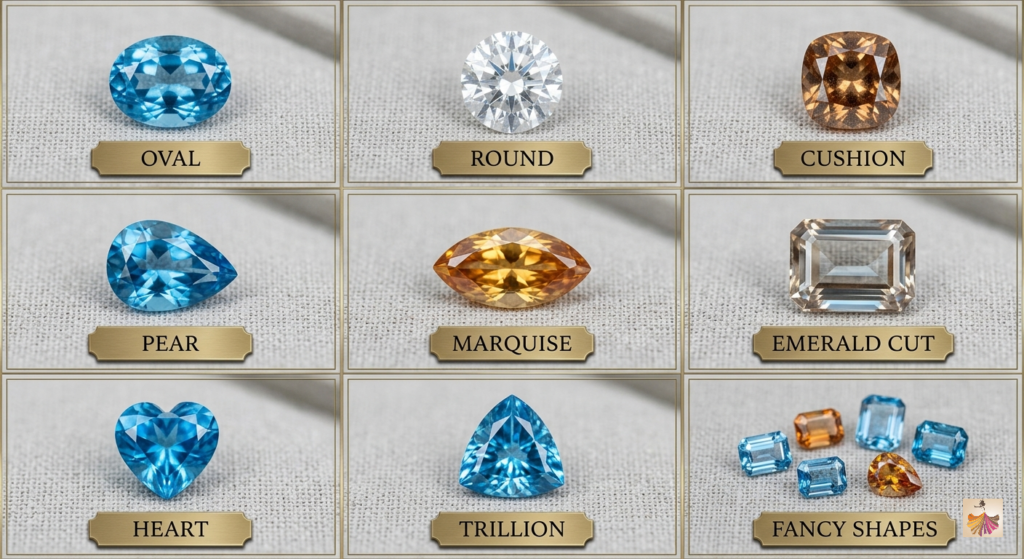
Jewelry manufacturers appreciate zircon versatility. Shape selection affects perceived size visually. Elongated cuts appear larger sometimes. Consumers often select shapes personally. Fashion trends also influence popularity significantly. Modern cutting technology supports complex shapes effectively. Precision improves finished gemstone beauty greatly.
Zircon Gemstone Price / Value Table (2026 Market Estimates)
Zircon prices vary significantly worldwide. Several quality factors determine value. Color strongly influences market pricing.
| Zircon Variety | Quality Grade | Color Description | Clarity | Size Range | Treatment Status | Origin Influence | Estimated Price Per Carat (USD) | Market Demand |
| Blue Zircon | Commercial | Light Blue | Slightly Included | 1–3 ct | Heat-Treated | Cambodia | $30 – $80 | High |
| Blue Zircon | Fine Quality | Vivid Neon Blue | Eye-Clean | 2–5 ct | Heat-Treated | Cambodia / Vietnam | $120 – $350 | Very High |
| Blue Zircon | Collector Grade | Intense Electric Blue | Flawless | 5+ ct | Untreated Rare | Cambodia | $400 – $1,200+ | Premium |
| Red Zircon | Fine Quality | Deep Reddish Orange | Eye-Clean | 1–4 ct | Usually Untreated | Sri Lanka | $250 – $900 | Rare |
| Green Zircon | Fine Quality | Olive to Bright Green | Eye-Clean | 1–3 ct | Untreated | Tanzania / Sri Lanka | $300 – $1,000 | Rare |
| Colorless Zircon | Commercial | White / Diamond-like | Slightly Included | 1–5 ct | Heat-Treated | Cambodia | $20 – $90 | Moderate |
| Colorless Zircon | Fine Quality | Bright White | Eye-Clean | 3–6 ct | Untreated | Sri Lanka | $100 – $300 | Strong |
| Brown Zircon | Commercial | Honey Brown | Included | 1–5 ct | Untreated | Australia | $10 – $40 | Low |
| Golden Zircon | Fine Quality | Golden Yellow | Eye-Clean | 2–5 ct | Untreated | Sri Lanka | $80 – $250 | Moderate |
| Orange Zircon | Fine Quality | Bright Orange | Eye-Clean | 1–3 ct | Untreated | Tanzania | $120 – $400 | Increasing |
| Pink Zircon | Rare Collector | Pinkish Peach | Eye-Clean | 1–2 ct | Untreated | Madagascar | $400 – $1,500 | Very Rare |
| Large Blue Zircon | Investment Grade | Vivid Blue | Flawless | 10+ ct | Untreated Rare | Cambodia | $1,500 – $5,000+ | Investment |
| Antique Zircon Jewelry | Estate Grade | Mixed Colors | Variable | Variable | Historical | Sri Lanka / Thailand | $500 – $10,000+ | Collector |
| Industrial Zircon | Non-Gem Grade | Brown / Opaque | Opaque | Bulk Material | Untreated | Australia | $2 – $10 per kg |
Major Industries to Use
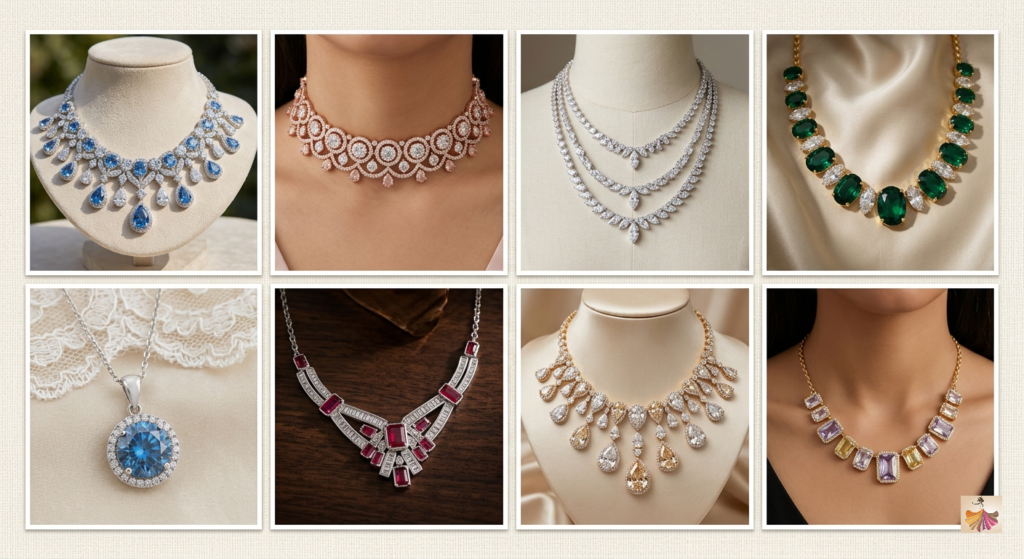
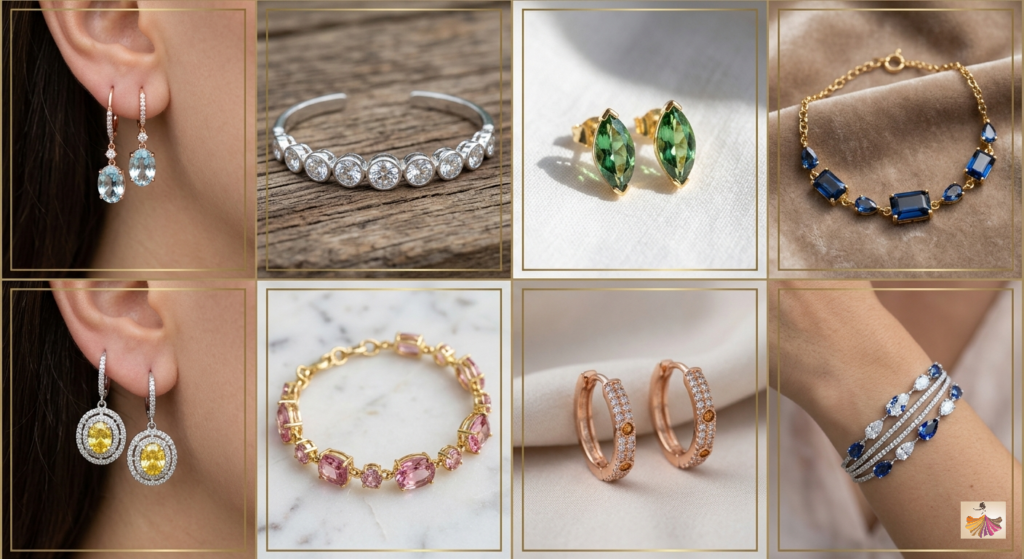
Jewelry Industry
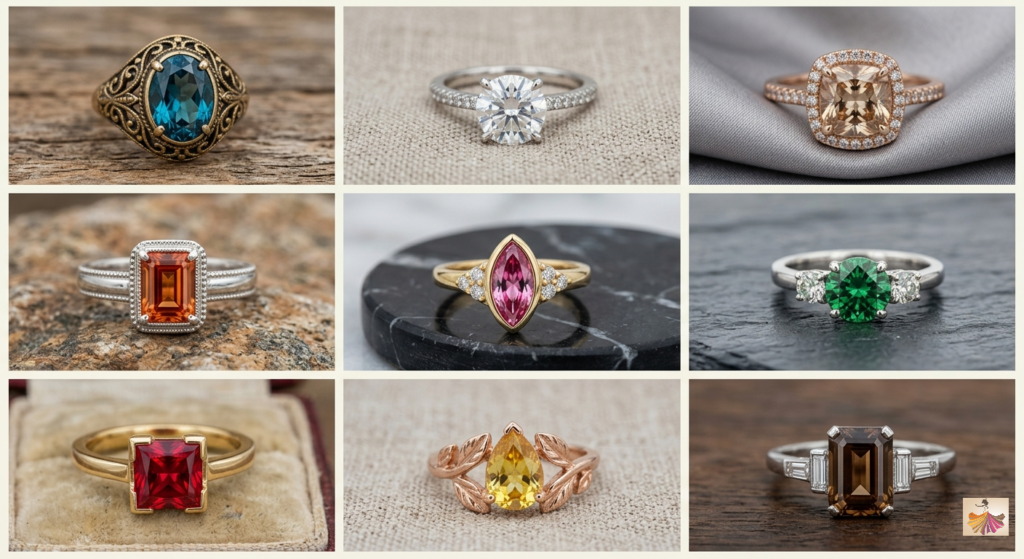
The jewelry industry remains the largest consumer of Zircon gemstones worldwide. Blue zircon especially attracts luxury jewelry designers because of its exceptional brilliance and colorful fire. Jewelers use zircon in rings, pendants, necklaces, earrings, and bracelets. Colorless zircon also serves as an affordable alternative to diamonds in fine jewelry collections.
Geological and Scientific Research Industry
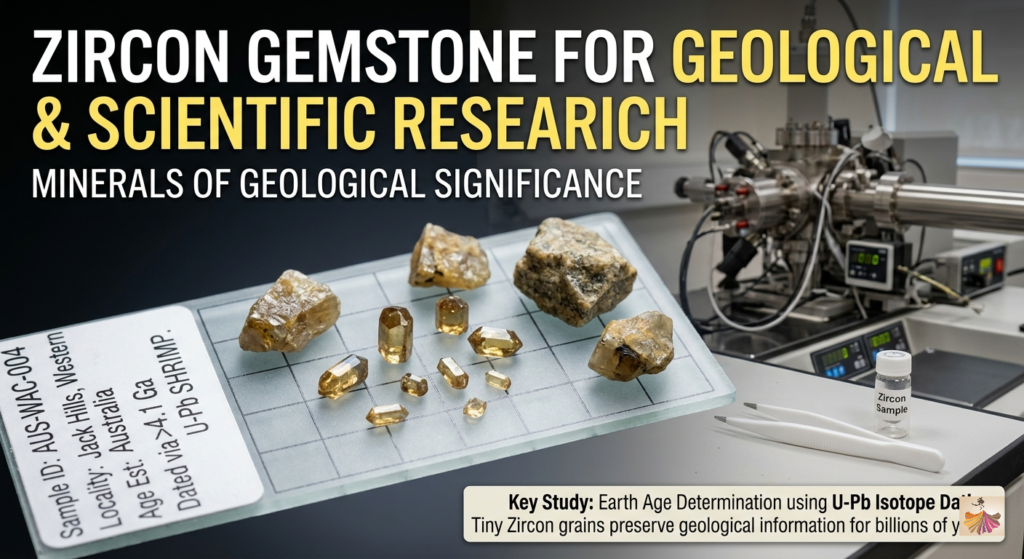
Geologists study zircon crystals extensively for Earth age determination. Tiny zircon grains preserve geological information for billions of years. Scientists use uranium-lead dating methods on zircon to calculate rock formation ages accurately. Ancient zircon crystals from Australia helped researchers understand Earth’s earliest crust development and planetary evolution.
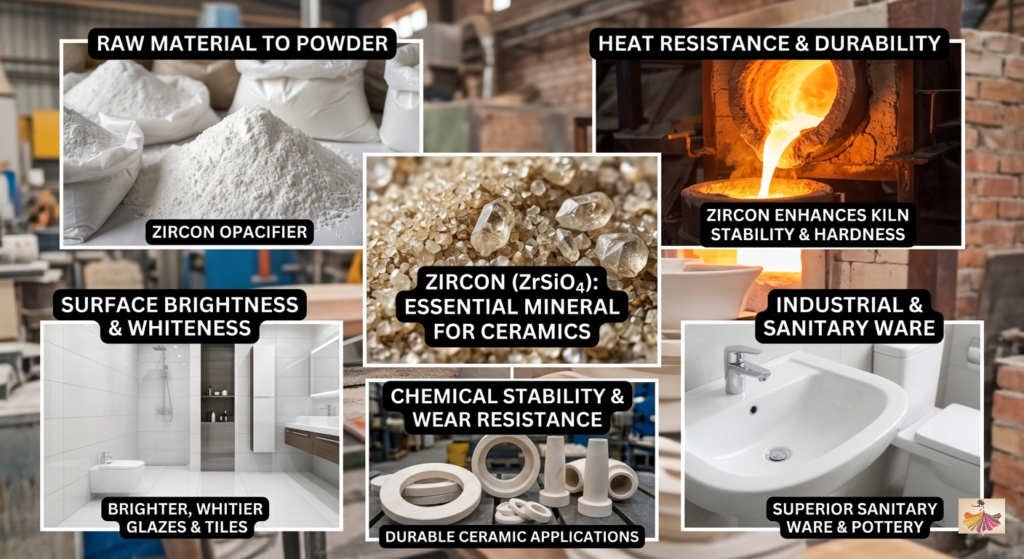
Ceramic Industry
Industrial zircon plays an important role in ceramic manufacturing. Ceramic companies use zircon compounds in tiles, sanitary products, pottery, and industrial ceramics. Zircon improves heat resistance, hardness, and durability in ceramic materials. The mineral also enhances surface brightness and chemical stability significantly.
Refractory Industry
Refractory industries depend heavily on zircon-based materials because of their excellent heat resistance. Furnaces, kilns, and industrial reactors often contain zircon refractories. These materials tolerate extremely high temperatures without breaking easily. Steel and glass manufacturing industries especially rely on zircon refractory products.
Nuclear Industry
The nuclear industry uses zirconium extracted from zircon minerals extensively. Zirconium resists corrosion under extreme conditions effectively. Nuclear reactors use zirconium alloys for fuel rod cladding and structural components. The metal performs reliably under intense heat and radiation exposure.
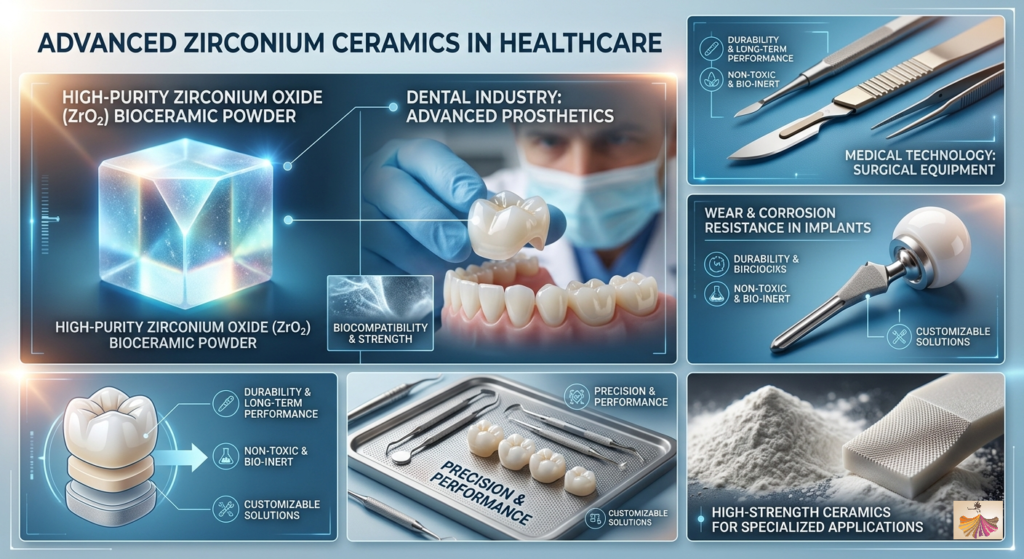
Dental and Medical Industry
Advanced dental industries use zirconium-based ceramics for crowns, implants, and dental restorations. These materials provide strength, durability, and biocompatibility. Medical technology companies also use zirconium ceramics in specialized surgical equipment. Their resistance to wear and corrosion increases long-term performance.
Electronics Industry
Electronics manufacturers occasionally use zirconium compounds in heat-resistant and insulating materials. Zircon supports production of advanced ceramics used in electronic systems. Some components require high thermal stability and chemical resistance. Zircon-based materials help meet these industrial requirements efficiently.
Educational and Mineralogical Institutions
Universities and mineralogy departments study zircon crystals frequently for scientific education and research. Students learn crystal structures, mineral identification, and radiometric dating through zircon analysis. Museums also display ancient zircon specimens because of their historical and scientific importance. These crystals provide valuable insight into Earth’s geological history.
Collector and Museum Industry
Rare zircon gemstones attract collectors worldwide because of their brilliance, rarity, and geological significance. Museums preserve exceptional zircon specimens for public education and scientific research. Rare colors, large crystals, and ancient zircon samples achieve high collector value internationally.
Conclusion
Zircon gemstone remains one of nature’s remarkable gemstones. Its beauty combines with scientific importance uniquely. Few gemstones possess similar historical significance. Strong brilliance defines zircon clearly. Exceptional fire also increases desirability greatly. Double refraction creates distinctive visual effects. Color diversity supports broad jewelry applications. Blue zircon especially dominates commercial markets. Rare green and red stones attract collectors strongly. Geologists also value zircon immensely.
Ancient crystals reveal Earth’s earliest history. Uranium dating methods transformed geological science. Consumers should understand zircon characteristics carefully. Proper care ensures long gemstone life. Certification also protects purchasing decisions. Zircon deserves greater recognition worldwide. Many people still confuse zircon incorrectly. Natural zircon remains beautiful and valuable. Collectors, scientists, and jewelers all admire zircon. Its importance continues growing internationally. Future markets may value zircon even more.